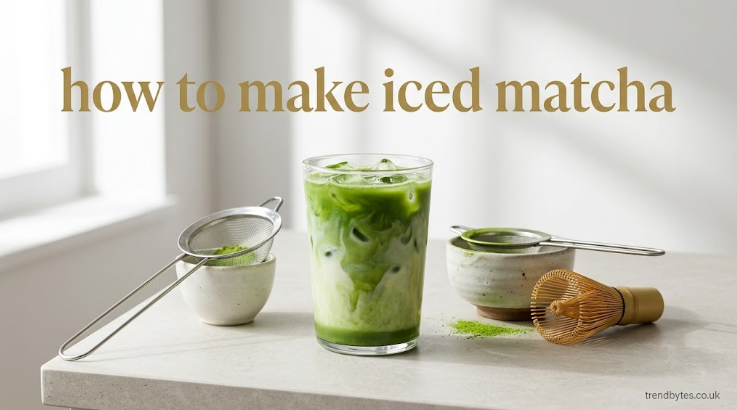
Learning how to make iced matcha at home is one of the easiest ways to upgrade your morning routine. A refreshing iced matcha latte delivers clean energy, vibrant flavor, and a smooth texture without the high price tag of a coffee shop. Many people struggle with clumps or a bitter taste, but mastering this beverage is straightforward once you know the proper technique and ratio.
In this guide, you will learn the exact steps to create a café-quality iced matcha from scratch. We will cover tool selection, water temperature, whisking techniques, and simple customization options so you can enjoy a perfect glass every single time.
Key Metadata At a Glance
- Prep Time: 3 minutes
- Total Time: 5 minutes
- Servings: 1 serving
- Caffeine Level: Approximately 60 to 70 mg per serving
- Skill Level: Beginner
Ingredients and Equipment Needed
To make an exceptional glass of iced matcha, high-quality ingredients make all the difference. Matcha is a finely ground powder made from specially grown green tea leaves, meaning you consume the entire leaf rather than just steeping it.
Core Ingredients
- Ceremonial Grade Matcha Powder: 1 to 2 teaspoons (2 grams)
- Water: 2 ounces (60 ml) filtered water, heated to 175°F (80°C)
- Milk of Choice: 6 to 8 ounces (180–240 ml) oat milk, almond milk, or whole milk
- Sweetener (Optional): 1 to 2 teaspoons honey, maple syrup, or simple syrup
- Ice: 1 cup fresh ice cubes
Essential Tools
- Bamboo Whisk (Chasen) or Electric Milk Frother: A bamboo whisk is traditional and breaks up clumps best, but a handheld electric frother works well for speed.
- Fine-Mesh Sifter: Essential for preventing clumps before adding liquid.
- Matcha Bowl (Chawan) or Small Glass: Provides enough room for proper whisking.
Selecting the Right Matcha Powder
Not all green tea powders are created equal. Understanding the difference between grades determines the final flavor, color, and smoothness of your drink.
Ceremonial Grade vs. Culinary Grade Ceremonial grade matcha uses the youngest tea leaves harvested during the first flush of spring. It features a bright emerald green color, a naturally sweet and nutty flavor profile, and minimal bitterness. It is designed to be consumed on its own with water or light milk.
Culinary grade matcha comes from later harvests. It has a deeper olive green hue, an astringent flavor, and higher bitterness. While great for baking or blended smoothies, it often tastes harsh in a simple iced latte unless heavily sweetened. For the best homemade experience, invest in a good ceremonial grade powder.
Step-by-Step Guide: How to Make Iced Matcha Latte
Follow these straightforward steps to prepare a smooth, creamy iced beverage in less than five minutes.
Step 1: Sift the Matcha Powder Place a fine-mesh sifter over your bowl or glass. Add 1 to 2 teaspoons of ceremonial matcha powder and use a spoon to press it through the mesh. Sifting removes natural clumps created by static electricity, ensuring your drink turns out completely smooth.
Step 2: Add Hot (Not Boiling) Water Pour 2 ounces of hot water over the sifted powder. Water temperature is critical. Boiling water burns the delicate green tea leaves, causing a bitter, grass-like taste. The ideal water temperature is between 160°F and 175°F (70°C to 80°C). If you do not have a temperature-controlled kettle, boil water and let it sit uncovered for two minutes before pouring.
Step 3: Whisk Until Frothy If using a traditional bamboo whisk, hold it vertically and whisk vigorously in a zigzag or “W” motion. Avoid circular stirring, which traps clumps against the edges. Whisk for 30 to 45 seconds until a fine layer of green foam forms on top. If using an electric frother, submerge the whisk head completely and froth for 15 to 20 seconds.
Step 4: Sweeten the Base (Optional) If you prefer a sweeter drink, add your maple syrup, honey, or simple syrup directly to the warm matcha liquid. Warm liquid dissolves liquid sweeteners instantly, ensuring an even flavor throughout the beverage.
Step 5: Assemble over Ice and Milk Fill a tall glass with fresh ice cubes. Pour 6 to 8 ounces of cold milk over the ice, leaving about an inch of space at the top. Slowly pour your frothed matcha shot over the cold milk. The dense green liquid will layer gracefully over the white milk before settling into a beautiful pale green shade. Stir gently before sipping.
Pro-Tips for Café-Quality Results
Use Quality Water Since matcha powder dissolves directly into water, tap water with heavy mineral contents or chlorine alters the natural flavor. Filtered or spring water yields a much cleaner taste.
Choose the Best Milk Pairing
- Oat Milk: Creates a naturally creamy texture and adds a subtle sweetness that balances green tea notes.
- Whole Milk: Offers a classic rich mouthfeel and smooth finish.
- Almond Milk: Provides a lighter, nutty background, though thinner in consistency.
- Coconut Milk: Adds a tropical twist, but can overpower subtle tea flavors.
Mastering the Cold-Whisk Method If you do not want to heat water, you can prepare iced matcha completely cold. Place your sifted powder, cold water, and ice into a small mason jar with a tight lid. Shake vigorously for 30 seconds until completely dissolved and frothy, then pour over your milk of choice.
Common Mistakes to Avoid
Using Boiling Water Adding boiling water (212°F / 100°C) degrades antioxidants and scorches the ground leaves, creating a harsh and bitter profile.
Skipping the Sifting Step Matcha powder naturally binds together due to moisture and fine grinding. Skipping the sifting step guarantees small, unwhisked clumps at the bottom of your glass.
Stirring in Circles Stirring in circular motions pushes powder to the sides of the bowl rather than aerating it. Always use a rapid back-and-forth “W” or “M” motion when whisking.
Buying Low-Quality Powder Dull, yellowish-brown powder indicates age, oxidation, or lower quality. Look for vibrant emerald green powder packaged in airtight, light-proof tins.
Flavor Variations to Try
Once you master the basic technique, customize your recipe with these popular flavor additions:
- Iced Vanilla Matcha: Add 1/2 teaspoon of pure vanilla extract or vanilla syrup to the milk before pouring.
- Strawberry Iced Matcha: Muddle fresh strawberries with simple syrup at the bottom of the glass before adding ice, milk, and matcha.
- Iced Coconut Matcha: Substitute regular milk with light coconut milk and sweetened condensed milk for a tropical treat.
- Honey Lavender Matcha: Infuse your simple syrup with dried culinary lavender buds for a calming floral aroma.
Health Benefits of Iced Matcha
Replacing standard iced coffee with green tea offers several wellness advantages:
- Sustained Clean Energy: Contains L-theanine, an amino acid that promotes calm alertness without the jitters or sudden caffeine crashes associated with coffee.
- Rich in Antioxidants: Packed with catechins, particularly epigallocatechin gallate (EGCG), which supports cellular health and metabolism.
- Supports Focus: The combination of natural caffeine and L-theanine improves concentration and mental clarity throughout the day.
People Also Ask (FAQs)
Is iced matcha healthy to drink every day? Yes, drinking iced matcha daily is safe and healthy for most people. It provides antioxidants, promotes steady energy, and supports brain function. Just be mindful of added sugars if using pre-sweetened plant milks or heavy syrups.
Why is my homemade iced matcha clumpy? Clumping happens when static electricity binds the fine powder together or when cold liquid is added directly without initial whisking. To prevent clumps, always sift your powder through a fine-mesh strainer and whisk it in warm water before pouring over cold milk and ice.
Can I make iced matcha without a bamboo whisk? Yes, you can make it without a bamboo whisk. A handheld electric milk frother, a small wire kitchen whisk, or a sealed mason jar shaken vigorously for 30 seconds all work effectively to create a smooth mixture.
Does iced matcha have more caffeine than coffee? No, a standard serving of iced matcha contains about 60 to 70 mg of caffeine, whereas an equivalent cup of brewed drip coffee contains around 95 to 140 mg. However, the caffeine in green tea releases more slowly into the bloodstream, offering longer-lasting energy.
Why does my iced matcha taste bitter? Bitterness usually results from using boiling water or lower-grade culinary matcha. Use water cooled to around 175°F (80°C) and opt for ceremonial grade powder to enjoy a smooth, naturally sweet taste.
Can I prepare iced matcha the night before? While you can mix the tea and water ahead of time and store it in the refrigerator, fresh preparation yields the best flavor and foam. If preparing ahead, store the liquid base in an airtight container and shake well before pouring over fresh milk and ice.
Summary of Best Practices
To ensure success every time you prepare this drink, keep these quick best practices in mind:
- Sift First: Always sift your powder to eliminate lumps.
- Watch Water Temp: Keep water under 175°F to preserve delicate flavors.
- Whisk in a “W”: Use fast back-and-forth movements for optimal froth.
- Choose Ceremonial: Stick to ceremonial grade for the brightest color and sweetest profile.
Final Thoughts on How to Make Iced Matcha
Knowing how to make iced matcha at home saves time, reduces daily expenses, and gives you total control over ingredient quality and sugar content. By selecting ceremonial grade powder, using water heated to the proper temperature, and whisking properly, you achieve a smooth, refreshing drink that rivals any commercial coffee shop. Experiment with milk options and natural sweeteners to find your perfect daily blend.