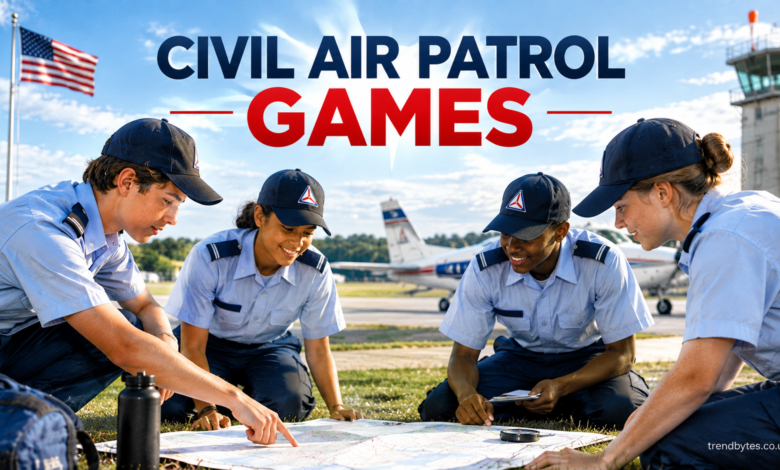
Finding engaging civil air patrol games can make cadet meetings more enjoyable while helping young people develop leadership, teamwork, communication, and aviation knowledge. Whether you are a Civil Air Patrol cadet, senior member, parent, or squadron activity planner, the right games can turn an ordinary meeting into a memorable learning experience.
The Civil Air Patrol (CAP) is a volunteer organization that serves as the civilian auxiliary of the U.S. Air Force. Its programs include cadet development, aerospace education, leadership training, and emergency services.
Games can support these goals by giving cadets opportunities to solve problems, practice communication, and work together. From aviation trivia to leadership challenges, many activities require little equipment and can be adapted to different ages and experience levels.
In this guide, you will discover practical Civil Air Patrol games, indoor and outdoor activities, team-building exercises, and tips for organizing safe, educational cadet meetings.
What Are Civil Air Patrol Games?
Civil Air Patrol games are structured activities designed for cadets and squadron members. They may focus on aviation, aerospace science, leadership, teamwork, physical fitness, communication, or problem-solving.
Some games are educational, helping cadets review concepts they have learned. Others build confidence and cooperation by asking participants to complete a challenge as a team.
For example, a squadron might organize an aviation trivia contest to review aircraft terminology. Another meeting might include a communication exercise in which one cadet describes a simple shape while teammates attempt to draw it without seeing the original.
These activities can make learning more interactive while supporting the broader goals of the CAP Cadet Program.
Who Can Participate in Civil Air Patrol Games?
The best activities depend on participants’ ages, abilities, experience, and training objectives.
- New cadets: Simple icebreakers, team challenges, and basic aviation quizzes.
- Experienced cadets: Leadership exercises, navigation concepts, and scenario-based problem-solving.
- Cadet leaders: Activities that practice delegation, briefing, planning, and decision-making.
- Senior members: Instructional games, mentoring exercises, and team-building activities.
- Entire squadrons: Group competitions that encourage cooperation across experience levels.
Always adapt activities to local squadron policies, approved training materials, and participants’ needs.
Best Civil Air Patrol Games for Cadets
The following activities are designed to be easy to organize and adaptable to different meeting spaces. They are suggested activities, not official CAP competitions or required training exercises.
1. Aviation Trivia Challenge
Aviation trivia is a simple way to review aerospace knowledge and encourage friendly competition.
Divide cadets into small teams and prepare questions about aircraft, flight principles, aviation history, and basic aerospace science.
Award one point for each correct answer. For a more advanced round, ask teams to explain why an answer is correct rather than simply naming it.
Sample questions include:
- What force opposes an aircraft’s forward motion through the air? Answer: Drag.
- What instrument indicates an aircraft’s altitude above a reference level? Answer: An altimeter.
- What is the name for the force that opposes gravity and supports an aircraft in flight? Answer: Lift.
- What does a runway provide? Answer: A prepared surface for aircraft takeoffs and landings.
Verify technical questions against reliable aerospace education materials before using them in a formal lesson.
Best for: Aerospace education, classroom meetings, and knowledge review.
2. Leadership Decision-Making Game
Leadership exercises help cadets practice making decisions, listening to others, and explaining their reasoning.
Present each team with a fictional situation. For example, a group is organizing a squadron open house but has limited time, a small budget, and several tasks to complete.
Ask the team to decide how to divide responsibilities, prioritize tasks, and communicate its plan.
Give participants five to ten minutes to prepare, followed by a short briefing.
Afterward, discuss what worked, which challenges arose, and how the team reached its decision.
Best for: Leadership development, planning, and communication.
3. The Blind Drawing Challenge
This game focuses on clear communication and active listening.
Pair cadets together. Give one participant a simple geometric picture, such as a collection of shapes, while the other receives blank paper and a pencil.
The first cadet describes the picture without showing it. The second cadet attempts to reproduce it using only the verbal instructions.
Compare the original and the drawing when time is up.
For a second round, let participants ask questions. Discuss whether the results improved and why.
Best for: Communication, teamwork, and briefing skills.
4. Civil Air Patrol Memory Game
Create cards featuring aviation terms, aircraft categories, aerospace concepts, or leadership vocabulary.
Place the cards face down on a table. Players take turns revealing two cards and attempting to find matching pairs.
For a more educational version, match a term with its definition instead of matching identical pictures.
For example, a card labeled “drag” could match a card explaining air resistance.
Keep the vocabulary appropriate for the cadets’ current knowledge level.
Best for: New cadets, aerospace education, and vocabulary review.
5. Team Problem-Solving Challenge
Give each team a collection of safe, inexpensive materials, such as paper, tape, string, and craft sticks.
Set a specific goal, such as building the tallest freestanding paper tower within ten minutes.
Before starting, ask each team to assign roles, develop a quick plan, and agree on how to test its design.
When time expires, measure the structures and discuss which design decisions helped or hurt performance.
The lesson is not just about winning. It is about planning, testing ideas, sharing responsibilities, and learning from mistakes.
Best for: Teamwork, creativity, and problem-solving.
Indoor Civil Air Patrol Games for Squadron Meetings
Indoor games are useful when weather, room availability, or meeting schedules limit outdoor activities.
1. Aerospace Quiz Bowl
Create several question categories, such as aviation basics, aircraft, space exploration, and aerospace history.
Teams select a category and answer questions for points. Include different difficulty levels so that new cadets and experienced participants can contribute.
Use approved educational materials to keep answers accurate.
2. Leadership Vocabulary Bingo
Prepare bingo cards containing leadership and aerospace terms.
Read a definition aloud, and participants mark the matching word if it appears on their cards.
For example, a definition might describe the process of giving clear instructions before an activity. Cadets would identify the relevant term from their vocabulary list.
This activity makes reviewing terminology more interactive than reading definitions from a page.
3. Cadet Meeting Planning Game
Ask small groups to design a sample 30-minute squadron activity.
They must choose a goal, list the required materials, divide responsibilities, and create a schedule.
Each group presents its plan to the room. Other cadets can suggest improvements or identify missing steps.
This activity introduces practical planning skills that cadets can use in real meetings.
Outdoor Civil Air Patrol Games and Team Activities
Outdoor games provide opportunities for movement, cooperation, and practical leadership. However, activities should always follow local rules, weather guidance, and appropriate supervision requirements.
1. Team Relay Challenge
Set up a simple relay course in an approved area. Participants may carry a beanbag, complete a short walking route, or perform another age-appropriate task before tagging the next teammate.
Keep the course clear of obstacles and avoid activities that create unnecessary collision or injury risks.
To emphasize teamwork rather than speed, award points for communication, fair participation, and following instructions.
2. Map Symbol Identification
Prepare a collection of map symbols and their meanings using suitable educational materials.
Place the cards around a room or approved outdoor area. Teams locate the cards, identify each symbol, and record their answers.
For advanced cadets, include basic map-reading questions under appropriate instruction.
Do not turn this classroom activity into unsupervised land navigation or an operational search exercise.
3. Observation and Recall Game
Display a collection of safe, ordinary objects on a table for 30 seconds.
Cover the objects and ask cadets to write down everything they remember.
Compare answers and discuss how attention, observation, and note-taking affect recall.
This is a general memory exercise, not a substitute for approved emergency-services training.
How to Organize a Successful Civil Air Patrol Game Night
A successful activity requires more than choosing a fun game. Good planning makes participation easier and helps the activity support the meeting’s objectives.
Step 1: Set a Clear Learning Goal
Decide what participants should learn or practice.
For example, an aviation trivia game may reinforce aerospace vocabulary, while a planning challenge may develop delegation and communication.
Step 2: Choose the Right Difficulty
Consider cadet experience, age, accessibility needs, and available time.
A complicated exercise can frustrate beginners, while a very simple activity may not challenge experienced cadets.
Offer different roles or difficulty levels when appropriate.
Step 3: Prepare Materials in Advance
Gather question cards, paper, pencils, timers, score sheets, and other supplies before the meeting begins.
Test the instructions yourself to identify confusing rules or missing materials.
Step 4: Explain the Rules
Describe the goal, time limit, scoring method, and safety expectations before play begins.
Invite questions so everyone understands how to participate.
Step 5: Finish With a Short Debrief
After the game, ask three simple questions:
- What did the team do well?
- What would you change next time?
- How could you use this lesson in a real squadron activity?
A brief discussion helps connect the game to leadership and learning goals.
Common Mistakes to Avoid
Even simple activities can become less effective when they are poorly planned.
Making every game competitive: Excessive competition can discourage beginners. Include cooperative activities where the group succeeds together.
Ignoring safety: Check the room or activity area, explain boundaries, and follow applicable supervision requirements.
Using inaccurate aviation information: Verify technical questions and answers against suitable educational sources.
Giving unclear instructions: Explain the rules and demonstrate the activity when needed.
Leaving out quieter participants: Rotate roles so every cadet has a chance to contribute.
Focusing only on winning: Recognize teamwork, clear communication, creativity, and improvement as well as results.
Running activities for too long: Choose a realistic time limit and leave space for a short debrief.
Tips for Making Civil Air Patrol Games More Educational
The most useful games have a clear purpose and a simple way to assess what participants learned.
First, connect the activity to a specific lesson. If cadets are reviewing aerospace concepts, prepare questions that reinforce the material they have already studied.
Second, give participants meaningful roles. A team may assign a facilitator, timekeeper, recorder, and presenter so everyone contributes.
Third, encourage reflection. Ask participants to identify one skill they used and one improvement they would make.
Finally, vary the activities from meeting to meeting. A balance of quizzes, physical challenges, planning exercises, and cooperative games can help keep cadets interested.
For official program requirements, use current Civil Air Patrol guidance and approved training materials rather than relying on games or informal online advice.
People Also Ask About Civil Air Patrol Games
1. What are the best Civil Air Patrol games for cadets?
Aviation trivia, leadership challenges, blind drawing, memory games, and team problem-solving exercises are useful options. The best choice depends on the meeting’s learning goals and the cadets’ experience.
2. Can you play Civil Air Patrol games indoors?
Yes. Indoor activities can include aerospace quizzes, vocabulary bingo, communication challenges, planning exercises, and aviation memory games. Many require only paper, pencils, and prepared questions.
3. Are Civil Air Patrol games official activities?
Some activities may be used by individual squadrons or instructors, but the games in this article are general suggestions rather than official CAP-approved activities. Check current guidance before presenting an activity as part of formal training.
4. What games help Civil Air Patrol cadets develop leadership?
Decision-making scenarios, meeting-planning challenges, team-building exercises, and group briefings can help cadets practice delegation, communication, and problem-solving.
5. How can I make aviation games educational?
Use accurate questions based on appropriate aerospace education materials. Include explanations for answers and finish with a short review of the concepts participants found difficult.
6. What supplies are needed for Civil Air Patrol team-building games?
Many activities need only paper, pencils, question cards, a timer, and basic craft materials. Outdoor activities may require additional equipment, an approved location, and suitable supervision.
7. How long should a cadet game last?
Many short activities work well in 10 to 20 minutes, depending on the rules and group size. Allow extra time for instructions, participation, and a brief discussion afterward.
8. Can new cadets participate in Civil Air Patrol games?
Yes. Choose beginner-friendly activities that introduce basic aviation terminology, encourage communication, and give every participant a meaningful role. Increase the difficulty as cadets gain experience.
Conclusion
The best civil air patrol games combine fun with meaningful learning. Aviation trivia can reinforce aerospace knowledge, leadership scenarios can improve decision-making, and team-building challenges can strengthen communication and cooperation.
You do not need expensive equipment to create a successful activity. Start with a clear learning goal, select a game that fits your group, explain the rules, and finish with a short discussion about what participants learned.
By rotating indoor games, outdoor activities, and leadership exercises, squadron leaders can create engaging meetings that encourage cadets to participate and develop valuable skills. Keep activities safe, inclusive, and appropriate for the group, and use current Civil Air Patrol guidance whenever an exercise relates to official training.
With thoughtful planning, Civil Air Patrol games can make cadet meetings more enjoyable while supporting the organization’s broader goals of leadership development, aerospace education, and service.