Celebrities Who Have Autism: Famous People and Their Stories

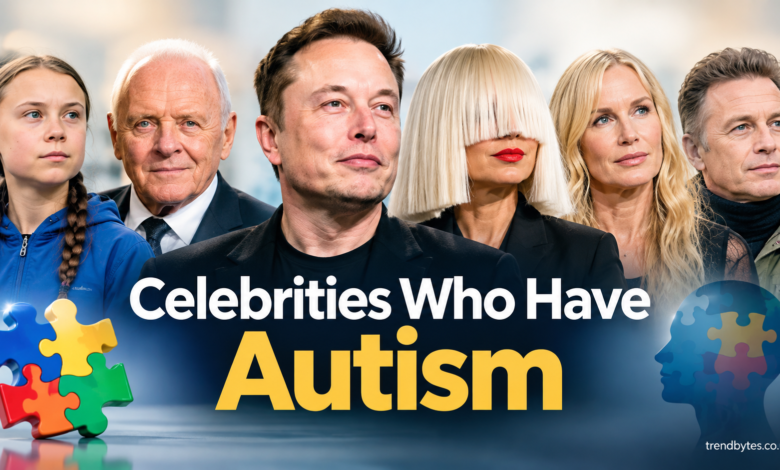
Autism is a part of many people’s lives, including some well-known actors, musicians, athletes, and public figures. When people search for celebrities who have autism, they often want to know which famous people have openly shared their diagnosis, how autism affects their lives, and what their stories can teach us.
Autism, also called autism spectrum disorder (ASD), is a developmental difference that can affect communication, social interaction, sensory experiences, and patterns of behavior. Every autistic person is different. Some need significant daily support, while others live independently and build successful careers.
In this article, we’ll explore famous people who have publicly discussed being autistic, explain what is known about their experiences, and address common questions about autism and celebrity life.
What Does It Mean to Be Autistic?
Autism is a lifelong neurodevelopmental condition. It influences how a person experiences the world and interacts with others.
Some autistic people may experience:
- Differences in social communication.
- Sensitivity to sounds, lights, textures, or crowds.
- Strong interests in specific subjects.
- A preference for routines and predictability.
- Differences in processing information.
- Challenges with changes or unfamiliar situations.
Autism is a spectrum, meaning it can look very different from one person to another.
For example, one autistic person may enjoy public speaking but struggle with noisy environments. Another may be highly skilled in music or mathematics but need help with everyday tasks.
Important: Autism is not something that can be confirmed by watching a celebrity in interviews, movies, or on social media. The people discussed below are included because they have publicly disclosed an autism diagnosis or have openly discussed being autistic. Public statements may not reveal the full details of someone’s medical history.
Celebrities Who Have Autism
1. Elon Musk


5
Elon Musk is one of the most widely recognized business leaders associated with autism. In May 2021, during his appearance as host of Saturday Night Live, Musk said that he had Asperger’s syndrome.
Asperger’s syndrome was a diagnostic term formerly used for a presentation of autism. Under current diagnostic systems, it is generally included within autism spectrum disorder.
Musk has spoken about how his communication style differs from what some people expect. His disclosure helped bring attention to the fact that autistic people can work in highly visible roles.
What his story shows: Autism does not automatically prevent someone from leading a business, working in technology, or appearing on television.
2. Greta Thunberg


6
Greta Thunberg is a Swedish climate activist who has openly discussed being autistic. She has described autism as part of her identity and has spoken about how it influences her perspective.
Thunberg has also discussed her strong focus on climate change and her direct communication style. She has explained that being autistic can affect how she approaches social situations and issues that matter deeply to her.
Her public advocacy has made her one of the best-known autistic public figures in the world.
What her story shows: Autistic people can use their interests, values, and communication styles to make a meaningful impact.
3. Anthony Hopkins


5
Anthony Hopkins, the Academy Award-winning actor known for The Silence of the Lambs, has publicly discussed receiving an autism diagnosis later in life.
In interviews, Hopkins has spoken about his diagnosis and how it helped him understand certain aspects of his personality and behavior.
He has also described being highly focused on his work and having a strong attention to detail. However, his experiences should not be treated as a complete picture of autism.
What his story shows: Autism can be recognized in adulthood, and a diagnosis may help some people better understand themselves.
4. Sia


4
Australian singer and songwriter Sia has publicly discussed being autistic. In 2023, she spoke about her diagnosis and shared personal reflections about her life.
Sia is known for songs such as “Chandelier” and “Elastic Heart.” She has also worked in songwriting and film.
Her disclosure brought attention to autism in adults who may have spent years without understanding why certain social or emotional experiences felt different.
What her story shows: Autism can be diagnosed in adulthood, even after years of a successful career.
5. Daryl Hannah


6
Daryl Hannah is an American actress known for films such as Splash, Blade Runner, and Kill Bill. She has spoken publicly about being autistic.
Hannah has described experiencing discomfort with attention and certain social situations. She has also discussed how autism affected her experiences in Hollywood.
Her story is a reminder that fame does not erase the challenges a person may experience in social environments.
What her story shows: An autistic person can have a long and successful acting career while still experiencing social or sensory challenges.
6. Chris Packham


6
Chris Packham is a British naturalist and television presenter known for his work on wildlife programs, including Springwatch.
Packham has publicly discussed being autistic and has spoken about his experiences with sensory differences, routines, and social communication.
His career has been closely connected to his interest in animals and the natural world.
What his story shows: Strong interests can become a source of knowledge, enjoyment, and professional success.
7. Paddy McGuinness


6
Paddy McGuinness is a British comedian and television presenter. He has publicly discussed his family’s experiences with autism, including the diagnoses of his children.
Although his story is different from celebrities who have personally disclosed an autism diagnosis, it is relevant to understanding autism in public life.
McGuinness has helped raise awareness of the practical challenges and support needs that families may face.
What his story shows: Autism affects families in many different ways, and public discussion can help reduce stigma.
8. Susan Boyle


5
Susan Boyle became internationally famous after appearing on Britain’s Got Talent in 2009. She later publicly discussed receiving an autism diagnosis.
Boyle has spoken about how understanding her diagnosis helped explain parts of her earlier life.
Her singing career shows that an autistic person can develop a strong artistic talent and perform in front of large audiences.
What her story shows: A diagnosis can provide personal understanding, even when it comes later in life.
9. Wentworth Miller


5
Wentworth Miller, best known for starring in Prison Break, publicly shared in 2021 that he had received an autism diagnosis.
He explained that the diagnosis came during adulthood and that he was still learning about himself.
Miller’s disclosure also highlighted the importance of understanding autism beyond childhood.
What his story shows: Adults can discover that autism helps explain experiences they have had throughout their lives.
10. Fern Brady


6
Fern Brady is a Scottish comedian and writer who has openly discussed her autism diagnosis.
She has spoken about her experiences in comedy, relationships, and everyday life. Her work has helped bring attention to how autistic adults may experience social expectations differently.
Brady is also known for writing about her personal experiences in a direct and humorous way.
What her story shows: Autistic adults can have different communication styles and still build successful creative careers.
Other Famous People Associated With Autism
The following names are also frequently discussed in conversations about autism and celebrities. However, it is important to distinguish between a confirmed public disclosure, a historical account, and speculation.
Dan Aykroyd
Dan Aykroyd, the actor and comedian known for Ghostbusters, has spoken about having Asperger’s syndrome. His public comments are often mentioned in discussions about autistic celebrities.
Courtney Love
Courtney Love has been associated with discussions about autism and neurodivergence. However, claims about celebrity diagnoses should be based on the person’s own public statements rather than online speculation.
Bill Gates
Bill Gates is often listed in online articles about famous people with autism. However, he has not publicly confirmed an autism diagnosis in the same way as some people on this list.
It is not accurate to diagnose someone based on their intelligence, personality, or behavior.
Why Autism Awareness Among Celebrities Matters
When a famous person talks openly about autism, it can help people understand that autism is not limited to one type of person.
For years, many people believed autism only affected children or people with obvious support needs. In reality, autism can be identified at different ages and can affect people with many different abilities.
Celebrity disclosures can help:
- Reduce harmful stereotypes.
- Encourage adults to learn about autism.
- Show different ways autism can appear.
- Support families who are seeking information.
- Promote acceptance and understanding.
At the same time, celebrities are individuals, not representatives of every autistic person. Their experiences cannot be used to decide what autism should look like for everyone else.
Autism in Adults: Why Some People Are Diagnosed Later
Some autistic people receive a diagnosis during childhood, while others are diagnosed as teenagers or adults.
Several factors may contribute to a later diagnosis:
Masking and Social Expectations
Some autistic people learn to copy social behaviors or hide difficulties to fit in. This can make autism harder to recognize.
Misunderstanding Autism
Older generations may have grown up when autism was less understood. As a result, they may not have been assessed when they were children.
Different Presentations
Autism can look different from person to person. Some individuals may have strong language skills or live independently while still experiencing significant challenges.
Increased Awareness
Greater public awareness has encouraged more adults to explore whether autism may explain their experiences.
A professional assessment is the appropriate way to investigate autism. Watching videos of celebrities is not a substitute for an evaluation.
Common Mistakes to Avoid When Discussing Autistic Celebrities
1. Assuming Someone Is Autistic
A person may be quiet, socially awkward, highly intelligent, or intensely focused without being autistic.
2. Treating Autism as a Superpower
Some autistic people have exceptional talents, but autism is not automatically linked to genius, creativity, or extraordinary ability.
3. Ignoring Support Needs
Autism can involve challenges with communication, sensory processing, daily living, or mental health. A successful career does not mean someone has no difficulties.
4. Sharing Unverified Diagnoses
Online lists often include celebrities who have never publicly confirmed being autistic. These claims should not be repeated as facts.
5. Using Outdated or Insensitive Language
Terms such as “Asperger’s syndrome” may appear in historical diagnoses or personal disclosures. Today, autism spectrum disorder is the standard diagnostic term in the DSM-5-TR.
Best Practices for Learning About Autism
If you want to learn more about autism through celebrity stories, consider these tips:
- Focus on people who have publicly disclosed their diagnosis.
- Read first-person accounts when available.
- Learn about autism from qualified medical and autism organizations.
- Remember that autism is a spectrum.
- Avoid comparing one autistic person’s experience with another’s.
- Respect privacy when someone has not discussed their diagnosis.
Celebrity stories can be useful starting points, but they are only one part of understanding autism.
People Also Ask: Celebrities Who Have Autism
1. Who is the most famous celebrity with autism?
Elon Musk, Greta Thunberg, Anthony Hopkins, and Sia are among the most widely recognized public figures who have openly discussed autism. Fame is subjective, and there is no official ranking of the most famous autistic celebrity.
2. Are there actors who have autism?
Yes. Anthony Hopkins, Daryl Hannah, Wentworth Miller, and Dan Aykroyd have publicly discussed autism or Asperger’s syndrome. Their experiences are different, and not every actor who is rumored to be autistic has confirmed a diagnosis.
3. Can autistic people become famous?
Absolutely. Autistic people can work in entertainment, business, science, sports, and many other fields. Autism does not determine whether someone can become successful.
4. Can adults be diagnosed with autism?
Yes. Some people receive an autism diagnosis during adulthood. An assessment by a qualified professional can help determine whether a person meets diagnostic criteria.
5. Is autism more common in celebrities?
There is no reason to assume that autism is more common among celebrities. Public figures may simply have more opportunities to share their experiences with a large audience.
6. Are all highly intelligent people autistic?
No. Intelligence and autism are not the same thing. Some autistic people have exceptional talents, while others have intellectual disabilities or average intellectual abilities.
7. Can autism be cured?
Autism is a lifelong neurodevelopmental condition. There is no established cure. Support, therapy, accommodations, and acceptance can help autistic people thrive.
8. How can I find out if I am autistic?
If you think you may be autistic, speak with a qualified healthcare professional or psychologist who has experience assessing autism in your age group. Online quizzes cannot confirm a diagnosis.
Conclusion: Celebrities Who Have Autism Show That Everyone’s Story Is Different
Learning about celebrities who have autism can help challenge stereotypes and show the many different ways autism may appear. Public figures such as Elon Musk, Greta Thunberg, Anthony Hopkins, Sia, and others have shared experiences that highlight the importance of understanding autism beyond childhood.
However, no two autistic people are exactly alike. Some may have strong artistic or technical skills, while others need extensive daily support. A successful career does not define autism, and a person’s diagnosis should never be assumed from their behavior.
The most important lesson is that autistic people deserve respect, understanding, and access to the support they need. By listening to their stories and learning from reliable information, we can build a more accepting world for everyone.