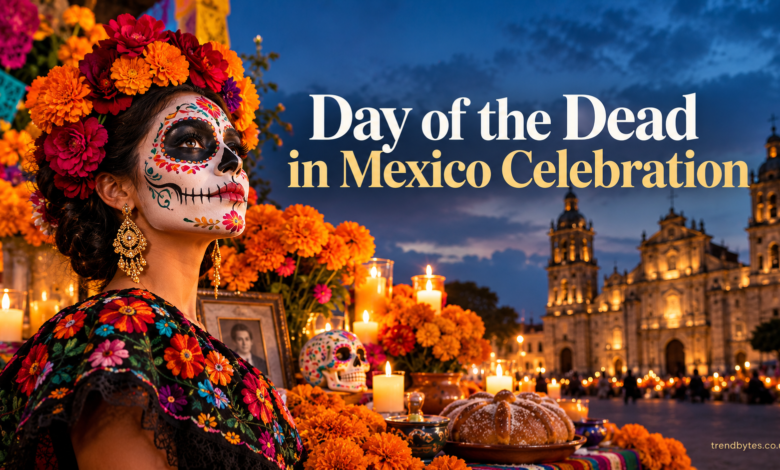
The day of the dead in mexico celebration is one of the country’s most meaningful cultural traditions. Held mainly on November 1 and 2, Día de los Muertos is a time when families honor loved ones who have died while celebrating the continuing bond between the living and the dead.
Although colorful decorations, painted faces, flowers, music, and special foods make the holiday visually striking, its deeper meaning is about remembrance, family, love, and respect. Rather than being simply a Mexican version of Halloween, Día de los Muertos has its own history, customs, and spiritual significance.
If you are planning to experience this celebration in Mexico, understanding its traditions will help you appreciate it more deeply and participate respectfully.
What Is the Day of the Dead in Mexico Celebration?
The day of the dead in mexico celebration is a Mexican tradition dedicated to remembering deceased family members and friends. Families often believe that during these special days, the spirits of loved ones can return to visit the living.
Homes, cemeteries, churches, and public spaces may be decorated with flowers, candles, photographs, food, and personal objects connected to those being remembered.
The celebration combines Indigenous Mexican traditions with Catholic influences introduced during the colonial period. Over generations, these traditions developed into the Día de los Muertos customs recognized around the world today.
Importantly, the holiday is generally not centered on fear. Instead, it treats death as a natural part of life and creates an opportunity to remember people with affection and gratitude.
When Is Día de los Muertos Celebrated?
Día de los Muertos is primarily observed on November 1 and November 2, although preparations and related events can begin days or even weeks earlier.
November 1 is commonly associated with children who have died and is often called Día de los Angelitos, or Day of the Little Angels.
November 2 is generally associated with deceased adults and is known as Día de los Muertos or Día de los Difuntos in different communities.
However, customs vary by region and family. Some communities begin honoring their dead on October 31, while others continue activities beyond November 2.
For travelers, this means there is no single schedule that applies to every part of Mexico.
The History Behind Día de los Muertos
The roots of Día de los Muertos reach back to Indigenous civilizations in Mexico, including the Aztec and other Mesoamerican cultures.
Death was not always viewed as a complete separation from the community. Indigenous traditions included ceremonies honoring ancestors and recognizing the continuing relationship between life and death.
After the Spanish conquest, Catholic practices and religious holidays became part of Mexican life. Over time, Indigenous customs and Catholic traditions blended in different ways.
This cultural mixture helped shape the modern celebration.
Today, Día de los Muertos is both deeply personal and broadly cultural. Families may follow traditions passed down through generations while adding their own practices and memories.
Day of the Dead Altars and Their Meaning
One of the most recognizable parts of the day of the dead in mexico celebration is the ofrenda, or altar.
An ofrenda is not simply a decoration. It is created to honor a deceased person and may contain objects that reflect that person’s personality, interests, relationships, and life.
What Is Placed on a Day of the Dead Altar?
A traditional ofrenda can include:
- Photographs of deceased relatives
- Candles
- Marigold flowers, known as cempasúchil
- Incense such as copal
- Favorite foods and drinks
- Water
- Pan de muerto
- Personal belongings
- Religious images or crosses
- Sugar skulls
- Papel picado
- Salt
Each family may arrange these elements differently.
Marigolds are especially important because their bright color and strong scent are traditionally associated with guiding spirits toward the altar.
Candles provide light, while photographs identify the people being remembered. Favorite foods and personal objects create a welcoming and familiar space for the honored family members.
Why Are Marigolds Important?
The Mexican marigold, or cempasúchil, is closely connected with Día de los Muertos.
Its vivid orange and yellow color creates a striking visual display, but its importance goes beyond appearance. Traditionally, marigold petals may be arranged in paths leading toward an altar or entrance.
The flower’s fragrance is also believed in traditional practices to help guide visiting spirits.
For many Mexican families, placing marigolds on an ofrenda is a meaningful act of remembrance rather than simply a seasonal decoration.
Day of the Dead Food and Traditional Dishes
Food plays a major role in family celebrations.
One of the most famous foods is pan de muerto, a slightly sweet bread prepared especially for Día de los Muertos. Its shape and decorations can vary depending on the region and bakery.
Families may also prepare the favorite meals of deceased relatives. Depending on where you are in Mexico, traditional foods can include tamales, mole, tortillas, regional stews, fruit, sweets, and other family recipes.
The food placed on an altar is often symbolic, but it also represents something very personal: remembering what someone enjoyed during their lifetime.
For example, if a grandmother loved a particular homemade dish, her family may prepare it specifically for the ofrenda.
Sugar Skulls and Calaveras
Sugar skulls, or calaveras de azúcar, are another familiar symbol of Día de los Muertos.
These colorful skulls are often decorated with icing, patterns, and names. Despite their skull-shaped appearance, they are not necessarily meant to represent something frightening.
Instead, skull imagery reflects the celebration’s broader approach to death. Death is acknowledged openly while life, personality, memory, and family connections are celebrated.
The term calavera can also refer to humorous poems known as calaveras literarias. These playful verses traditionally make jokes about death and sometimes poke fun at public figures or people in the community.
Face Painting and Catrina Makeup
The elegant skeleton figure known as La Catrina has become one of the most recognizable images associated with Día de los Muertos.
La Catrina is linked to Mexican artist José Guadalupe Posada and was later popularized in Mexican art and culture.
Today, Catrina-inspired makeup often features a skull-like face combined with flowers, elaborate patterns, and elegant clothing.
However, it is important to understand that not every person celebrating Día de los Muertos paints their face. Face painting is especially common at public events and tourist gatherings, while many family celebrations remain much quieter and more private.
How Mexico Celebrates Día de los Muertos
There is no single way to celebrate Día de los Muertos across Mexico.
Traditions differ between states, cities, towns, and individual families.
In some places, families spend time cleaning and decorating graves. Cemeteries may become gathering places filled with flowers, candles, music, food, and conversation.
In other communities, people create elaborate home altars or attend religious services.
Large cities may also host public exhibitions, cultural performances, parades, art displays, and community events.
Places Known for Day of the Dead Traditions
Several Mexican destinations are particularly associated with Día de los Muertos.
Mexico City often features large public events, exhibitions, decorations, and cultural activities.
Oaxaca is famous for its rich cultural traditions, decorated streets, markets, cemeteries, and community celebrations.
Pátzcuaro and the surrounding Lake Pátzcuaro region in Michoacán are known for deeply rooted Indigenous traditions connected with Día de los Muertos.
Janitzio, an island in Lake Pátzcuaro, is especially associated with nighttime cemetery observances.
These destinations can offer memorable experiences, but visitors should remember that the celebration remains a meaningful religious and family tradition rather than simply a tourist attraction.
How to Experience Día de los Muertos Respectfully
If you are visiting Mexico during the holiday, your behavior matters.
First, learn about the local customs before attending an event. Different communities may have different expectations.
Second, ask before photographing people, private altars, or family ceremonies. A beautiful altar may be deeply personal to the people who created it.
Third, avoid treating the celebration as a Halloween party. While costumes and face painting may appear at public events, Día de los Muertos has a much deeper cultural context.
Finally, support local artists, food vendors, museums, guides, and community businesses when possible.
Common Mistakes to Avoid
Visitors sometimes misunderstand the celebration because of its colorful appearance.
One common mistake is assuming Día de los Muertos is simply Halloween. The two holidays have different histories and meanings.
Another mistake is assuming that every Mexican person celebrates in exactly the same way. Traditions vary significantly by region and family.
It is also inappropriate to photograph grieving families without permission or enter private cemetery activities as though they were entertainment.
Likewise, copying traditional symbols without learning their meaning can reduce a meaningful cultural practice to a fashion trend.
Respect and curiosity are the best approach.
Expert Tips for Planning a Day of the Dead Visit
If you want to experience the celebration in Mexico, plan ahead.
Book transportation and accommodations early, especially in popular destinations. Demand can increase significantly around the holiday period.
Research local events instead of assuming that the largest parade is the most authentic experience. Smaller community activities may provide a better understanding of local traditions.
Try traditional seasonal foods, visit cultural museums, and consider hiring a knowledgeable local guide.
Most importantly, allow time to observe rather than rushing from one attraction to another. The heart of Día de los Muertos is remembrance, and understanding that perspective can make the experience much more meaningful.
Why Día de los Muertos Matters Today
Día de los Muertos continues to evolve while remaining deeply connected to Mexican identity and family traditions.
For many people, the celebration provides a special opportunity to remember relatives whose stories might otherwise fade over time.
Children may learn about grandparents or ancestors they never met. Families can share old photographs, recipes, stories, music, and memories.
The celebration also demonstrates how cultural traditions can adapt while preserving their core meaning.
Its international popularity has introduced millions of people to Mexican art and culture. At the same time, that popularity makes cultural understanding especially important.
People Also Ask About Day of the Dead in Mexico Celebration
1. What is the Day of the Dead in Mexico celebration?
The day of the dead in mexico celebration is a Mexican tradition honoring deceased family members and friends. It is mainly observed on November 1 and 2 through altars, food, flowers, candles, family gatherings, and cemetery visits.
2. Is Día de los Muertos the same as Halloween?
No. Although both can involve skeleton imagery and costumes, they have different origins and meanings. Día de los Muertos focuses on remembering and honoring deceased loved ones.
3. What happens during Día de los Muertos?
Families may build ofrendas, decorate graves, prepare traditional foods, light candles, place marigolds, attend religious services, and share stories about deceased relatives.
4. Why do people use marigolds for Día de los Muertos?
Marigolds, or cempasúchil, are traditional symbols associated with the celebration. Their bright color and fragrance are traditionally believed to help guide spirits toward the places where they are being remembered.
5. What is an ofrenda?
An ofrenda is an altar created to honor a deceased person. It may contain photographs, candles, flowers, food, drinks, personal possessions, and other meaningful items.
6. Can tourists participate in Día de los Muertos?
Yes, tourists can attend many public cultural events and celebrations. However, they should respect private family traditions, ask permission before taking photographs, and learn about local customs.
7. What food is traditionally eaten during Día de los Muertos?
Pan de muerto is one of the best-known foods associated with the holiday. Families may also prepare tamales, mole, regional dishes, sweets, fruit, and the favorite foods of deceased relatives.
8. Where is Día de los Muertos celebrated in Mexico?
It is celebrated throughout Mexico, with traditions varying by region. Mexico City, Oaxaca, Michoacán, Pátzcuaro, and Janitzio are among the places widely known for distinctive Día de los Muertos observances.
Conclusion
The day of the dead in mexico celebration is much more than colorful skulls, flowers, costumes, and public festivals. At its heart, Día de los Muertos is about family, memory, love, and keeping connections with deceased loved ones alive through stories and traditions.
From carefully prepared ofrendas and fragrant marigolds to pan de muerto and cemetery gatherings, each element can carry a personal meaning. Just as importantly, the celebration is not identical throughout Mexico. Local history, Indigenous traditions, family customs, and regional culture all influence how it is observed.
For travelers, the best way to experience Día de los Muertos is with respect and an open mind. Learn the meaning behind what you see, ask permission when appropriate, support local communities, and remember that behind every altar is a real person being honored.
That combination of remembrance and celebration is what makes Día de los Muertos one of Mexico’s most powerful and distinctive cultural traditions.