Franchise Digital Marketing: A Complete Guide to Growing Every Location

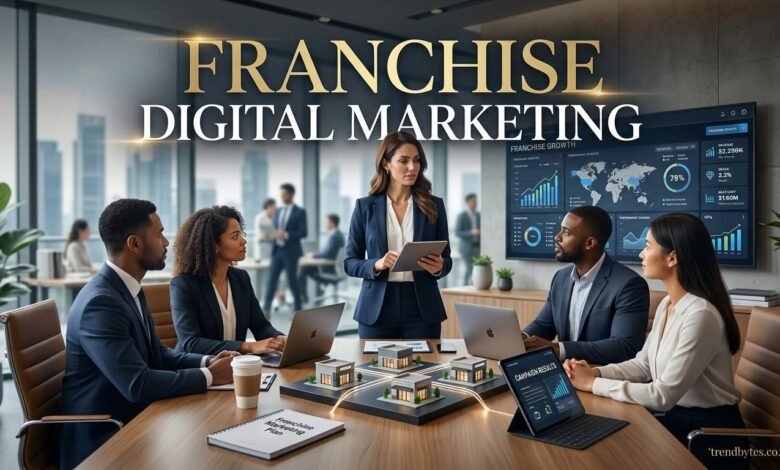
Franchise digital marketing helps businesses build a strong national or regional brand while attracting customers to individual franchise locations. Unlike traditional marketing, it must balance two goals at once: keeping the brand consistent and making each location visible to its local audience.
A successful strategy connects corporate marketing with local campaigns, search optimization, paid advertising, social media, reputation management, and useful content. When these pieces work together, franchises can generate more qualified leads, increase local visibility, and create a consistent customer experience across multiple markets.
What Is Franchise Digital Marketing?
Franchise digital marketing is the process of promoting a franchise brand and its individual locations through online channels.
The challenge is that a franchise does not operate like a single-location business. A national brand may have hundreds of locations, each serving a different community with different competitors, customer needs, search behavior, and market conditions.
For example, a fitness franchise in Dallas may compete with different gyms than the same franchise in Chicago. The brand message should remain consistent, but the local marketing strategy needs to reflect each market.
A strong franchise marketing system therefore combines:
- Corporate-level brand marketing
- Local SEO
- Location-specific landing pages
- Paid search and social advertising
- Local content
- Online reviews
- Social media
- Email marketing
- Reputation management
- Performance tracking
The goal is to create one connected digital ecosystem instead of treating every franchise location as a completely separate business.
Why Franchise Digital Marketing Matters
Customers increasingly search online before visiting a business, making an appointment, requesting a quote, or purchasing a product.
For franchises, this creates a major opportunity. A well-optimized location can appear when someone searches for a service near them, while the larger brand can continue building awareness nationally.
However, poor digital management can create the opposite effect.
A franchise may have an excellent corporate website but weak local pages. Another location may have good reviews but incomplete business information. Some franchisees may run their own social media accounts with inconsistent branding.
These problems can weaken customer trust and make it harder for search engines to understand individual locations.
A coordinated strategy solves this problem by combining brand authority with local relevance.
Franchise Digital Marketing and Local SEO
Local SEO is one of the most important parts of franchise digital marketing because customers often search for businesses based on location.
Common searches include:
- Franchise restaurants near me
- Fitness center near me
- Best cleaning company in [city]
- Auto repair near me
- Hair salon in [city]
- Local tax preparation services
Each location should have a strong local presence designed around the searches its customers actually use.
Build Dedicated Location Pages
Every franchise location should ideally have a unique, useful location page.
A strong location page can include:
- Business name
- Address
- Phone number
- Hours
- Services
- Service area
- Local photos
- Directions
- Frequently asked questions
- Reviews
- Booking or contact options
- Relevant local information
Avoid creating hundreds of pages that simply replace the city name in the same template. Each location page should provide genuine value for people in that community.
Optimize Local Business Profiles
Each eligible franchise location should maintain accurate business information across important online platforms.
Business name, address, phone number, hours, services, categories, photos, and other details should remain accurate and consistent.
Location-specific profiles also give customers a direct way to find directions, call the business, read reviews, and learn about available services.
Create a Scalable Franchise Content Strategy
Content marketing becomes more complicated as a franchise network grows.
A corporate team may create educational articles, videos, guides, and social media campaigns, while individual franchisees need content that feels relevant to their communities.
The solution is a centralized content system with room for local customization.
For example, a home-services franchise could create a national article about preparing a home for winter. Individual locations could then publish locally relevant versions that discuss seasonal concerns in their service areas.
This approach saves time while allowing franchisees to maintain local relevance.
Use Content to Answer Customer Questions
Useful franchise content should focus on problems customers are trying to solve.
Consider topics such as:
- How much does the service cost?
- How long does the service take?
- What should customers expect?
- Which option is right for my situation?
- How often should I use the service?
- What should I do before an appointment?
Answering these questions can improve search visibility while helping potential customers move closer to making a decision.
Paid Advertising for Franchise Locations
Paid advertising can help franchises reach customers faster than organic search alone.
However, national campaigns should not always use the same strategy as local campaigns.
Corporate advertising can focus on:
- Brand awareness
- National promotions
- Franchise opportunities
- Major product launches
- Broad audience targeting
Local campaigns can focus on:
- Location-based searches
- Appointment bookings
- Phone calls
- Store visits
- Local promotions
- Service-area targeting
A franchise network should also establish clear rules for advertising budgets, targeting, creative assets, landing pages, and reporting.
This prevents different franchisees from competing against one another unnecessarily.
Social Media Marketing for Franchises
Social media provides franchises with an opportunity to combine brand consistency with local personality.
Corporate accounts can communicate major campaigns, company news, educational content, and brand stories.
Local franchise accounts can showcase:
- Local employees
- Customer experiences
- Community events
- Location-specific promotions
- Behind-the-scenes content
- Local partnerships
- New products or services
The best approach is usually not to make every location publish identical content at exactly the same time.
Instead, corporate marketing can provide approved content frameworks while giving franchisees enough flexibility to connect with their communities.
Online Reviews and Reputation Management
Reviews can strongly influence whether a potential customer chooses one business over another.
For franchise businesses, reputation management must operate at both the corporate and local levels.
Each location should have a process for requesting genuine customer feedback, monitoring reviews, and responding professionally.
Positive reviews can highlight customer experiences, while negative reviews can reveal problems that need attention.
A useful review management process includes:
- Monitor reviews regularly.
- Respond professionally and promptly.
- Thank customers for positive feedback.
- Address legitimate complaints respectfully.
- Move sensitive conversations to private channels when appropriate.
- Look for recurring problems across locations.
Franchise leaders can also analyze reviews to identify patterns. If customers across multiple locations complain about the same issue, the problem may require a corporate solution rather than a local fix.
Email Marketing for Franchise Growth
Email marketing can help franchises stay connected with customers after their first interaction.
A franchise can use email for:
- Promotions
- Appointment reminders
- Loyalty programs
- Educational content
- Seasonal offers
- Product updates
- Customer retention campaigns
Segmentation is particularly useful.
Someone who has already purchased may need different messaging from someone who only downloaded a guide or requested information.
Local franchises can also send location-specific promotions when appropriate, while corporate teams manage larger brand campaigns.
Use Data to Measure Franchise Marketing Performance
One of the biggest mistakes franchises make is focusing only on traffic.
Website visitors are useful, but they do not necessarily represent business growth.
Instead, franchise marketing should track meaningful outcomes such as:
- Qualified leads
- Phone calls
- Appointment requests
- Form submissions
- Online bookings
- Store visits
- Conversion rates
- Cost per lead
- Customer acquisition cost
- Revenue by location
A useful reporting system should allow corporate leadership and franchise owners to understand both overall performance and location-level results.
For example, if one location receives substantial website traffic but generates few leads, the problem may be the landing page, offer, messaging, or conversion process rather than SEO.
Common Franchise Digital Marketing Mistakes
Even established franchise systems can make avoidable marketing mistakes.
Treating Every Location Exactly the Same
Standardization is useful for branding, but customers search locally.
Each location needs enough customization to reflect its market, services, customers, and competition.
Creating Duplicate Local Pages
Publishing hundreds of nearly identical location pages can produce a poor user experience.
Local pages should contain useful, location-specific information instead of simply changing city names.
Giving Franchisees Too Much Freedom
Independent marketing can create inconsistent logos, messaging, offers, websites, and social content.
Clear brand guidelines and approved marketing resources help prevent this problem.
Giving Franchisees Too Little Freedom
The opposite problem can also hurt performance.
Local teams understand their communities and customers. A rigid corporate system may prevent them from responding to local events, customer questions, and market opportunities.
The strongest systems establish clear boundaries while allowing reasonable local flexibility.
Ignoring Reputation Management
A single negative review rarely defines a business, but repeated unresolved complaints can reveal deeper customer experience problems.
Reviews should be treated as both a marketing channel and a source of operational feedback.
Best Practices for Franchise Digital Marketing
A scalable franchise strategy should follow several core principles.
Create one central marketing framework. Corporate teams should establish brand standards, technology, content guidelines, and reporting systems.
Customize the local experience. Each location should have relevant pages, accurate information, local content, and market-specific campaigns.
Use centralized technology. Shared platforms can simplify website management, analytics, reputation monitoring, advertising, and content distribution.
Give franchisees practical resources. Templates, training, campaign materials, content calendars, and clear instructions can make local marketing easier.
Measure outcomes instead of vanity metrics. Leads, bookings, sales, and customer acquisition costs provide more useful insight than traffic alone.
Keep customer experience at the center. Marketing should accurately represent what each location delivers.
Expert Tips for Scaling Franchise Marketing
Start with the customer journey rather than individual marketing channels.
Ask what happens when someone searches for the franchise, visits a location page, reads reviews, contacts the business, and eventually becomes a customer.
Then identify weaknesses at each stage.
Another useful approach is to identify the strongest-performing locations and analyze what they are doing differently. Their successful processes may provide ideas that can be adapted across the franchise network.
Finally, create a repeatable testing process. Test landing page designs, offers, content formats, advertising messages, and calls to action while tracking meaningful business results.
The Future of Franchise Digital Marketing
Franchise marketing will continue becoming more localized, data-driven, and personalized.
Search behavior is evolving, and customers increasingly expect businesses to provide direct answers, accurate local information, helpful content, and convenient digital experiences.
Franchises that build flexible marketing systems will be better positioned to adapt.
The key is not simply publishing more content or spending more money on advertising. It is building a connected system where corporate strategy, local expertise, technology, content, search visibility, and customer experience support one another.
People Also Ask
What is franchise digital marketing?
Franchise digital marketing is the online promotion of a franchise brand and its individual locations through SEO, paid advertising, social media, content marketing, email, reviews, and other digital channels.
Why is local SEO important for franchises?
Local SEO helps individual franchise locations appear when customers search for nearby products or services. It can improve local visibility, calls, directions, bookings, and website visits.
How do franchises manage multiple websites or location pages?
Many franchises use a centralized website structure with individual location pages. Corporate teams manage brand standards and technical systems while local teams provide relevant location information.
Should every franchise location have its own social media account?
Not necessarily. The right structure depends on the franchise model, resources, audience, and brand requirements. If local accounts are used, they should follow clear brand and content guidelines.
How can franchises improve online reviews?
Franchises can create a consistent process for requesting genuine customer feedback, monitoring reviews, responding professionally, and using recurring complaints to improve customer experience.
What should franchise marketing teams measure?
Important metrics include qualified leads, calls, bookings, conversion rates, cost per lead, customer acquisition cost, revenue, and performance by location.
How can a franchise keep branding consistent?
A centralized brand system can provide approved logos, colors, messaging, content templates, advertising materials, website standards, and social media guidelines while allowing reasonable local customization.
What is the biggest franchise marketing challenge?
One of the biggest challenges is balancing centralized brand control with local relevance. Franchise marketing works best when corporate teams provide structure while local teams can address the needs of their specific communities.
Conclusion
Franchise digital marketing requires more than running the same campaign across multiple locations. Successful franchise growth depends on creating a scalable system that combines strong brand consistency with meaningful local relevance.
Local SEO, optimized location pages, useful content, paid advertising, social media, reputation management, email marketing, and performance tracking all play important roles.
The most effective strategy is one that gives franchisees the tools and guidance they need while allowing them to connect authentically with local customers.
By building a coordinated digital marketing framework, measuring real business outcomes, and continuously improving the customer experience, franchise organizations can create a stronger online presence and support sustainable growth across every location.