Eeboo Frog Hopkins Game: How to Play, Rules, and Complete Guide

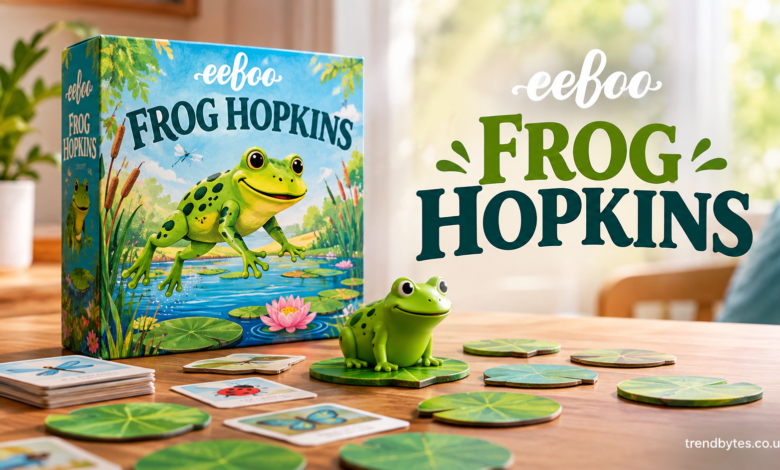
Looking for a fun board game that helps children learn while enjoying family game time? The Eeboo Frog Hopkins game is a colorful strategy game in which players move frog pieces across a lily-pad board to collect dragonflies. It combines simple rules with planning, spatial awareness, and friendly competition.
Created by eeBoo and illustrated by Linda Bleck, Frog Hopkins is designed for children and families. Players take turns placing and hopping their frogs while trying to earn as many dragonflies as possible. The game is easy to introduce to young players, but choosing the right moves adds an enjoyable strategic challenge.
Whether you are considering it for a family game night, a birthday gift, or an educational play activity, this guide explains how Frog Hopkins works, what comes in the box, how to play, and what parents should know before choosing it.
What Is the Eeboo Frog Hopkins Game?
The eeBoo Frog Hopkins game is a tabletop strategy game built around frogs, lily pads, and dragonflies. Players move their frog pieces around a gridded board, using placement and jumping moves to collect dragonfly tokens.
Unlike games that rely mainly on rolling dice or drawing random cards, Frog Hopkins focuses on spatial thinking and strategic decisions. Players must consider where their frogs are positioned, which jumps are possible, and how their moves affect the available spaces.
The game is suitable for two to four players and is designed for children ages four and up. A typical game takes around 15 minutes, making it a practical choice for short play sessions.
Its colorful artwork and straightforward theme make it appealing to younger children, while the blocking and movement mechanics give older players something to think about.
Key Features of Frog Hopkins
Here are the main details to know before buying the game.
| Feature | Details |
|---|---|
| Brand | eeBoo |
| Game type | Strategy and family board game |
| Recommended age | 4 years and up |
| Players | 2–4 |
| Typical playtime | Approximately 15 minutes |
| Game board | Die-cut, illustrated lily-pad board |
| Game pieces | 40 frog pieces |
| Scoring pieces | 45 dragonfly tokens |
| Illustrator | Linda Bleck |
| Main skills | Strategic thinking and spatial awareness |
The set includes a shaped game box, a board, frog pieces, and dragonfly counting tokens. The illustrated design gives the game a playful appearance without making the board itself difficult to understand.
What Is Included in the Frog Hopkins Game Box?
Before starting, it helps to understand the pieces and what each one does.
1. The Game Board
The board features a pond-inspired layout with spaces representing lily pads. Players use these spaces to position their frogs and plan their next moves.
Because the board is central to the game, it helps to place it on a flat table with enough room for everyone to reach their pieces comfortably.
2. Frog Game Pieces
The game includes 40 frog pieces. Players use their assigned frogs to move across the board and collect dragonflies.
Keeping each player’s pieces organized makes it easier for children to follow the action and recognize their own frogs.
3. Dragonfly Tokens
The set includes 45 dragonfly counting tokens. These represent the rewards players earn through successful frog movements.
Collecting these tokens is an important part of the game because the winner is determined by who earns the most dragonflies.
4. Instructions
The game includes instructions with adaptable rules for different learning levels. This is helpful for families introducing the game to children who are still learning how to take turns and plan moves.
Parents should review the included instructions before the first game because they provide the rules for the specific edition being played.
How to Play the Eeboo Frog Hopkins Game
The basic idea is simple: position your frogs, make useful jumps, and collect dragonflies. However, good movement choices can make a difference as the board becomes more crowded.
Step 1: Set Up the Board
Place the board in the center of the table. Give each player their frogs and make the dragonfly tokens available for scoring.
Follow the setup directions supplied with your edition. Make sure everyone can see the board and reach the playing spaces without moving other players’ pieces accidentally.
Step 2: Choose the First Player
Decide who will take the first turn. Younger children may enjoy choosing randomly, while families can simply let the youngest player begin.
Play then continues around the table, with each person taking a turn.
Step 3: Place a Frog or Hop a Frog
On a turn, a player can place a new frog on the board or make a legal hop with a frog already in play.
Placing frogs helps establish useful positions. Hopping allows players to take advantage of frogs already on the board to earn dragonflies.
Step 4: Make a Strategic Jump
Players hop their frogs over their own frogs horizontally or diagonally, following the movement rules in the game’s instructions.
The number of hops in a move determines the dragonfly token earned. For example, a move involving two hops earns a two-dragonfly token under the standard scoring description.
Think carefully before jumping. A move that earns a token now may also change the spaces available for future turns.
Step 5: Collect Dragonflies
After a successful move, take the appropriate dragonfly token according to the number of hops completed.
Keep the tokens in front of you so that everyone can see their progress. This makes scoring easier, particularly when younger children are still learning to count.
Step 6: Watch for Blocked Spaces
The board can become more challenging as frogs occupy spaces. Players need to look for useful paths while considering how their moves affect the remaining options.
Strategic blocking is part of the game. A strong move can help you collect dragonflies while limiting the opportunities available to your opponents.
Step 7: Determine the Winner
Continue taking turns according to the supplied rules. At the end of the game, count the dragonfly tokens each player has collected.
The player with the most dragonflies wins.
If players are unsure about a particular jump or when the game ends, consult the instructions included with their edition rather than guessing at a rule.
What Makes Frog Hopkins a Good Game for Kids?
Board games can offer more than entertainment. When children play games that require planning, movement, and turn-taking, they get opportunities to practice useful thinking and social skills.
Frog Hopkins includes several features that can support these experiences.
Strategic Thinking
Children need to decide whether to place another frog or make a jump. They can begin by choosing simple moves and gradually learn to consider what might happen next.
For example, a child may notice that one jump earns a dragonfly but leaves fewer useful moves for the following turn. Over time, they can begin comparing immediate rewards with future opportunities.
Spatial Awareness
The game encourages children to look at positions, directions, and the spaces between frogs.
Recognizing a possible horizontal or diagonal jump requires players to understand how objects relate to one another on the board.
Counting and Number Recognition
Dragonfly tokens provide a practical opportunity to count scores and compare quantities.
Parents can ask children to count their tokens aloud, identify who has the most, or work out how many more dragonflies one player needs to catch up.
Turn-Taking and Patience
Players must wait while others make their moves. They also learn to follow shared rules and accept that another player may make a better move.
These experiences can help children practice patience, fair play, and respectful competition.
Problem-Solving
A blocked route may encourage a child to look for another possible move. Rather than treating a difficult position as a failure, parents can invite children to examine the board and consider different options.
These are opportunities to practice problem-solving, not a guarantee that every child will develop a particular skill simply by playing.
Tips for Helping Children Enjoy Frog Hopkins
The best way to introduce a strategy game to a young child is to make the first few turns relaxed and easy to follow.

Start with a practice round
Demonstrate how to place a frog, identify a possible jump, and collect a dragonfly token. Let the child try a move without worrying about winning.

Use counting as part of play
Invite children to count the dragonflies they earn. Keep the activity relaxed and adjust the difficulty to their comfort level.

Encourage thinking aloud
Ask questions such as, “Which frog could you jump over?” or “What might happen if you move here?” This helps children explain their choices.
It is also helpful to praise good decisions, patience, and fair play instead of focusing only on who wins.
If a child becomes frustrated, pause the game and explain the rules again. Short, enjoyable sessions are often better than forcing a young player to finish when they are no longer interested.
Frog Hopkins Game Strategies for Beginners
Although the rules are accessible to young children, players can use several simple strategies to make better decisions.
Look Ahead Before Moving
Before making a jump, examine the nearby spaces. Think about whether the move will create another useful opportunity or leave the frog in a difficult position.
Children do not need to plan several turns ahead immediately. Even considering one possible next move is a useful starting point.
Keep Track of Available Frogs
Remember which frogs can make useful jumps. A player who pays attention to their existing positions may find more scoring opportunities than someone who chooses moves without examining the board.
Balance New Placements With Jumps
Players can choose between placing a frog and hopping an existing one. The better option depends on the current board position.
Sometimes placing a frog creates future opportunities. At other times, an available jump may provide an immediate scoring reward.
Pay Attention to Other Players
Observe how the board changes after each turn. Another player’s move may create a new opportunity or block a path you were considering.
The goal is not simply to move quickly. Taking a moment to inspect the board can help you choose more effectively.
Learn From Every Round
After the game, discuss which moves worked well and which ones were less useful. Keep the conversation positive, particularly when playing with young children.
This turns each round into an opportunity to learn without making the game feel like a lesson.
Common Mistakes to Avoid When Playing Frog Hopkins
New players may need a few turns to understand the movement and scoring system. The following mistakes are easy to prevent.
- Forgetting the movement rules: Check the instructions when a player is unsure whether a jump is legal.
- Rushing every turn: Take a moment to inspect the available frogs and spaces before moving.
- Miscounting dragonflies: Place earned tokens in a separate area so that scoring remains clear.
- Moving another player’s pieces: Encourage everyone to handle only their own frogs unless helping with permission.
- Ignoring the setup instructions: Follow the supplied setup so that players begin with the correct arrangement.
- Focusing only on winning: Remember that younger children may benefit more from learning the rules and enjoying the activity than from keeping a perfect score.
Clear explanations and consistent rules make the experience smoother for everyone.
Is the Eeboo Frog Hopkins Game Worth Buying?
Frog Hopkins may be a good choice for families seeking a short strategy game that younger children can learn with some guidance.
Its main strengths include the colorful design, a relatively short playing time, and a scoring system that encourages children to think about movement and count rewards. The ability to adjust instruction to different learning levels can also make it easier to introduce the game to players with different experience.
However, it may not be the ideal choice for every family. Children who prefer fast-moving action, electronic games, or imaginative role-play may enjoy a different activity more.
Consider your child’s interests and patience for turn-based games before purchasing. If possible, show them the board and explain the basic idea so they can decide whether it looks fun.
Who Will Enjoy Frog Hopkins Most?
- Families looking for a short tabletop activity.
- Children who enjoy frogs, nature themes, and colorful illustrations.
- Parents interested in games that involve planning and counting.
- Siblings who want a shared activity for two to four players.
- Grandparents and caregivers looking for an activity to play together with children.
The game is recommended for ages four and up. Because the set contains small pieces, it is not intended for children under three years old.
Design, Artwork, and Environmental Considerations
The visual style is an important part of Frog Hopkins. Illustrator Linda Bleck gives the game a playful, nature-inspired appearance that fits its pond and frog theme.
The shaped box and die-cut board also make the presentation distinctive compared with a standard rectangular board game.
eeBoo describes its products as using materials and manufacturing practices intended to reduce environmental impact, including recycled board, vegetable-based inks, and FSC-certified paper. Packaging and product specifications can vary, so check the current edition for details.
The combination of artwork and accessible gameplay makes Frog Hopkins suitable as a gift for a young child who enjoys hands-on games.
People Also Ask About the Eeboo Frog Hopkins Game
1. What age is the Eeboo Frog Hopkins game for?
Frog Hopkins is designed for children ages four and up. Younger players may benefit from an adult explaining the movement rules and helping them count dragonfly tokens.
2. How many players can play Frog Hopkins?
The game supports two to four players. This makes it suitable for one-on-one play, siblings, or a small family group.
3. How long does a Frog Hopkins game take?
A typical game takes approximately 15 minutes. The actual time may vary depending on the players’ ages, familiarity with the rules, and pace of play.
4. How do you win the Frog Hopkins game?
Players earn dragonfly tokens by making successful frog moves. The player with the most dragonflies at the end of the game wins.
5. What skills does Frog Hopkins help children practice?
The game provides opportunities to practice strategic thinking, spatial awareness, counting, problem-solving, and turn-taking. The benefits depend on how children engage with the game and the support they receive.
6. How many pieces come with Frog Hopkins?
The game includes 40 frog pieces and 45 dragonfly counting tokens, along with the board and shaped packaging.
7. Is Frog Hopkins suitable for family game night?
Yes. Its short playing time and support for two to four players make it a practical option for a family game night, especially when children enjoy turn-based activities.
8. Is Frog Hopkins a good educational game?
It can be a useful learning-through-play activity because children make movement decisions, compare positions, and count tokens. However, it is primarily a game, and it should be chosen based on the child’s enjoyment as well as its learning opportunities.
Conclusion
The Eeboo Frog Hopkins game combines colorful frog-themed artwork with a simple but thoughtful strategy experience. Players place and hop frogs across a lily-pad board, collect dragonflies, and compete to earn the highest score.
With support for two to four players, a typical playing time of around 15 minutes, and a recommended age of four and up, it can be a practical choice for family game nights and short play sessions. Its movement rules also give children opportunities to practice spatial awareness, counting, planning, and turn-taking.
Before buying, consider your child’s interests and review the included rules to make sure the game is a good fit. If your family enjoys hands-on activities that combine friendly competition with simple strategic decisions, Frog Hopkins is worth considering for your collection.