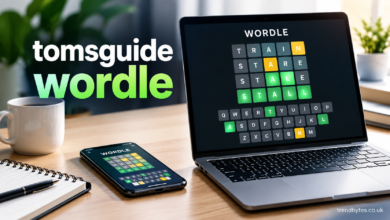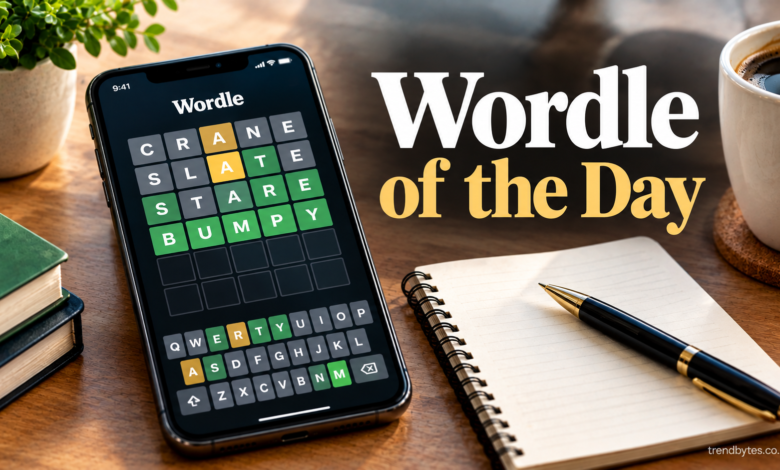
The Wordle of the day is a fun way to test your vocabulary, sharpen your thinking, and enjoy a quick daily challenge. The popular five-letter word puzzle gives players six attempts to discover a hidden word. After each guess, colored tiles provide clues that help you narrow down the possible answer.
Whether you play Wordle every morning or have just started, a little strategy can make each game easier. Choosing a strong opening word, paying attention to letter positions, and avoiding repeated mistakes can help you solve the puzzle in fewer attempts.
In this guide, you’ll learn how Wordle works, how to use hints effectively, which strategies can improve your guesses, and what common mistakes to avoid. You’ll also find answers to frequently asked questions about the daily puzzle.
What Is the Wordle of the Day?
The Wordle of the day is the daily five-letter word puzzle published by the popular word game Wordle. Every day, players around the world try to identify the same hidden five-letter word in six guesses or fewer.
The game is simple to understand but can be surprisingly challenging. You start by entering any valid five-letter word. The game then changes the colors of the letters to show how close your guess is to the answer.
You can use these clues to choose your next word and gradually uncover the solution.
Wordle is popular because each puzzle takes only a few minutes, yet it rewards vocabulary, logic, patience, and careful planning. Players can also share their results using a grid of colored squares without revealing the answer itself.
How to Play Wordle
If you’re new to Wordle, the rules are easy to learn. You don’t need special equipment or advanced vocabulary to get started.
Understand the Three Tile Colors
Each letter in your guess receives a color that provides information about the hidden word.
- Green: The letter is correct and in the right position.
- Yellow: The letter appears in the answer but belongs in a different position.
- Gray: The letter does not appear in the answer, subject to Wordle’s rules for repeated letters.
For example, imagine the answer contains the letters B, R, I, C, and K. If you guess a word that places R in the correct position, that tile turns green. If another letter is in the answer but appears in the wrong position, it turns yellow.
Use every result to improve your next guess rather than entering words at random.
Solve the Puzzle in Six Guesses
Wordle gives you six attempts to find the answer. Your first guess establishes a starting point, while later guesses should use the information you’ve gathered.
A useful approach is to choose a word containing common letters, review the colors, and then select a second word that tests additional letters or confirms possible positions.
As you get closer to the solution, focus on matching the known letters instead of trying unrelated words.
Wordle of the Day: How to Use Hints
Hints can help when you’re stuck without immediately giving away the answer. The best hints guide your thinking while leaving you enough room to solve the puzzle yourself.
If you’re looking for the Wordle of the day, try these approaches before checking a full solution.
Hint 1: Look for Common Vowels
Vowels help form many five-letter English words. The letters A, E, I, O, and U are often useful when identifying a word’s structure.
If your first guess reveals no vowels, consider using another guess that tests several common vowels. However, don’t assume every answer contains a traditional vowel. Some English words use Y as a vowel-like sound.
Hint 2: Pay Attention to Letter Positions
A green tile gives you valuable information because that letter must remain in the same position in future guesses.
Yellow letters are also useful, but they must move to a different position. Keep track of these restrictions so you don’t waste a turn repeating a letter arrangement you’ve already ruled out.
For instance, if E appears yellow in the second position, your next guess should place E somewhere else.
Hint 3: Consider Common Word Patterns
English has familiar letter combinations, including TH, CH, SH, ST, and common endings such as -ER, -ED, and -LY.
These patterns can help you narrow down possible answers. Still, use them alongside your color clues rather than assuming the solution must follow a particular pattern.
Hint 4: Eliminate Unlikely Letters
Gray tiles can reduce the number of possible answers. If a letter is confirmed absent, avoid using it again unless repeated-letter clues make the situation more complex.
The goal is to gather useful information with every guess. A word that tests several new letters may be more valuable than one that looks like a possible answer but provides little new information.
Best Starting Words for Wordle
Your opening guess can make a big difference. A strong starting word tests common letters and gives you useful information for the next attempt.
There is no single perfect opening word for every puzzle, but some choices offer a helpful mix of vowels and consonants.
| Starting word | Why it can help |
|---|---|
| CRANE | Tests common consonants and two vowels |
| SLATE | Covers frequent letters in English words |
| STARE | Checks common consonants and vowels |
| TRACE | Offers a useful mix of frequent letters |
| AUDIO | Tests four different vowels quickly |
These words are starting points, not guaranteed solutions. The best choice depends on your playing style and the information you want to collect.
Should You Start With Vowels or Consonants?
Both approaches can work. A vowel-heavy opening helps identify the word’s structure, while a balanced word can reveal useful vowels and common consonants at the same time.
For most players, a balanced opening is a practical choice. Words such as CRANE and SLATE can provide several clues without using up a guess on letters that rarely appear.
After the first attempt, let the results guide your strategy instead of sticking to a fixed sequence of words.
Wordle of the Day: Today’s Answer
If you have tried the hints and still can’t solve today’s puzzle, you can reveal the answer below.
Spoiler warning
Try to solve the puzzle before revealing the solution.Reveal today’s answer
The word BUMPY describes a surface that is uneven or full of bumps. It can also describe a difficult or uncertain experience, such as a bumpy journey or a bumpy start to a project.
If you solved the puzzle without help, congratulations. If you needed a hint or the answer, use the experience to refine your strategy for tomorrow.
Note: Daily puzzle answers depend on the date. Check the date above before using a solution from an earlier article or saved page.
Common Wordle Mistakes to Avoid
Even experienced players can lose a streak by overlooking a clue or rushing into a guess. Avoiding a few common mistakes can make your approach more consistent.
1. Reusing Letters Without a Reason
Once a letter turns gray, using it repeatedly usually wastes a valuable attempt. Instead, test letters you haven’t tried or explore possible positions for confirmed letters.
Remember that Wordle can contain repeated letters, so don’t rule out a repeated-letter answer just because your first guess used that letter once.
2. Ignoring Yellow Tiles
A yellow tile means the letter is in the answer, but not in that position. Repeating the same placement in your next guess throws away useful information.
Before submitting a word, check that each yellow letter has moved to a different position.
3. Guessing Too Quickly
A word may seem promising, but it isn’t always the best choice. Pause briefly to review the colors and list the letters that remain possible.
A few seconds of careful thought can save an entire guess.
4. Choosing an Unhelpful Word
Some guesses use letters you’ve already confirmed or ruled out. Such a guess may not reveal anything new.
Early in the game, choose words that test several useful letters. When only a few possible answers remain, focus on words that fit the known pattern.
5. Forgetting About Repeated Letters
Wordle answers sometimes contain the same letter more than once. For example, a word might begin and end with the same consonant or contain two identical vowels.
If your clues seem inconsistent with the words you’re considering, check whether a letter could be repeated.
Advanced Wordle Strategies for Better Results
Once you’ve learned the basic rules, a few advanced techniques can help you solve puzzles more efficiently.
Use Information-Rich Guesses
Sometimes, your next guess should help you learn rather than immediately attempt the answer.
Suppose you know the answer contains A and R, but several possible words fit the clues. A carefully selected guess containing other common letters may eliminate multiple possibilities at once.
This approach can be especially helpful when you have several guesses remaining.
Keep a Mental List of Possible Answers
After each attempt, identify the letters that must appear, the positions they can occupy, and the letters that are unlikely to be part of the solution.
For example, if your pattern is B _ M _ Y, you can begin considering words that fit the structure. Check each possibility against every clue before making your next guess.
Don’t settle on the first word that comes to mind. A quick review can help prevent an avoidable mistake.
Use Your Final Guesses Carefully
When you have only two attempts left, avoid making a guess without checking whether it fits all the clues.
If several answers remain possible, think about which guess would eliminate the most alternatives. However, if one answer clearly matches all the information, entering it directly may be the better move.
The key is to balance information gathering with the need to solve the puzzle.
Practice Without Relying on the Answer
Checking the solution every day can help you maintain a streak, but solving puzzles independently builds stronger habits.
Try using one or two hints before revealing the answer. Over time, you’ll become better at spotting letter patterns, remembering common combinations, and narrowing down possibilities.
Why Is Wordle So Popular?
Wordle became popular because it combines simple rules with a satisfying daily challenge. Anyone who understands five-letter words can play, but the limited number of guesses makes every decision matter.
Several features help explain its lasting appeal:
- One shared daily puzzle: Players can compare results with friends without sharing the answer.
- A short time commitment: Most games take only a few minutes.
- A mental challenge: Players use vocabulary, deduction, and pattern recognition.
- A daily routine: The new puzzle gives people a reason to return each day.
- A social element: Results can be shared through colored grids that conceal the word.
The puzzle is also easy to fit into a morning routine, a study break, or a short period of downtime.
Best Practices for Maintaining a Wordle Winning Streak
A long winning streak doesn’t require complicated techniques. Consistent habits and careful attention to clues are often more useful than memorizing large lists of words.
Here are a few practices worth following:
- Start with a familiar word. Choose an opening guess with several common letters.
- Review every color. Make sure you understand what each tile tells you.
- Avoid unnecessary repeats. Use confirmed information to guide the next attempt.
- Consider alternative patterns. Remember that answers may contain repeated letters or less common combinations.
- Take your time. There’s no advantage to submitting a guess before you’ve considered the available clues.
- Learn from difficult puzzles. Think about which clue you missed and how you could use it next time.
You can also keep a simple record of your results. Tracking your opening words, number of guesses, and common mistakes may reveal patterns in your playing style.
Most importantly, don’t let a lost streak ruin the experience. Every new puzzle is an opportunity to improve.
People Also Ask About Wordle of the Day
What is the Wordle of the day?
The Wordle of the day is the current five-letter word puzzle in which players have six attempts to find the hidden answer. The solution changes with each daily puzzle.
Where can I play Wordle?
You can play the official Wordle game through The New York Times Games website or its supported app experience. Search for the official Wordle game to find the current version.
How many guesses do you get in Wordle?
You get six guesses to solve the standard Wordle puzzle. Each attempt provides color-coded feedback to help you identify the answer.
What do the green, yellow, and gray squares mean?
Green means the letter is in the correct position. Yellow means the letter appears in the answer but is in the wrong position. Gray means the letter isn’t included in the answer, taking repeated-letter rules into account.
What is the best starting word for Wordle?
There isn’t one universally best starting word. CRANE, SLATE, STARE, and TRACE are useful options because they test a mix of common letters. Your ideal choice depends on your preferred strategy.
Can Wordle answers contain repeated letters?
Yes. A Wordle answer can use the same letter more than once. If your guesses don’t seem to fit the clues, consider whether a letter might appear in multiple positions.
How can I improve my Wordle score?
Choose an effective starting word, track the color clues carefully, avoid wasting guesses on eliminated letters, and consider multiple possible answers before submitting a guess. Practice can help you recognize common patterns more quickly.
Does Wordle have a new puzzle every day?
Yes. The standard daily Wordle puzzle provides a new challenge each day. Because the answer changes, make sure any hint or solution you read matches the correct date.
Conclusion
The Wordle of the day is more than a quick word game. It’s a daily opportunity to test your vocabulary, recognize patterns, and make better decisions with limited information.
For stronger results, begin with a useful five-letter word, study every green and yellow tile, eliminate unlikely letters, and consider repeated-letter possibilities. Most importantly, make each guess count instead of rushing toward an answer.
Whether you solve the puzzle in two attempts or use all six, the real benefit comes from learning a little more with every game. Return for the next daily challenge, apply these strategies, and keep building your Wordle skills one word at a time.