Assisted Reproductive Technology Book: A Complete Guide for Learning Modern Fertility Treatments

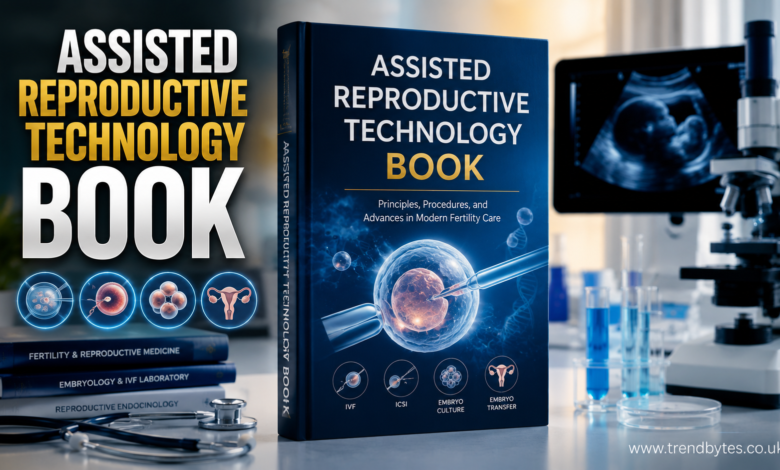
Finding reliable fertility information can feel overwhelming, especially with so many online resources offering conflicting advice. A well-written assisted reproductive technology book provides structured, evidence-based knowledge that helps readers better understand fertility, infertility, and modern reproductive treatments.
Whether you’re a patient beginning your fertility journey, a healthcare professional expanding your expertise, or a student studying reproductive medicine, the right book can simplify complex topics and provide practical guidance. This comprehensive guide explains what an assisted reproductive technology book covers, who benefits from it, key topics to expect, and how to choose the best resource for your needs.
What Is an Assisted Reproductive Technology Book?
An assisted reproductive technology book is an educational resource that explains medical procedures used to help individuals and couples achieve pregnancy when natural conception is difficult or impossible.
These books are designed for various audiences, including:
- Patients
- Medical students
- Nurses
- Fertility specialists
- Embryologists
- Researchers
- Healthcare educators
Depending on the intended audience, the content may range from beginner-friendly explanations to advanced scientific discussions.
Understanding Assisted Reproductive Technology (ART)
Before choosing a book, it’s helpful to understand what Assisted Reproductive Technology (ART) means.
ART refers to medical procedures that involve handling eggs, sperm, or embryos to improve the chances of pregnancy.
Common fertility treatments include:
- In Vitro Fertilization (IVF)
- Intracytoplasmic Sperm Injection (ICSI)
- Frozen Embryo Transfer (FET)
- Egg freezing
- Embryo freezing
- Donor eggs
- Donor sperm
- Gestational surrogacy
A quality assisted reproductive technology book explains these treatments in a clear and easy-to-understand way.
Why Read an Assisted Reproductive Technology Book?
Reliable medical books provide more than basic definitions.
They help readers:
- Understand treatment options
- Learn medical terminology
- Reduce confusion
- Prepare for fertility consultations
- Understand laboratory procedures
- Explore success factors
- Learn about emotional challenges
Reading trusted educational material can help patients feel more confident when discussing treatment plans with healthcare providers.
Who Should Read an Assisted Reproductive Technology Book?
Patients and Couples
People facing infertility often have many questions.
A comprehensive book helps explain:
- Causes of infertility
- Treatment timelines
- Medical testing
- Procedure expectations
- Possible outcomes
Better understanding often reduces anxiety during treatment.
Medical Students
Students studying reproductive medicine benefit from detailed explanations of reproductive anatomy, physiology, embryology, and fertility treatments.
Books often include diagrams, case studies, and clinical examples that reinforce classroom learning.
Fertility Specialists
Experienced clinicians use advanced textbooks to stay informed about evolving treatment methods, laboratory practices, and patient management strategies.
Nurses and Healthcare Professionals
Nurses working in fertility clinics need practical knowledge about patient education, treatment protocols, medication management, and emotional support.
Key Topics Covered in an Assisted Reproductive Technology Book
Reproductive Anatomy
Most books begin by explaining the reproductive system.
Topics include:
- Female reproductive organs
- Male reproductive anatomy
- Hormonal regulation
- Ovulation
- Fertilization
This foundation helps readers understand later treatment discussions.
Causes of Infertility
Understanding infertility is an essential part of fertility education.
Books commonly discuss:
- Ovulation disorders
- Endometriosis
- Polycystic ovary syndrome (PCOS)
- Male factor infertility
- Tubal blockage
- Age-related fertility decline
- Unexplained infertility
Each condition is typically explained using clear medical language.
Fertility Evaluation
Readers learn about diagnostic testing such as:
- Hormone testing
- Ultrasound imaging
- Semen analysis
- Genetic screening
- Ovarian reserve testing
- Hysterosalpingography (HSG)
These evaluations help healthcare providers develop personalized treatment plans.
IVF Procedures
One of the most detailed chapters usually focuses on IVF.
Common topics include:
- Ovarian stimulation
- Egg retrieval
- Fertilization
- Embryo culture
- Embryo transfer
- Pregnancy testing
Step-by-step explanations help readers understand the complete process.
Laboratory Techniques
Modern fertility treatment depends heavily on specialized laboratory procedures.
Books often explain:
- Embryo grading
- Cryopreservation
- Blastocyst development
- Micromanipulation
- Embryo culture systems
- Laboratory quality control
These chapters are especially valuable for students and embryologists.
Benefits of Reading an Assisted Reproductive Technology Book
A high-quality educational resource offers several important advantages.
Better Understanding
Medical procedures become easier to understand when explained systematically.
Readers can prepare for consultations with greater confidence.
Improved Decision-Making
Patients who understand available treatment options can participate more actively in shared medical decisions.
Reduced Anxiety
Knowledge often reduces uncertainty during fertility treatment.
Understanding each step makes the process feel more manageable.
Professional Development
Healthcare providers strengthen their clinical knowledge while improving patient communication.
How to Choose the Best Assisted Reproductive Technology Book
Not every medical book provides the same level of quality.
Consider these factors before purchasing.
Current Medical Information
Choose books that reflect modern fertility practices and updated clinical guidelines.
Medical knowledge changes regularly.
Clear Writing Style
Complex medical topics should be explained using simple language without sacrificing accuracy.
Easy-to-read books improve learning for all audiences.
Visual Learning Tools
Quality books often include:
- Medical illustrations
- Flowcharts
- Clinical diagrams
- Treatment timelines
- Laboratory images
Visual aids improve comprehension.
Evidence-Based Content
Reliable books explain both benefits and limitations of fertility treatments while presenting balanced medical information.
Practical Example
Imagine a couple beginning IVF treatment.
Without educational resources, they may feel overwhelmed by unfamiliar medical terms and procedures.
After reading an assisted reproductive technology book, they understand:
- Why hormone injections are necessary
- How eggs are collected
- What happens in the embryology laboratory
- Why embryo grading matters
- What to expect after embryo transfer
This knowledge allows them to ask informed questions during medical appointments and feel more involved in their care.
Best Practices for Learning About Fertility Treatments
Reading alone is valuable, but combining several learning methods creates better understanding.
Consider these best practices.
Read Gradually
Medical topics can be complex.
Focus on one chapter at a time before moving to advanced material.
Take Notes
Writing summaries improves information retention.
Highlight unfamiliar terms for future review.
Ask Healthcare Providers Questions
Use your reading as a foundation for meaningful conversations with fertility specialists.
Never hesitate to ask for clarification.
Stay Updated
Reproductive medicine continues evolving.
Look for newer editions that include recent advances and updated treatment recommendations.
Common Mistakes to Avoid
Many readers unintentionally misunderstand fertility information.
Avoid these common mistakes.
Assuming Every Patient Has the Same Experience
Every fertility journey is unique.
Treatment recommendations vary based on medical history, age, diagnosis, and personal goals.
Relying Only on Online Information
Online articles can be useful, but they may lack scientific accuracy or context.
Comprehensive books often provide more balanced and structured information.
Ignoring Emotional Health
Infertility affects emotional well-being as well as physical health.
Educational books often encourage emotional support throughout treatment.
Skipping Basic Chapters
Foundational knowledge makes advanced topics much easier to understand.
Don’t rush directly into complex procedures.
Expert Tips for Getting the Most Value
Medical educators often recommend these strategies:
- Choose books written for your experience level.
- Review diagrams carefully.
- Learn medical terminology gradually.
- Discuss questions with qualified healthcare professionals.
- Focus on understanding concepts rather than memorizing every detail.
- Keep notes for future reference.
- Revisit important chapters before treatment appointments.
- Continue learning as fertility medicine evolves.
Future Trends in Assisted Reproductive Technology
Reproductive medicine continues advancing rapidly.
Future developments may include:
- Improved embryo selection methods
- Personalized fertility treatments
- Enhanced genetic screening
- Better cryopreservation techniques
- Advanced laboratory automation
- Improved fertility preservation
- Greater use of precision medicine
- Expanded reproductive research
New editions of educational books will continue incorporating these innovations to help readers stay informed.
People Also Ask
What is an assisted reproductive technology book?
An assisted reproductive technology book is an educational resource that explains fertility treatments such as IVF, embryo transfer, fertility testing, reproductive biology, and modern reproductive medicine.
Who should read an assisted reproductive technology book?
Patients, couples experiencing infertility, medical students, nurses, fertility specialists, embryologists, and healthcare professionals can all benefit from these books.
Does an assisted reproductive technology book explain IVF?
Yes. Most comprehensive books provide detailed explanations of IVF, including ovarian stimulation, egg retrieval, fertilization, embryo culture, embryo transfer, and follow-up care.
Can beginners understand these books?
Many books are written specifically for beginners and explain medical concepts using clear language, illustrations, and practical examples.
Do these books replace medical advice?
No. Educational books improve understanding but should never replace professional medical evaluation, diagnosis, or treatment recommendations.
Why is fertility education important?
Understanding fertility treatments helps patients make informed decisions, communicate effectively with healthcare providers, and feel more prepared throughout the treatment process.
What topics are usually included?
Common topics include reproductive anatomy, infertility causes, fertility testing, IVF, ICSI, embryo development, cryopreservation, ethics, laboratory procedures, and patient care.
How often should readers choose updated editions?
Because reproductive medicine evolves quickly, selecting recent editions ensures access to the latest clinical practices, technologies, and treatment recommendations.
Conclusion
An assisted reproductive technology book is an invaluable educational resource for anyone seeking a deeper understanding of modern fertility care. Whether you are a patient preparing for treatment, a student studying reproductive medicine, or a healthcare professional expanding your expertise, these books provide structured, evidence-based knowledge that supports informed decision-making and lifelong learning. By choosing a well-written assisted reproductive technology book, readers gain a clearer understanding of infertility, assisted reproductive procedures, laboratory techniques, patient care, and the latest advances shaping the future of reproductive medicine.