Healthcare Digital Marketing Services: A Complete Guide

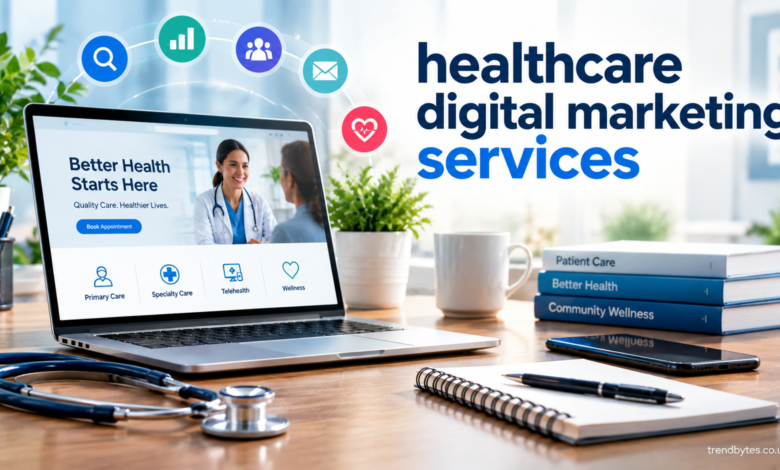
Healthcare digital marketing services help medical practices, clinics, hospitals, and healthcare organizations reach people online, build trust, and make it easier for patients to find the care they need. From search engine optimization and local search to content marketing, social media, paid advertising, and reputation management, digital marketing can support the entire patient journey.
Patients increasingly research symptoms, providers, treatments, insurance information, and healthcare facilities online before making decisions. That makes a strong digital presence an important part of modern healthcare marketing.
However, healthcare marketing requires more than generating traffic. Content should be accurate, trustworthy, easy to understand, and handled with appropriate attention to privacy and healthcare regulations.
What Are Healthcare Digital Marketing Services?
Healthcare digital marketing services are online marketing strategies designed specifically for healthcare providers and organizations.
These services can include:
- Healthcare SEO
- Local SEO
- Medical content marketing
- Website optimization
- Search advertising
- Social media marketing
- Online reputation management
- Email marketing
- Conversion optimization
- Patient-focused content
- Analytics and performance tracking
The right combination depends on the type of organization.
A family medical practice may focus heavily on local SEO and appointment generation. A dental clinic may benefit from service-specific landing pages and patient education content. A large healthcare organization may require a broader strategy involving multiple locations, specialties, and audiences.
Why Healthcare Digital Marketing Matters
Healthcare decisions often begin with research.
A person may search for a nearby specialist, investigate treatment options, compare providers, or look for answers to a health-related question. If a healthcare organization does not have a useful and trustworthy online presence, potential patients may find competing providers instead.
A strong digital strategy helps organizations appear at relevant moments while providing information that supports informed decision-making.
Healthcare Digital Marketing Services and Patient Discovery
Consider a person searching for “pediatric dentist near me.”
The searcher may look at local listings, reviews, websites, office hours, services, insurance information, and appointment options.
A healthcare provider can improve this experience with:
- Accurate business information
- A well-optimized website
- Dedicated service pages
- Helpful patient information
- Clear contact details
- Positive and authentic reviews
- Convenient appointment options
The goal is not simply to rank higher. It is to make the online experience useful from the first search through the appointment process.
Core Healthcare Digital Marketing Services
Healthcare SEO
Search engine optimization helps healthcare websites become more discoverable through organic search.
Healthcare SEO can involve:
- Keyword research
- Search intent analysis
- Technical SEO
- On-page optimization
- Internal linking
- Local SEO
- Service-page optimization
- Content development
- Competitor research
- Website performance analysis
Healthcare content deserves particular care because users may rely on it when making decisions about their health.
Content should be written clearly and reviewed for accuracy by appropriately qualified professionals when the subject requires clinical expertise.
Local SEO for Healthcare Practices
Local SEO is especially valuable for providers serving specific geographic areas.
A medical practice can optimize its online presence around relevant services and locations while maintaining consistent business information across important platforms.
Useful local SEO elements include:
- Accurate name, address, and phone information
- Location-specific website pages
- Provider information
- Office hours
- Service descriptions
- Patient reviews
- Local search optimization
- Easy-to-find appointment information
For example, an orthopedic clinic in Dallas could create useful pages around its major services while clearly explaining where patients can access those services.
Medical Content Marketing
Content marketing helps healthcare organizations answer common questions and demonstrate expertise.
Potential content formats include:
- Educational articles
- Treatment guides
- Service pages
- Provider profiles
- Frequently asked questions
- Patient resources
- Condition overviews
- Preventive care information
- Videos
- Downloadable guides
Good healthcare content should prioritize clarity and usefulness over unnecessary technical language.
Instead of overwhelming readers with complex medical terminology, explain important concepts in plain language while maintaining accuracy.
Healthcare Website Optimization
A healthcare website often serves as the first major interaction between a patient and an organization.
Important website elements include:
- Mobile-friendly design
- Fast page loading
- Simple navigation
- Clear provider information
- Easy appointment access
- Service descriptions
- Contact information
- Insurance details where appropriate
- Patient resources
- Trust-building information
A beautiful website is not enough if visitors cannot quickly find what they need.
How to Build a Healthcare Digital Marketing Strategy
A successful strategy begins with research and clear objectives.
1. Define the Organization’s Goals
Start by identifying what the organization wants to achieve.
Possible goals include:
- Increasing appointment requests
- Growing awareness of a specialty
- Reaching patients in a new location
- Increasing visibility for specific services
- Improving local search performance
- Educating patients
- Strengthening online reputation
Clear goals make it easier to select appropriate marketing channels.
2. Understand the Target Patient
Different healthcare audiences have different needs.
A pediatric practice speaks primarily to parents and guardians. A senior-care organization may communicate with both older adults and their families. A cosmetic practice may have another set of expectations.
Research the audience’s questions, concerns, search behavior, location, and decision-making process.
3. Perform Healthcare Keyword Research
Keyword research should focus on search intent rather than simply chasing high-volume terms.
For example, these searches have different purposes:
- “What is physical therapy?”
- “Physical therapy exercises”
- “Physical therapist near me”
- “Sports physical therapy clinic”
- “Book physical therapy appointment”
Each query may require a different type of content.
4. Create Helpful Topic Clusters
Healthcare websites can benefit from organized topic coverage.
For example, a dermatology practice might create a central page about acne treatment supported by related educational pages covering adult acne, hormonal acne, acne scars, treatment options, prevention, and frequently asked questions.
This creates a logical information structure and helps visitors navigate related topics.
5. Optimize for Conversions
Once visitors arrive, the website should make the next step obvious.
Depending on the organization, calls to action could include:
- Schedule an appointment
- Request an appointment
- Contact the office
- Call the clinic
- Find a location
- Meet the care team
Avoid making visitors search through multiple pages to find basic contact information.
Practical Example: Growing a Local Medical Practice
Imagine a primary care practice wants to attract more patients in its local area.
A comprehensive campaign could begin with technical website improvements and local SEO.
Next, the practice could build detailed pages for primary care services and locations. Helpful educational content could answer common patient questions.
The organization could also maintain accurate provider profiles, collect genuine patient feedback according to applicable rules, and use paid search campaigns for high-intent services.
Performance could then be monitored through website engagement, appointment requests, search visibility, and other meaningful business metrics.
The important point is that these activities work together rather than operating as isolated campaigns.
Expert Tips for Healthcare Marketing
Prioritize Trust
Healthcare is a trust-based industry.
Clearly identify healthcare professionals, provide accurate information, explain services honestly, and keep important website information current.
Write for Real People
Healthcare content should answer the questions people actually ask.
Use straightforward headings, short paragraphs, definitions, examples, and practical explanations.
Keep Information Current
Healthcare information can change as medical guidance, services, providers, and organizational policies evolve.
Review important pages regularly and update information when necessary.
Make Accessibility a Priority
A healthcare website should be usable by as many people as possible.
Clear typography, logical navigation, readable content, appropriate contrast, descriptive links, and accessible design can improve the experience for a broader audience.
Common Healthcare Digital Marketing Mistakes
Publishing Unreviewed Medical Content
Healthcare information requires a higher level of care than ordinary commercial content. Incorrect or misleading claims can damage trust and create serious problems.
Have appropriate subject-matter professionals review medical information when needed.
Using Excessive Medical Jargon
Patients may not understand complex clinical terminology.
Explain specialized terms when they are necessary and use plain language whenever possible.
Ignoring Local Search
A local healthcare practice can lose valuable opportunities if its location, hours, services, and contact information are difficult to find.
Focusing Only on Traffic
A large amount of traffic does not automatically mean more patients.
Track meaningful outcomes such as qualified inquiries, appointment requests, conversions, and relevant search visibility.
Making Aggressive Health Claims
Avoid unsupported guarantees or claims about treatment outcomes.
Healthcare marketing should communicate services and information responsibly and accurately.
Best Practices for Healthcare Digital Marketing
A sustainable strategy combines patient needs, business objectives, accurate information, and strong digital experiences.
Start with a technically sound website. Build useful service and educational content. Improve local visibility where relevant. Maintain accurate provider and location information. Then measure performance and continuously improve.
Privacy and compliance should also be considered throughout the marketing process. Healthcare organizations need to understand the rules that apply to their specific operations, audience, advertising activities, and use of patient information.
Digital marketing should never come at the expense of patient privacy or trust.
Measuring Healthcare Marketing Performance
The right metrics depend on the organization’s goals.
Useful measurements may include:
- Organic search visibility
- Relevant website traffic
- Appointment requests
- Qualified leads
- Conversion rates
- Phone inquiries
- Local search activity
- Engagement with educational content
- Advertising performance
- Patient acquisition costs
For example, a clinic might discover that one service page generates fewer visitors than another but produces substantially more appointment requests.
That insight can be more valuable than simply knowing which page receives the most traffic.
People Also Ask
What are healthcare digital marketing services?
Healthcare digital marketing services are online marketing strategies designed for healthcare organizations. They can include SEO, local search, content marketing, website optimization, paid advertising, social media, reputation management, and analytics.
Why is digital marketing important for healthcare?
Digital marketing helps healthcare organizations become easier to discover online, provide useful information, communicate their services, and create convenient paths for potential patients to contact them.
What is healthcare SEO?
Healthcare SEO is the process of improving a healthcare website’s organic visibility in search engines. It can involve technical optimization, keyword research, content, local SEO, internal linking, and service-page optimization.
How can a medical practice get more patients online?
A practice can improve its online presence through local SEO, useful service pages, accurate provider information, patient-focused content, reputation management, paid advertising, and a website with clear appointment options.
How long does healthcare SEO take?
SEO timelines vary based on competition, website quality, location, content depth, authority, and the specific goals of the organization. Organic visibility generally requires consistent optimization rather than a one-time change.
What content should healthcare websites publish?
Healthcare websites can publish service information, provider profiles, educational articles, FAQs, treatment explanations, patient resources, and other accurate information that addresses the needs of their audiences.
Is local SEO important for healthcare providers?
Local SEO can be particularly important for healthcare providers whose services depend on geographic availability. Accurate location information, service details, reviews, and local website optimization can help potential patients discover nearby providers.
How should healthcare marketing performance be measured?
Healthcare marketing can be measured using relevant indicators such as organic visibility, qualified website traffic, appointment requests, conversion rates, inquiries, advertising performance, and patient acquisition costs.
Conclusion
Healthcare digital marketing services can help medical practices, clinics, hospitals, and healthcare organizations build stronger online visibility while creating a better experience for people searching for care.
The strongest approach combines healthcare SEO, local search, useful content, website optimization, reputation management, and carefully measured campaigns. However, healthcare marketing should always place accuracy, transparency, privacy, and patient trust at the center of the strategy.
Rather than chasing traffic alone, organizations should focus on connecting the right people with useful information and making legitimate next steps easy to take. With a clear strategy, accurate content, strong local visibility, and ongoing measurement, healthcare digital marketing services can become an important part of sustainable digital growth.