
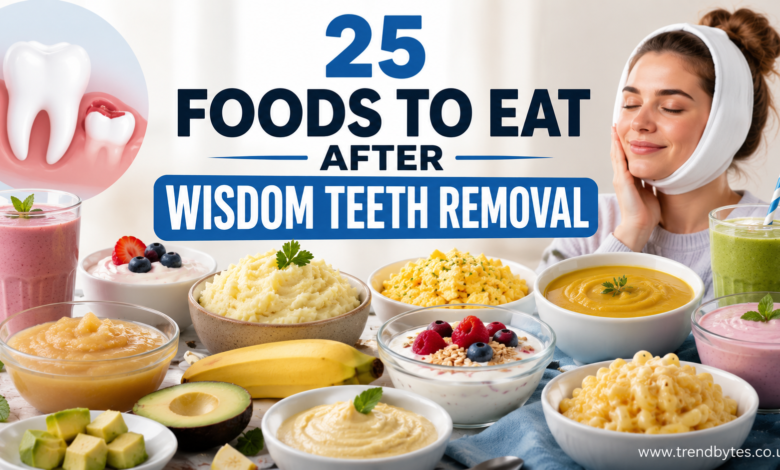
Recovering after wisdom teeth extraction can be uncomfortable, but choosing the right foods makes a significant difference. These 25 foods to eat after wisdom teeth removal provide essential nutrients while being gentle on sensitive gums and healing tissues. During the first several days after surgery, soft, easy-to-swallow meals help reduce discomfort, protect blood clots, and support faster healing.
This guide explains exactly what to eat, when to introduce different foods, and which foods to avoid so you can recover as comfortably as possible.
Why Your Diet Matters After Wisdom Teeth Removal
After oral surgery, your mouth needs time to heal. Hard, crunchy, spicy, or chewy foods can irritate the extraction sites and slow recovery.
A proper recovery diet helps:
- Protect the surgical area
- Reduce irritation
- Support tissue repair
- Prevent unnecessary pain
- Maintain energy levels
- Supply vitamins and minerals needed for healing
Choosing nutrient-rich soft foods is one of the easiest ways to promote a smooth recovery.
25 Foods to Eat After Wisdom Teeth Removal
1. Applesauce
Applesauce is soft, naturally sweet, and easy to swallow without chewing. It also provides vitamin C and antioxidants.
2. Mashed Potatoes
Creamy mashed potatoes are filling and gentle on sore gums. Add a little butter or gravy for extra flavor if approved by your dentist.
3. Greek Yogurt
Greek yogurt is rich in protein, calcium, and probiotics that support overall health during recovery.
4. Smoothies
Fruit smoothies provide vitamins and hydration. Avoid using a straw because suction may interfere with healing.
5. Scrambled Eggs
Soft scrambled eggs are one of the best sources of high-quality protein and are easy to chew.
6. Oatmeal
Once your mouth feels slightly better, soft oatmeal becomes a nutritious breakfast option.
7. Cottage Cheese
Cottage cheese offers protein and calcium while remaining soft enough for tender gums.
8. Avocado
Mashed avocado contains healthy fats, fiber, potassium, and vitamins that support healing.
9. Banana
A ripe banana can be mashed with a fork, making it easy to eat without much chewing.
10. Broth
Warm chicken, beef, or vegetable broth helps maintain hydration and provides comfort during the first day or two.
11. Cream Soup
Smooth soups without chunky vegetables or meat are excellent recovery meals.
12. Pumpkin Puree
Pumpkin is packed with vitamin A, antioxidants, and fiber while remaining naturally soft.
13. Mashed Sweet Potatoes
Sweet potatoes provide vitamins A and C along with complex carbohydrates for lasting energy.
14. Pudding
Pudding is cool, smooth, and easy to enjoy when chewing feels uncomfortable.
15. Gelatin
Gelatin desserts are refreshing and require no chewing, making them ideal during the first few days.
16. Ice Cream
Plain ice cream can soothe sore tissues. Choose varieties without nuts, candy, or crunchy mix-ins.
17. Frozen Yogurt
Frozen yogurt provides protein while offering a cooling sensation that many people find comforting.
18. Soft Pasta
Small, well-cooked pasta becomes suitable after the first few recovery days when chewing improves.
19. Macaroni and Cheese
Soft macaroni with creamy cheese sauce is filling and easy to chew once healing progresses.
20. Rice Porridge
Soft rice porridge is gentle on the mouth and provides carbohydrates for energy.
21. Hummus
Smooth hummus offers plant-based protein and healthy fats without requiring much chewing.
22. Pureed Vegetables
Pureed carrots, peas, squash, or cauliflower supply important vitamins while remaining easy to eat.
23. Soft Fish
Tender fish like salmon flakes easily and provides omega-3 fatty acids that support overall health.
24. Tofu
Soft tofu is rich in protein and works well in soups or lightly seasoned dishes.
25. Protein Shakes
Protein shakes help maintain adequate nutrition if eating solid foods is difficult during recovery.
Best Foods During the First 24 Hours
The first day requires extra care.
Ideal foods include:
- Applesauce
- Yogurt
- Broth
- Smooth pudding
- Gelatin
- Protein shakes
- Ice cream
- Mashed avocado
Keep foods cool or lukewarm rather than hot.
Foods to Eat During Days Two Through Five
As swelling decreases, you can slowly introduce slightly thicker foods.
Good choices include:
- Mashed potatoes
- Scrambled eggs
- Oatmeal
- Cottage cheese
- Pumpkin puree
- Mashed bananas
- Cream soups
- Sweet potatoes
Continue chewing away from the extraction sites whenever possible.
Foods to Add After the First Week
Once your dentist confirms healing is progressing well, gradually introduce foods that require light chewing.
Examples include:
- Soft pasta
- Rice
- Tender fish
- Soft cooked vegetables
- Macaroni and cheese
- Soft chicken
- Tofu
Always increase food texture gradually.
Nutrients That Promote Healing
Protein
Protein supports tissue repair after surgery.
Excellent sources include:
- Eggs
- Greek yogurt
- Cottage cheese
- Tofu
- Fish
- Protein shakes
Vitamin C
Vitamin C supports collagen production and healing.
Soft sources include:
- Applesauce
- Smooth fruit puree
- Mashed bananas
- Blended fruit smoothies
Healthy Fats
Healthy fats reduce inflammation and provide energy.
Good choices include:
- Avocado
- Salmon
- Yogurt
Hydration
Drinking enough water supports healing and helps prevent dehydration.
Sip water slowly throughout the day.
Foods to Avoid After Wisdom Teeth Removal
Certain foods may interfere with recovery.
Avoid:
- Chips
- Popcorn
- Nuts
- Seeds
- Hard candy
- Toast
- Crackers
- Crunchy vegetables
- Sticky candy
- Spicy foods
- Acidic foods
- Very hot foods
These foods may irritate the surgical area or become trapped in the extraction sites.
Common Mistakes to Avoid
Many people unintentionally slow healing.
Avoid these mistakes:
- Drinking through a straw
- Eating crunchy foods too early
- Smoking or vaping
- Skipping meals
- Drinking alcohol during recovery
- Eating extremely hot foods
- Ignoring your dentist’s instructions
Following proper aftercare significantly reduces complications.
Best Practices for Faster Recovery
For the best healing experience:
- Eat soft foods.
- Stay hydrated.
- Rest during the first few days.
- Follow your medication schedule.
- Brush carefully around the surgical area.
- Rinse only as instructed by your dentist.
- Introduce harder foods gradually.
Small daily improvements are completely normal.
Expert Tips for Eating Comfortably
Eat Small Portions
Large meals may feel uncomfortable.
Smaller meals throughout the day are often easier.
Choose Cool Foods Initially
Cool foods may help reduce soreness and swelling during the first day.
Prepare Meals in Advance
Before surgery, stock your kitchen with recovery-friendly foods so you won’t need to cook while recovering.
Listen to Your Body
If a food causes discomfort, wait another day or two before trying it again.
Sample One-Day Recovery Meal Plan
Breakfast
- Greek yogurt
- Applesauce
Morning Snack
- Protein shake
Lunch
- Creamy tomato soup
- Mashed potatoes
Afternoon Snack
- Mashed banana
Dinner
- Scrambled eggs
- Mashed sweet potatoes
Evening Snack
- Pudding
This menu provides protein, vitamins, and calories while minimizing chewing.
Real-World Example
Imagine someone returning home after wisdom teeth removal. Instead of trying to eat pizza or chips, they follow a recovery-friendly meal plan with yogurt, mashed potatoes, broth, scrambled eggs, and smoothies. By avoiding crunchy foods and staying hydrated, they experience less irritation and are able to gradually return to their normal diet as healing progresses.
People Also Ask (FAQs)
What are the best foods to eat after wisdom teeth removal?
Soft foods such as yogurt, mashed potatoes, scrambled eggs, smoothies, applesauce, soup, and mashed bananas are excellent choices during recovery.
When can I eat solid food after wisdom teeth removal?
Most people begin adding soft solid foods after several days, but timing depends on individual healing and your dentist’s instructions.
Can I eat ice cream after wisdom teeth removal?
Yes. Plain ice cream without nuts, candy, or crunchy toppings is generally a comfortable option during the early recovery period.
Why should I avoid using a straw?
The suction created by a straw may dislodge the protective blood clot at the extraction site, which can delay healing and increase discomfort.
Is oatmeal safe after wisdom teeth removal?
Yes. Soft oatmeal is usually appropriate once chewing becomes more comfortable, often after the first day or two.
Can I eat pasta after wisdom teeth removal?
Yes. Soft, well-cooked pasta can usually be introduced after the initial recovery period when your mouth feels less sore.
What foods should I avoid after wisdom teeth surgery?
Avoid crunchy, sticky, spicy, acidic, and hard foods until your dentist confirms that healing has progressed enough.
How long should I eat soft foods?
Many people follow a soft-food diet for several days to a week, although recovery time varies depending on the complexity of the extraction and individual healing.
Conclusion
Following this list of 25 foods to eat after wisdom teeth removal can make your recovery more comfortable while supporting proper healing. Soft, nutrient-rich foods such as yogurt, mashed potatoes, scrambled eggs, smoothies, soup, and mashed fruits provide the protein, vitamins, and energy your body needs without putting unnecessary stress on the extraction sites.
As your mouth heals, gradually introduce more textured foods while continuing to follow your dental professional’s instructions. By choosing the right 25 foods to eat after wisdom teeth removal, staying hydrated, and avoiding foods that may irritate the surgical area, you’ll give yourself the best chance for a smooth, healthy, and successful recovery.




hfsmhijsxhkjhgvorxrdujvyxvtode
hkgikyjnjyhrqwxlxijrdmnkkthple