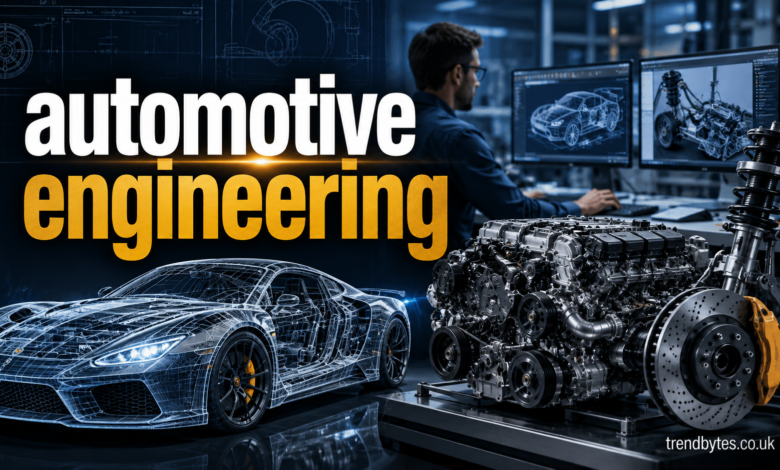
Automotive engineering combines mechanical engineering, electrical systems, software, materials science, and vehicle design to create safer, more efficient, reliable, and advanced vehicles. From gasoline-powered cars and hybrid vehicles to electric and autonomous systems, automotive engineers play a major role in how modern transportation is designed and developed.
If you are considering this career, understanding what automotive engineers do, which skills they need, what education is required, and where the industry is heading can help you make a better decision.
What Is Automotive Engineering?
Automotive engineering is the branch of engineering focused on designing, developing, testing, manufacturing, and improving vehicles and their systems.
Automotive engineers can work on passenger cars, trucks, buses, racing vehicles, electric vehicles, hybrid systems, and specialized transportation equipment.
The field covers many technical areas, including:
- Vehicle design
- Engine and powertrain systems
- Electric motors
- Battery technology
- Vehicle electronics
- Braking systems
- Suspension and steering
- Aerodynamics
- Safety systems
- Manufacturing
- Vehicle software
- Autonomous driving technology
The goal is not simply to make a vehicle move. Engineers must balance performance, safety, efficiency, reliability, cost, environmental impact, and customer expectations.
What Does an Automotive Engineer Do?
The daily responsibilities of an automotive engineer depend heavily on their specialty.
A design engineer may develop components using computer-aided design software. A powertrain engineer may work on engines, transmissions, electric motors, or hybrid systems.
A testing engineer, on the other hand, may evaluate vehicle performance under different road, weather, and operating conditions.
Typical responsibilities can include:
- Creating engineering designs
- Developing vehicle components
- Running computer simulations
- Testing prototypes
- Analyzing performance data
- Improving fuel or energy efficiency
- Solving mechanical problems
- Evaluating safety performance
- Working with manufacturing teams
- Reviewing technical specifications
- Supporting quality control
- Developing new vehicle technologies
For example, an engineer working on an electric vehicle may help improve battery cooling, motor efficiency, charging performance, or thermal management.
Major Areas of Automotive Engineering
The automotive industry is broad, so engineers often specialize in a particular technical area.
Mechanical Automotive Engineering
Mechanical engineering remains an important part of vehicle development.
Mechanical automotive engineers may work on engines, transmissions, suspension systems, steering components, braking systems, thermal systems, and other mechanical parts.
They need a strong understanding of mechanics, thermodynamics, fluid dynamics, materials, and machine design.
Electrical and Electronics Engineering
Modern vehicles contain extensive electrical and electronic systems.
Automotive engineers may work with sensors, electronic control units, wiring systems, power electronics, vehicle communication networks, lighting, infotainment, and driver-assistance technology.
As vehicles become more connected and electrified, electrical engineering skills are becoming increasingly valuable.
Electric Vehicle Engineering
Electric vehicles have changed the technical requirements of the automotive industry.
EV engineers work with:
- Battery packs
- Electric motors
- Inverters
- Charging systems
- Battery management systems
- Thermal management
- Power electronics
- Energy efficiency
A practical example is battery temperature control. Engineers must help keep batteries within an appropriate operating range while maintaining performance, safety, and long-term durability.
Automotive Software Engineering
Software now plays a major role in vehicle operation.
Engineers and software specialists can work on vehicle control systems, infotainment, connectivity, cybersecurity, advanced driver-assistance systems, and automated driving functions.
This means automotive engineering increasingly overlaps with computer engineering and software development.
Safety Engineering
Vehicle safety is another critical area.
Safety engineers evaluate crash performance, restraint systems, structural design, driver-assistance features, and other technologies designed to reduce injury risks.
Their work requires careful testing, data analysis, regulatory knowledge, and attention to detail.
Education Requirements for Automotive Engineering
A bachelor’s degree in engineering is a common starting point for an automotive engineering career.
Students may study automotive engineering directly or choose related disciplines such as mechanical, electrical, mechatronics, or computer engineering.
Typical coursework can include:
- Calculus
- Physics
- Engineering mathematics
- Mechanics
- Thermodynamics
- Fluid mechanics
- Materials science
- Electrical circuits
- Control systems
- Computer-aided design
- Manufacturing processes
- Programming
- Engineering design
A graduate degree can be useful for advanced research, specialized technical roles, or academic careers.
However, education alone is not enough. Practical experience can make a major difference when entering the industry.
Skills You Need for Automotive Engineering
Successful automotive engineers combine technical knowledge with problem-solving and communication skills.
Technical Skills
Important technical skills may include:
- CAD modeling
- Engineering simulation
- Data analysis
- Programming
- Electronics
- Mechanical design
- Control systems
- Testing methods
- Manufacturing knowledge
- Technical documentation
The exact skills required depend on the position.
For example, an engineer working on autonomous vehicle systems may need stronger programming and sensor knowledge than someone specializing in suspension design.
Soft Skills
Automotive engineering is also a team-based profession.
Engineers frequently work with designers, technicians, software developers, manufacturing specialists, project managers, suppliers, and quality teams.
Useful soft skills include:
- Communication
- Critical thinking
- Teamwork
- Time management
- Creativity
- Attention to detail
- Problem-solving
- Project management
Being able to explain a technical issue clearly can be just as important as finding the technical solution.
Automotive Engineering Career Paths
There are many career directions within the industry.
Common positions include:
- Automotive design engineer
- Mechanical engineer
- Manufacturing engineer
- Vehicle dynamics engineer
- Powertrain engineer
- EV engineer
- Battery engineer
- Controls engineer
- Testing engineer
- Safety engineer
- Automotive software engineer
- Quality engineer
- Research and development engineer
Engineers can also move into technical management, product development, consulting, or specialized research.
Automotive Engineering and Electric Vehicles
Electrification is one of the biggest changes affecting automotive engineering.
Traditional internal combustion vehicles rely on engines, fuel systems, transmissions, exhaust systems, and related mechanical components.
Electric vehicles shift much of the engineering focus toward batteries, motors, power electronics, software, charging infrastructure, and thermal management.
This does not mean mechanical engineering is disappearing. Instead, modern vehicle development requires engineers from multiple disciplines to work together.
A successful EV may require mechanical engineers to design structural components, electrical engineers to develop power systems, software engineers to control vehicle functions, and materials specialists to improve efficiency and durability.
The Role of Technology in Automotive Engineering
Technology has transformed the vehicle development process.
Engineers can use digital modeling and simulation to evaluate designs before physical prototypes are built.
This can help teams identify problems earlier and reduce development time.
Advanced sensors and testing equipment also allow engineers to collect large amounts of vehicle data. That information can then be analyzed to improve performance, reliability, safety, and efficiency.
Connected vehicles are creating another area of opportunity. Modern cars can communicate with external systems, receive software updates, and monitor vehicle conditions.
Automotive Engineering Best Practices
Good engineering requires more than advanced technology.
One important best practice is to define the design requirements before developing a solution. Engineers need to understand performance targets, safety requirements, operating conditions, manufacturing limitations, and cost constraints.
Testing is equally important.
A component that performs well in a computer simulation still needs appropriate physical validation. Engineers should test products under realistic conditions and investigate unexpected results rather than ignoring them.
Documentation is another key practice. Clear technical records allow teams to understand why design decisions were made and make future troubleshooting easier.
Common Mistakes to Avoid
People entering automotive engineering sometimes focus too narrowly on one skill.
For example, learning only CAD software may not provide enough knowledge to solve real engineering problems. A strong engineer understands the principles behind the design rather than simply knowing which buttons to click.
Another common mistake is ignoring practical experience.
Internships, university projects, technical competitions, laboratory work, and hands-on vehicle projects can help students connect classroom concepts with real-world engineering.
It is also a mistake to stop learning after graduation. Automotive technology changes quickly, so engineers need to continue developing their technical knowledge.
How to Start a Career in Automotive Engineering
If you are a student interested in this field, start by building a strong foundation in mathematics and physics.
Next, develop practical engineering skills through projects.
You could design a mechanical component, build a small electric vehicle, create a suspension model, analyze vehicle performance data, or develop a simple control system.
Learning CAD and basic programming can also strengthen your portfolio.
Internships are particularly valuable because they provide exposure to professional engineering processes and teamwork.
When applying for entry-level positions, show employers what you have built, tested, analyzed, or improved rather than listing skills without evidence.
Expert Tips for Future Automotive Engineers
Focus on fundamentals first. Advanced software and tools are useful, but strong engineering principles allow you to adapt when technology changes.
Develop cross-disciplinary knowledge. Modern vehicles combine mechanical, electrical, software, and materials technologies.
Learn how to analyze data. Vehicle development generates large amounts of test and performance information, and engineers need to turn that information into useful decisions.
Build a portfolio. A few well-documented engineering projects can demonstrate practical ability more effectively than a long list of software names.
Finally, stay curious. Read about new vehicle technologies, study engineering problems, and learn from experienced professionals.
People Also Ask
What is automotive engineering?
Automotive engineering is the engineering discipline focused on designing, developing, testing, manufacturing, and improving vehicles and their systems.
Is automotive engineering a good career?
It can be a strong career for people who enjoy engineering, vehicles, technology, mathematics, and problem-solving. The industry offers opportunities across vehicle design, EVs, software, manufacturing, safety, and research.
What degree is best for automotive engineering?
A bachelor’s degree in automotive, mechanical, electrical, mechatronics, or a closely related engineering field can provide a strong foundation. The best choice depends on the area of automotive technology you want to enter.
What skills do automotive engineers need?
Important skills include mechanical design, CAD, mathematics, physics, data analysis, electronics, programming, testing, problem-solving, communication, and teamwork.
Is automotive engineering only about car engines?
No. Modern automotive engineering covers much more than engines. Engineers work on electric motors, batteries, software, safety systems, electronics, suspension, aerodynamics, manufacturing, autonomous technology, and vehicle control systems.
Can automotive engineers work with electric vehicles?
Yes. Automotive engineers are involved in many areas of electric vehicle development, including battery systems, electric motors, thermal management, vehicle structures, electronics, controls, and testing.
What is the future of automotive engineering?
The field is expected to continue evolving through vehicle electrification, connected vehicles, advanced driver-assistance systems, software-defined vehicles, automation, improved materials, and more efficient manufacturing.
Do automotive engineers need programming skills?
Programming is becoming increasingly useful, particularly in areas involving vehicle controls, simulation, data analysis, embedded systems, autonomous driving, and connected vehicle technologies. However, the level of programming required depends on the specific engineering role.
Final Thoughts on Automotive Engineering
Automotive engineering is evolving from a field centered largely on mechanical systems into a multidisciplinary profession that combines mechanical design, electronics, software, data, materials, energy systems, and advanced vehicle technology.
For aspiring engineers, this creates more career paths rather than fewer. Whether your interest is electric vehicles, vehicle design, safety, manufacturing, autonomous systems, or traditional mechanical engineering, building strong fundamentals and gaining practical experience can give you a valuable advantage.
The most successful automotive engineers will be those who understand both the core principles of engineering and the technologies shaping the next generation of transportation. By continuing to learn, developing practical projects, and building skills across disciplines, you can prepare for a rewarding career in the rapidly changing automotive industry.