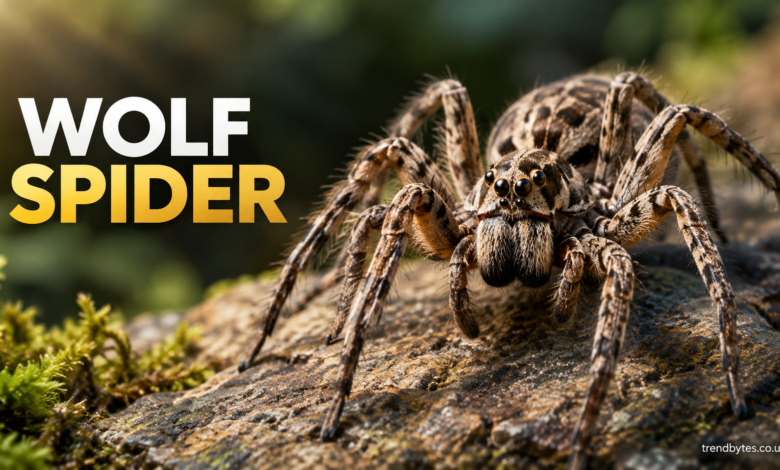
A wolf spider is a fast-moving, ground-dwelling spider known for hunting prey instead of catching it in a web. If you spot a large, hairy spider running across your floor, hiding beneath a rock, or moving through your garden, you may be looking at a wolf spider.
These spiders are common in many parts of the world and often enter homes while searching for insects or shelter. Although their size and speed can make them look frightening, wolf spiders are generally not dangerous to people.
In this guide, you’ll learn how to identify a wolf spider, where it lives, what it eats, whether it bites, and how to manage an unwanted spider indoors. We’ll also cover baby wolf spiders, their hunting habits, and common mistakes to avoid.
What Is a Wolf Spider?
A wolf spider is a member of the family Lycosidae. These spiders are active hunters that search for prey on the ground rather than relying on a large capture web.
Unlike orb-weaver spiders, which often build round webs to catch insects, wolf spiders usually chase or ambush their prey. Some species may use silk to create shelters, line burrows, or protect their eggs.
Wolf spiders come in many sizes and colors. They are often brown, gray, tan, or black, with patterns that help them blend into soil, leaves, grass, and other natural surroundings.
Wolf Spider Quick Facts
| Feature | Description |
|---|---|
| Scientific family | Lycosidae |
| Common name | Wolf spider |
| Main habitat | Gardens, grasslands, forests, and homes |
| Diet | Insects and other small invertebrates |
| Hunting style | Active hunting and ambush |
| Web use | Usually not for catching prey |
| Activity | Many species are active at night |
| Reproduction | Females carry egg sacs and spiderlings |
| Danger to humans | Generally low |
| Typical defense | Running away or biting when threatened |
Wolf spiders are not a single species. The family includes many different species with different body sizes, colors, and habits.
How to Identify a Wolf Spider
Correct identification is important because several other spiders look similar.
A wolf spider usually has a sturdy, hairy body, long legs, and a low, ground-level hunting style. Its colors often blend into its surroundings.
Physical Features of a Wolf Spider
Look for these identifying features:
- A relatively large, robust body.
- Hairy legs and body.
- Brown, gray, tan, or dark coloring.
- Stripes or other patterns on the back.
- Two noticeably large eyes near the top of the face.
- Several smaller eyes arranged below and around them.
- A fast, ground-running movement.
Wolf spiders have eight eyes. Their eye arrangement is one of the useful features experts examine when identifying them.
However, size and color alone are not enough to confirm a species.
Wolf Spider vs. Brown Recluse
People sometimes confuse wolf spiders with brown recluse spiders.
A brown recluse is generally smaller and has a different body shape and eye arrangement. It is also associated with a different medical concern because its bite can sometimes cause serious skin damage.
Wolf spiders are usually more robust and hairy, while brown recluses are often less hairy and more uniformly brown.
If you find an unfamiliar spider indoors, avoid handling it. A clear photograph can help with identification.
Wolf Spider vs. Black Widow
Black widow spiders are known for their dark, often shiny bodies and distinctive markings.
Wolf spiders usually have a more solid, hairy appearance and spend much of their time on the ground.
Black widows often build irregular webs, while wolf spiders are active hunters.
These differences can help, but not every spider follows a simple appearance rule. Local species and individual variation matter.
Where Do Wolf Spiders Live?
Wolf spiders live in a wide range of environments.
They can be found in gardens, grasslands, forests, agricultural areas, rocky spaces, and urban surroundings.
Some species prefer damp soil, while others live in dry habitats.
Common Wolf Spider Habitats
You may find wolf spiders:
- Under rocks and logs.
- In leaf litter.
- Around garden plants.
- Near outdoor lights where insects gather.
- In cracks around buildings.
- Beneath outdoor furniture.
- In garages, sheds, and basements.
- Around doorways and windows.
Wolf spiders often enter homes accidentally while searching for food or shelter.
They do not usually create large webs across ceilings or corners. Instead, they may hide under furniture, along walls, or in dark areas.
Why Do Wolf Spiders Enter Houses?
A wolf spider may come indoors for several reasons.
Food: Homes can attract insects such as flies, crickets, and other small bugs.
Shelter: Buildings provide protection from weather and predators.
Temperature: During hot or cold conditions, spiders may move toward more suitable environments.
Accidental entry: A spider can enter through gaps beneath doors, cracks, or open windows.
Finding one wolf spider does not automatically mean your home has a serious infestation.
What Do Wolf Spiders Eat?
Wolf spiders are predators that eat other small animals.
Their diet mainly consists of insects and other small invertebrates.
Common Prey
Wolf spiders may eat:
- Crickets.
- Grasshoppers.
- Flies.
- Moths.
- Small beetles.
- Ants.
- Other spiders.
- Small insects found on the ground.
Some larger wolf spiders can capture relatively large prey.
They use their speed, vision, and legs to chase or ambush insects. Once they catch prey, they use their fangs to inject venom that helps subdue it.
Are Wolf Spiders Helpful?
Yes, wolf spiders can be beneficial in gardens and outdoor areas.
By eating insects, they contribute to natural pest control.
They may help reduce some populations of insects that people consider unwanted, although their impact depends on the species and environment.
Rather than automatically killing every spider outdoors, consider whether it is causing a problem.
Wolf Spider Behavior
Wolf spiders are known for their active hunting habits.
Instead of waiting in a web, they often move across the ground searching for prey.
Do Wolf Spiders Hunt at Night?
Many wolf spider species are especially active at night.
Their eyes can reflect light, which makes them easier to spot with a flashlight after dark.
This is one reason people sometimes notice wolf spiders in gardens, yards, or around buildings during evening hours.
However, some species are active during the day as well.
Do Wolf Spiders Jump?
Wolf spiders can move quickly and may suddenly change direction when disturbed.
They are not known for the distinctive jumping behavior of jumping spiders, but their quick movements can make them appear to jump.
If a wolf spider suddenly rushes away, it is usually trying to escape rather than attack.
Do Wolf Spiders Make Webs?
Wolf spiders generally do not build large webs to catch prey.
Some species create silk-lined burrows or shelters. Others use silk for egg sacs or temporary retreats.
Their hunting lifestyle is the main difference between them and many web-building spiders.
Wolf Spider Bite: Is It Dangerous?
A wolf spider can bite, but it generally does not seek out humans.
Most bites happen when a spider is trapped, handled, pressed against the skin, or otherwise threatened.
What Does a Wolf Spider Bite Feel Like?
A bite may cause:
- Local pain.
- Redness.
- Mild swelling.
- Itching.
- Tenderness around the bite.
Symptoms can vary depending on the person, the species, and the circumstances.
Wolf spider venom is intended for prey, not people. Their bites are generally considered medically mild, although any bite can cause an unexpected reaction.
What to Do After a Suspected Bite
If you think a wolf spider has bitten you:
- Gently wash the area with soap and water.
- Apply a cool compress to help reduce discomfort and swelling.
- Avoid scratching the area.
- Monitor the symptoms.
- Seek medical advice if symptoms are severe, worsening, or unusual.
Get urgent medical help if you experience trouble breathing, swelling of the lips or throat, fainting, or other signs of a severe allergic reaction.
Seek medical care if the wound becomes increasingly painful, develops spreading redness, warmth, pus, or other signs of infection.
Do not assume every spider bite is caused by a wolf spider. Many skin conditions and insect bites can look similar.
Baby Wolf Spiders: Why They Carry Their Young
One of the most interesting facts about wolf spiders is how females care for their young.
Female wolf spiders carry their egg sacs with them. After the eggs hatch, the spiderlings often climb onto the mother’s back.
What Do Baby Wolf Spiders Look Like?
Baby wolf spiders are tiny versions of adults.
They may appear pale or dark depending on the species and stage of development.
A female can carry many spiderlings on her back, creating a distinctive sight.
The young eventually leave the mother and begin living independently.
Do Baby Wolf Spiders Bite?
Baby wolf spiders are small predators, but they generally avoid people.
Like adults, they can bite if handled or threatened. It is best to leave them alone and avoid touching a mother carrying spiderlings.
How to Keep Wolf Spiders Out of Your Home
If you frequently see wolf spiders indoors, the best approach is to reduce the conditions that attract them.
1. Seal Entry Points
Check for gaps around:
- Doors.
- Windows.
- Pipes.
- Foundation cracks.
- Garage entrances.
- Utility openings.
Use appropriate caulk, weatherstripping, or screens to reduce entry points.
2. Reduce Outdoor Clutter
Wolf spiders often hide under objects near the ground.
Move firewood, stones, unused containers, and garden debris away from the home’s foundation when practical.
Keep outdoor storage areas organized.
3. Control Insects
Wolf spiders are predators, so reducing their food supply can make your property less attractive.
Use practical insect-control methods such as:
- Keeping food covered.
- Cleaning crumbs and spills.
- Fixing damaged window screens.
- Reducing unnecessary outdoor lighting.
- Addressing moisture problems.
Avoid excessive pesticide use, especially outdoors, because it can affect beneficial insects and other wildlife.
4. Use Outdoor Lighting Carefully
Outdoor lights attract many insects.
Since wolf spiders hunt insects, areas with large numbers of bugs may also attract them.
Consider motion-activated lighting or bulbs that are less attractive to insects.
5. Keep Indoor Areas Clean
Vacuum corners, garages, storage rooms, and other areas where spiders may hide.
Remove clutter that creates dark, undisturbed spaces.
Cleaning alone will not eliminate all spiders, but it can reduce hiding places.
How to Remove a Wolf Spider Safely
If you find a wolf spider indoors, you have several options.
Catch and Release
A container and stiff piece of paper can help you move a spider outdoors without touching it.
Place the container over the spider, slide the paper underneath, and carefully carry it outside.
Avoid trapping the spider against your skin.
Use a Vacuum
A vacuum can remove a spider from an indoor area.
Empty the vacuum according to the manufacturer’s instructions, especially if you are concerned about insects or spiders surviving inside.
When to Contact Pest Control
Professional help may be useful if:
- You regularly see many spiders indoors.
- There are numerous insects inside your home.
- You cannot identify a potentially dangerous spider.
- Spiders are entering through structural gaps.
- You have difficulty managing the problem yourself.
A pest professional can help identify the cause and recommend targeted control.
Common Mistakes to Avoid
Mistake 1: Assuming Every Large Spider Is Dangerous
Large size does not automatically mean a spider is medically dangerous.
Identification matters more than appearance alone.
Mistake 2: Handling Spiders With Bare Hands
Even relatively harmless spiders can bite when threatened.
Use a container or another safe removal method.
Mistake 3: Spraying Every Spider You See
Spiders can help control insects.
Targeted prevention is often more useful than unnecessary pesticide use.
Mistake 4: Ignoring Entry Points
If spiders keep appearing indoors, killing individual spiders may not solve the problem.
Check doors, windows, cracks, and other openings.
Mistake 5: Assuming a Skin Mark Is a Spider Bite
Many different conditions can resemble a spider bite.
If a skin reaction is severe or worsening, seek medical advice rather than relying on spider identification alone.
Expert Tips for Wolf Spider Identification
When identifying a wolf spider, focus on several features together.
Tip 1: Look at the eyes. The eye arrangement is more useful than size alone.
Tip 2: Check the habitat. Ground-dwelling spiders found under rocks or in leaf litter may fit the wolf spider lifestyle.
Tip 3: Observe the movement. Active hunting and quick running are common clues.
Tip 4: Take a clear photograph. A photo of the body and eye area can help with identification.
Tip 5: Consider your region. Different wolf spider species occur in different parts of the world.
Tip 6: Avoid unnecessary handling. Even when a spider is likely harmless, it is safer to leave it alone.
People Also Ask About Wolf Spiders
1. Are wolf spiders poisonous?
Wolf spiders are venomous because they use venom to subdue prey. However, their bites are generally not considered dangerous to humans.
2. Do wolf spiders bite humans?
Yes, wolf spiders can bite, but they generally avoid people. Bites are more likely when the spider is trapped, handled, or threatened.
3. How can you identify a wolf spider?
Look for a hairy body, sturdy legs, earth-toned coloring, distinctive eye arrangement, and ground-hunting behavior.
4. Are wolf spiders good for gardens?
Yes. Wolf spiders eat insects and other small invertebrates, so they can contribute to natural pest control.
5. Why are wolf spiders coming into my house?
They may enter homes looking for food, shelter, or suitable temperatures. Gaps around doors, windows, and foundations can provide entry points.
6. Do wolf spiders make webs?
Most wolf spiders do not build large prey-catching webs. Some use silk for burrows, shelters, or egg sacs.
7. Are baby wolf spiders dangerous?
Baby wolf spiders generally pose little risk to people. Avoid handling them, especially when they are on the mother’s back.
8. How do I get rid of wolf spiders naturally?
Seal cracks, reduce clutter, control insects, improve window screens, and remove spiders safely with a container when possible.
Conclusion
The wolf spider is a fascinating ground-dwelling hunter that plays a useful role in nature. Although its hairy body and quick movements can seem intimidating, it generally poses little danger to people.
Learning to identify a wolf spider helps you distinguish it from other spiders and understand its behavior. These spiders hunt insects, live in many different habitats, and have a remarkable way of carrying their young.
If wolf spiders enter your home, focus on practical prevention: seal entry points, reduce clutter, control insects, and use safe removal methods.
With the right knowledge, you can manage wolf spiders without unnecessary fear and appreciate their role in the natural world.