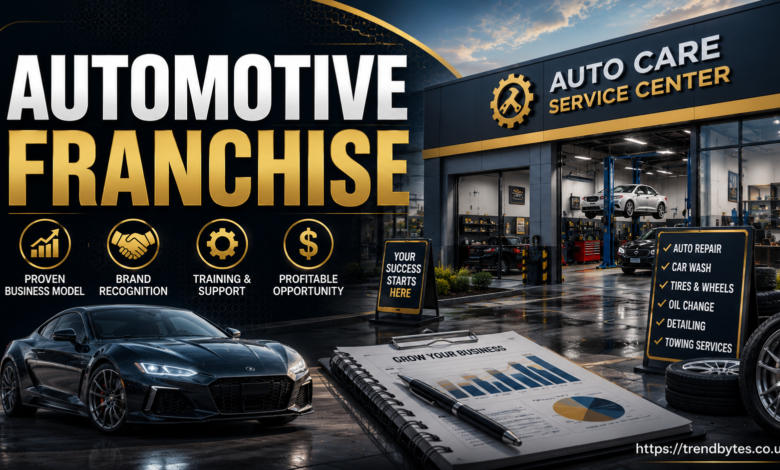
The automotive franchise industry continues to grow rapidly as vehicle ownership increases and technological innovation transforms the transportation sector. Entrepreneurs looking for profitable business opportunities are increasingly exploring automotive franchises because of their established business models, brand recognition, and long-term growth potential.
From repair centers and car washes to tire shops and oil change businesses, the automotive industry offers a wide range of franchise opportunities. Understanding the advantages, challenges, and financial requirements can help you determine whether this business model aligns with your goals.
This guide explores everything you need to know about building a successful automotive franchise in 2026.
What Is an Automotive Franchise?
An automotive franchise is a business that operates under an established brand while following specific operational guidelines created by the parent company.
In exchange for licensing fees and royalty payments, franchise owners gain access to:
- Brand recognition
- Marketing support
- Training programs
- Operational systems
- Technology platforms
- Supplier networks
- Ongoing business guidance
This arrangement allows entrepreneurs to benefit from proven systems instead of building a business entirely from scratch.
Types of Automotive Franchise Opportunities
The automotive sector includes numerous franchise models designed to serve different customer needs.
Popular options include:
- Oil change centers
- Tire service shops
- Auto repair facilities
- Car detailing businesses
- Car wash locations
- Vehicle accessory stores
- Glass replacement services
- Towing operations
Each business model requires different levels of investment and operational expertise.
Why Entrepreneurs Choose an Automotive Franchise
Starting an independent business can involve significant risks. Franchises often reduce some of those challenges by providing established procedures and ongoing support.
Brand Recognition
Well-known brands have already earned customer trust. This recognition can accelerate growth and increase revenue opportunities.
Established Operating Systems
Franchise owners receive guidance on daily operations, employee training, inventory management, and customer service practices.
Marketing Support
Many franchisors invest heavily in advertising campaigns and digital marketing strategies that benefit local franchise locations.
Business Training
Even individuals without extensive automotive experience can learn the skills necessary to operate a successful business.
Automotive Franchise Startup Costs
Initial investments vary depending on the type of franchise and its location.
The table below provides estimated cost ranges.
| Franchise Type | Estimated Investment |
|---|---|
| Car wash business | $100,000–$500,000 |
| Oil change center | $150,000–$750,000 |
| Tire and repair shop | $250,000–$1 million |
| Auto detailing service | $50,000–$250,000 |
| Towing business | $75,000–$400,000 |
These estimates may include:
- Franchise fees
- Equipment costs
- Employee salaries
- Insurance expenses
- Property leases
- Marketing budgets
- Technology investments
Careful financial planning is essential before making a commitment.
How to Start an Automotive Franchise
Building a successful business requires preparation, patience, and dedication.
Research Available Opportunities
Compare multiple companies before selecting a franchise. Consider market demand, support systems, investment requirements, and brand reputation.
Evaluate Financial Resources
Determine how much capital is available and identify potential funding sources.
Analyze Local Competition
Research competing businesses and identify opportunities within your target market.
Complete Training Programs
Many franchisors provide extensive training to help owners understand operational procedures.
Launch Marketing Campaigns
Develop a strategy to attract customers and establish a strong local presence.
Essential Skills for Franchise Owners
Running an automotive business requires more than technical knowledge.
Successful owners often possess the following abilities:
- Leadership skills
- Communication skills
- Financial management expertise
- Problem-solving abilities
- Customer service experience
- Strategic planning capabilities
These skills contribute directly to long-term business growth.
How Technology Is Transforming the Automotive Franchise Industry
Technology continues to reshape nearly every aspect of the automotive sector.
Important innovations include:
- Digital appointment scheduling
- Mobile payment systems
- Vehicle diagnostic software
- Customer relationship management tools
- Inventory management platforms
- Data analytics systems
Businesses that adopt modern technologies often improve efficiency and customer satisfaction.
The Future of the Automotive Franchise Business Model
The future of the automotive franchise industry appears promising as electric vehicles, advanced safety systems, and connected technologies become increasingly common.
Many businesses are expanding their services to accommodate these developments.
Real-World Example
Imagine that an entrepreneur opens a new automotive service center in a growing suburban community.
Instead of building an entirely new brand, the owner purchases a franchise agreement from an established company. Employees receive professional training, customers recognize the brand name, and marketing materials are immediately available.
Within a relatively short period, the business develops a loyal customer base and expands its services.
This example illustrates the advantages of operating within a proven framework.
Common Mistakes to Avoid
Many new owners encounter challenges during the early stages of operation.
Avoid the following mistakes:
- Underestimating startup expenses
- Ignoring local market conditions
- Hiring unqualified employees
- Neglecting customer service
- Overlooking ongoing training opportunities
- Failing to develop marketing strategies
Learning from these mistakes can save both time and money.
Best Practices for Long-Term Success
The most successful businesses follow several proven principles.
Prioritize Customer Satisfaction
Positive customer experiences often result in repeat business and valuable referrals.
Invest in Employee Development
Well-trained employees contribute to improved efficiency and service quality.
Monitor Financial Performance
Regular evaluations help owners identify opportunities for growth and improvement.
Adapt to Market Trends
The automotive industry changes rapidly, making adaptability essential.
Maintain High Standards
Consistency helps strengthen brand reputation and customer loyalty.
Advantages and Challenges of an Automotive Franchise
Every business opportunity comes with both benefits and risks.
Advantages
- Established brand identity
- Proven business systems
- Marketing assistance
- Training opportunities
- Reduced operational uncertainty
Challenges
- Franchise fees
- Ongoing royalty payments
- Operational restrictions
- Competitive markets
- Economic fluctuations
Understanding both perspectives allows business owners to make informed decisions.
People Also Ask
What is an automotive franchise?
An automotive franchise is a business that operates under the name, systems, and guidelines of an established automotive brand.
How much does an automotive franchise cost?
Startup expenses vary significantly depending on the type of business, location, and equipment requirements.
Is an automotive franchise profitable?
Profitability depends on market demand, operational efficiency, management skills, and customer satisfaction.
Do franchise owners need automotive experience?
Although technical knowledge can be helpful, many companies provide extensive training programs.
What types of automotive franchises are available?
Common options include car washes, repair facilities, tire centers, detailing businesses, and towing companies.
How long does it take to open a franchise?
The process often takes several months because of licensing, training, financing, and construction requirements.
Can automotive franchises support electric vehicles?
Yes. Many businesses are investing in equipment and training designed specifically for electric vehicle maintenance.
How do franchise owners attract customers?
Successful businesses rely on marketing campaigns, customer referrals, online reviews, and excellent service.
Conclusion
The automotive franchise industry presents exciting opportunities for entrepreneurs seeking a structured and scalable business model. Established systems, recognized brands, and ongoing support programs help reduce some of the uncertainty associated with launching a new business.
As the automotive industry continues to evolve, businesses that embrace innovation, invest in employee development, and maintain exceptional service standards will remain well positioned for long-term success. Whether your goal is to open a repair facility, a detailing center, or another type of automotive franchise, careful planning and consistent effort can help you achieve sustainable growth.