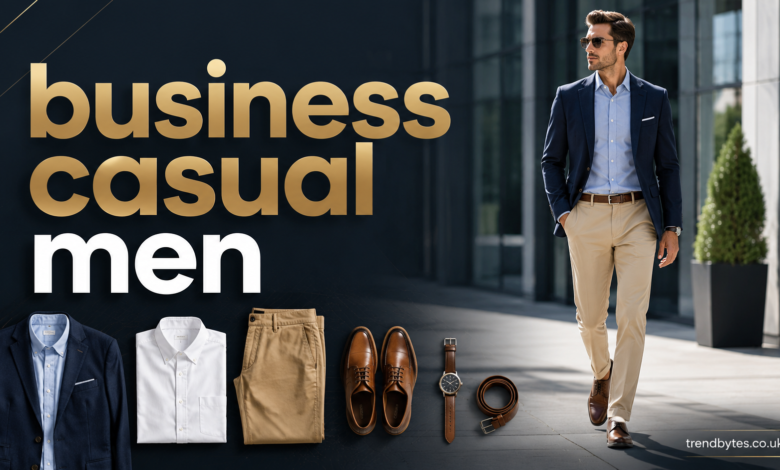
When it comes to business casual men, the goal is simple: look polished without looking overdressed. The style sits between traditional business attire and relaxed everyday clothing, making it one of the most useful dress codes for modern workplaces, meetings, dinners, networking events, and professional gatherings.
The challenge is knowing exactly what to wear. Should you choose chinos or dress pants? Is a polo shirt appropriate? Can you wear sneakers? What colors work best?
This guide breaks down business casual style for men, including essential clothing, shoes, colors, outfit combinations, common mistakes, and practical tips for looking professional while staying comfortable.
What Does Business Casual Mean for Men?
Business casual is a flexible dress code that combines traditional professional clothing with more relaxed pieces.
Unlike a formal business suit, business casual usually does not require a matching jacket and trousers, tie, or highly polished dress shoes. However, it still requires clothing that looks intentional, clean, and appropriate for the setting.
A typical business casual outfit might include chinos, a button-down shirt, leather loafers, and a belt.
For a slightly more polished occasion, you could add an unstructured blazer.
The key is balance. You want to look professional without appearing as though you are dressed for a formal board meeting.
Essential Business Casual Clothes for Men
Building a business casual wardrobe becomes easier when you focus on versatile pieces that can be mixed and matched.
Button-Down Shirts
A well-fitted button-down shirt is one of the most useful items in a business casual wardrobe.
White and light blue are excellent starting colors because they work with almost everything. You can also add subtle patterns, stripes, or muted colors once you have the basics covered.
Oxford shirts are particularly versatile because they can look professional with dress pants while still working with chinos.
Make sure your shirt fits comfortably around the neck, shoulders, chest, and sleeves. An expensive shirt will not look polished if it is too large or extremely tight.
Polo Shirts
A high-quality polo can work in some business casual environments, particularly during warmer weather or in relaxed workplaces.
Choose a structured polo made from a refined fabric rather than a sporty performance shirt.
Neutral colors such as navy, white, gray, and dark green are easy to style.
However, always consider the workplace. A polo may be appropriate for a casual office but too relaxed for a client presentation or formal business meeting.
Chinos
Chinos are one of the most practical choices for men’s business casual outfits.
They provide a cleaner appearance than jeans while remaining more relaxed than traditional suit trousers.
Navy, khaki, gray, olive, and tan are especially versatile.
For a classic office outfit, try navy chinos with a light blue button-down shirt and brown loafers.
Dress Pants
Dress trousers can make an outfit look more sophisticated without requiring a complete suit.
Wool-blend or lightweight tailored trousers work particularly well for business casual settings.
Gray, charcoal, navy, and brown are dependable choices.
If your workplace leans toward the formal side of business casual, dress pants are often a safer choice than chinos.
Blazers and Sport Coats
A blazer can instantly elevate a simple outfit.
You do not necessarily need a traditional suit jacket. An unstructured blazer can provide a more modern and relaxed appearance.
Navy is one of the best colors to start with because it works with gray trousers, chinos, khakis, and even dark denim in appropriate casual settings.
A blazer is especially useful when you are unsure how formal an event will be. You can wear it during a meeting and remove it afterward if the environment becomes more relaxed.
Best Business Casual Shoes for Men
Shoes can determine whether an outfit looks professional or too casual.
Loafers
Loafers are an excellent choice because they can look polished without being overly formal.
Brown leather loafers work particularly well with navy, khaki, beige, and gray trousers.
Black loafers are more formal and pair naturally with darker outfits.
Derby Shoes
A clean pair of leather Derby shoes provides a traditional professional appearance while remaining suitable for many business casual environments.
They are a strong option for presentations, interviews, office meetings, and professional events.
Chukka Boots
Chukka boots can add a modern touch to business casual outfits.
Choose a simple leather or suede design without excessive decorative details.
They pair particularly well with chinos and tailored trousers.
Clean Minimal Sneakers
Some modern offices allow sneakers as part of business casual attire.
If sneakers are acceptable, choose a clean, minimalist pair in a neutral color.
Avoid athletic running shoes, heavily branded designs, bright colors, or visibly worn sneakers when dressing for a professional environment.
Business Casual Men: Best Colors to Wear
Color choice has a major effect on how professional an outfit appears.
Neutral colors are usually the easiest to combine.
Navy
Navy is one of the most versatile colors in men’s clothing. It works with white, blue, gray, tan, brown, and many other shades.
Gray
Gray trousers are a business casual staple. Light gray creates a softer appearance, while charcoal looks more formal.
Khaki and Tan
Khaki and tan chinos provide a relaxed but polished appearance. They are especially useful during spring and summer.
White
White shirts create a clean and classic appearance. They also make it easy to add color through trousers, shoes, or a blazer.
Earth Tones
Olive, brown, burgundy, and muted green can add personality without making an outfit look overly casual.
A useful rule is to keep stronger colors limited to one main piece while allowing the rest of the outfit to remain neutral.
Business Casual Outfit Ideas for Men
Having individual clothing pieces is useful, but knowing how to combine them is even more important.
Classic Office Outfit
Try navy chinos, a white Oxford shirt, brown leather loafers, and a matching brown belt.
This combination is simple, professional, and suitable for many office environments.
Smart Meeting Outfit
For an important meeting, wear charcoal trousers, a light blue dress shirt, a navy blazer, and brown Derby shoes.
This outfit provides a more professional appearance without becoming a full formal suit.
Warm-Weather Business Casual
During warmer months, consider lightweight chinos, a short-sleeve button-down shirt, and leather loafers.
Choose breathable fabrics such as cotton or linen blends, provided they remain appropriate for your workplace.
Relaxed Office Outfit
For a casual office, dark chinos, a premium polo shirt, and clean minimalist sneakers can create a comfortable but polished appearance.
Again, workplace expectations should determine whether sneakers and polos are acceptable.
Business Casual Dinner
For a dinner after work, try dark trousers, a crisp button-down shirt, loafers, and an unstructured blazer.
This combination can transition easily from the office to a restaurant or networking event.
Can Men Wear Jeans With Business Casual?
Jeans can be acceptable in some business casual environments, but they are not universally appropriate.
If jeans are permitted, choose dark, clean, well-fitting denim without holes, excessive fading, or decorative details.
Pair dark jeans with a button-down shirt, leather shoes, and possibly a blazer.
Avoid combining casual jeans with several other relaxed pieces. For example, jeans, a graphic T-shirt, athletic sneakers, and a hoodie generally move beyond traditional business casual.
When in doubt, choose chinos or dress trousers instead.
How Should Business Casual Clothing Fit?
Fit is often more important than brand or price.
Your trousers should sit comfortably at the waist without needing constant adjustment. The leg should have a clean shape without excessive fabric pooling around the shoes.
Shirts should follow your body without pulling across the chest or hanging excessively from the shoulders.
A blazer should sit naturally across your shoulders, with sleeves ending around the wrist.
If an otherwise good outfit looks slightly sloppy, tailoring may make a bigger difference than buying new clothes.
Common Business Casual Mistakes Men Should Avoid
Dressing Too Casually
Graphic T-shirts, sweatpants, athletic shorts, distressed jeans, and worn sneakers are generally too casual for most business casual environments.
Dressing Too Formally
A full suit with a tie may look out of place when everyone else is dressed casually.
Business casual is about finding the middle ground.
Wearing Poorly Fitting Clothing
Oversized shirts and excessively tight trousers can make an outfit look unprofessional.
Prioritize fit before expensive brands.
Mixing Too Many Colors
A professional outfit does not need to be boring, but too many competing colors can make the look feel uncoordinated.
Start with two or three complementary colors.
Ignoring Shoes
Dirty or worn-out shoes can undermine an otherwise excellent outfit.
Keep leather shoes clean and maintain suede according to the manufacturer’s care instructions.
Overusing Accessories
A simple watch, belt, and perhaps a pocket square are usually enough.
You do not need multiple bold accessories to make a business casual outfit interesting.
Expert Tips for Better Business Casual Style
One of the easiest ways to improve your wardrobe is to build around interchangeable pieces.
For example, one navy blazer can work with gray trousers, khaki chinos, navy chinos, or dark denim where appropriate.
Likewise, white and light blue shirts can be paired with almost every neutral trouser color.
Invest in quality basics before buying unusual statement pieces.
It is also helpful to keep your clothing in good condition. Iron or steam shirts when needed, remove visible lint, polish leather shoes, and replace worn-out basics.
Most importantly, learn your workplace’s actual dress culture.
A company’s written dress code may say “business casual,” but employees may interpret it differently. If you are starting a new job, observe what managers and senior employees wear during normal working days.
Business Casual by Season
Spring
Spring is ideal for lighter colors and breathable fabrics.
Try beige chinos with a light blue shirt and brown loafers. A lightweight navy blazer can be added when needed.
Summer
Choose breathable materials and lighter shades.
Cotton chinos, lightweight button-down shirts, and loafers can provide a professional appearance without excessive warmth.
Fall
Fall allows richer colors such as burgundy, olive, brown, and charcoal.
Layering also becomes easier. Add a lightweight sweater over a collared shirt or wear a blazer over a fine-gauge knit.
Winter
During winter, wool trousers, structured coats, sweaters, and leather shoes can create a polished business casual wardrobe.
Stick with classic colors and avoid bulky layers that make your outfit look unstructured.
How to Build a Business Casual Capsule Wardrobe
You do not need dozens of clothes to create a flexible wardrobe.
Start with:
- Two white or off-white shirts
- Two light blue shirts
- Two pairs of chinos
- One pair of gray trousers
- One navy blazer
- One pair of brown loafers
- One pair of black or dark leather shoes
- One neutral sweater
- One versatile belt
- One pair of dark jeans if your workplace allows them
These pieces can create many different combinations.
Once your core wardrobe is established, add seasonal colors, patterns, textures, and accessories.
People Also Ask About Business Casual Men
What is business casual for men?
Business casual for men combines professional and relaxed clothing. Common choices include button-down shirts, chinos, dress trousers, blazers, loafers, Derby shoes, and appropriate minimalist footwear.
Can men wear polos for business casual?
Yes, polos can work in relaxed business casual environments. Choose a structured, high-quality polo and pair it with chinos or tailored trousers.
Are jeans business casual for men?
Jeans may be acceptable in some workplaces. Dark, clean, well-fitting denim is generally a better choice than distressed or heavily faded jeans.
Can men wear sneakers with business casual outfits?
Some modern workplaces allow clean minimalist sneakers. However, athletic shoes and visibly worn sneakers are usually less appropriate for professional settings.
What color pants are best for business casual men?
Navy, gray, charcoal, khaki, tan, and olive are versatile choices. Gray and navy generally provide a more polished appearance, while khaki and tan create a more relaxed look.
Do business casual men need to wear a blazer?
No. A blazer is optional in many business casual environments. However, it is a useful way to make an outfit look more polished for meetings or professional events.
Can men wear a tie with business casual clothing?
A tie is usually unnecessary for business casual attire. If you wear one, make sure the overall outfit matches the formality of the occasion.
What shoes should men wear for business casual?
Loafers, Derby shoes, chukka boots, and certain clean minimalist sneakers can work depending on the workplace. Leather shoes are generally the safer choice when you are unsure.
Conclusion
The best business casual men outfits are built around balance, fit, and versatility. You do not need a closet full of expensive clothing to look professional. A few well-fitting shirts, chinos, tailored trousers, versatile shoes, and a good blazer can cover most business casual situations.
Start with neutral colors such as navy, gray, white, khaki, and brown. Then add personality through subtle patterns, seasonal colors, textures, and accessories.
Most importantly, dress for the environment. Business casual can mean different things from one workplace to another, so pay attention to the company culture and the formality of each occasion.
When your clothes fit well, are clean and maintained, and combine polished and relaxed elements, you will have a reliable business casual wardrobe that works for the office, meetings, dinners, and professional events.