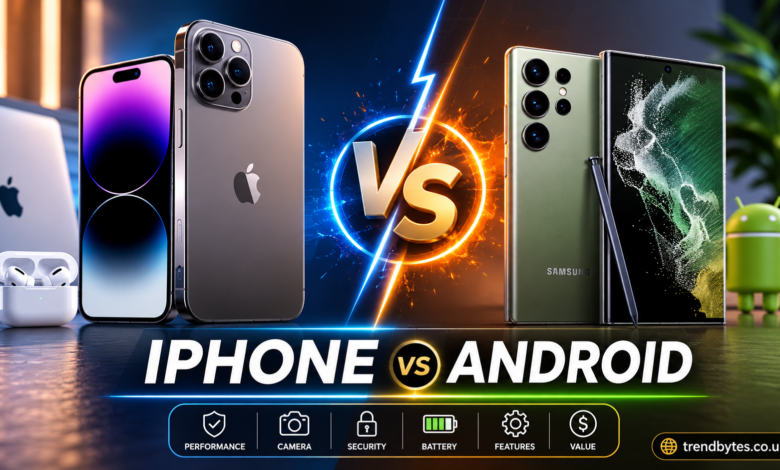
Choosing between an iPhone and an Android phone is harder than ever. The iphone vs android debate is no longer simply about which phone has the better camera or faster processor. In 2026, both platforms offer excellent displays, powerful hardware, advanced cameras, strong security, and long software support.
The bigger question is which operating system fits your lifestyle.
An iPhone may appeal to someone who values simplicity, ecosystem integration, consistent software updates, and resale value. Android, meanwhile, gives users more hardware choices, deeper customization, flexible pricing, and features that vary across manufacturers.
This guide compares the two platforms across the areas that matter most, helping you choose the right smartphone for your needs and budget.
iPhone vs Android: The Biggest Differences
The most important difference between iPhone and Android is the overall approach to the user experience.
Apple controls both the iPhone hardware and iOS software. This allows the company to create a consistent experience across its devices.
Android is used by many manufacturers, including Samsung, Google, OnePlus, Xiaomi, Motorola, and others. As a result, Android phones can be very different from one another.
That creates a major advantage: choice.
You can buy an affordable Android phone, a premium flagship, a foldable device, or a phone designed around photography and gaming.
With iPhone, the selection is narrower, but the experience is generally more consistent.
Design and Build Quality
Modern smartphones from both platforms can offer premium materials and excellent build quality.
iPhones typically have a recognizable design language, premium construction, and tight integration between hardware and software. Apple’s focus on consistency means that moving from one iPhone generation to another usually feels familiar.
Android offers much greater variety.
Some Android manufacturers focus on lightweight designs, while others emphasize large displays, foldable screens, camera systems, or gaming features.
Which Has Better Design?
There is no universal winner.
If you want a predictable premium design, iPhone is an easy choice. If you want more variety and are interested in unusual form factors, Android offers more possibilities.
Your personal preference matters more than the logo on the back of the phone.
Performance: iPhone vs Android
Performance has traditionally been one of Apple’s strongest areas.
Apple designs its own smartphone chips and tightly integrates them with iOS. This can provide excellent performance and power efficiency, especially in demanding applications and games.
Android flagship phones can also deliver extremely powerful performance. High-end devices use advanced processors capable of handling intensive gaming, photography, multitasking, and productivity.
For everyday activities such as browsing, messaging, social media, streaming, and email, both platforms are more than fast enough.
The difference becomes more noticeable when you perform demanding tasks such as video editing, 3D gaming, or advanced photography processing.
Camera Comparison
Camera quality is another major factor in the iphone vs android comparison.
Modern iPhones are known for consistent image processing, reliable video recording, natural-looking colors, and strong performance across different lighting conditions.
Android manufacturers take different approaches. Some prioritize large camera sensors, powerful zoom, high-resolution photography, computational photography, or specialized portrait modes.
For example, a flagship Android phone may provide a more versatile zoom system, while an iPhone may deliver particularly consistent video performance.
iPhone vs Android Camera: Which Is Better?
If you want a simple point-and-shoot experience with consistent results, iPhone is an excellent option.
If you enjoy experimenting with camera settings, long-range zoom, different lenses, and photography features, certain Android flagships may offer more flexibility.
Instead of asking which platform has the best camera, compare the specific iPhone and Android models you are considering.
Battery Life and Charging
Battery performance depends heavily on the specific phone.
Screen size, processor efficiency, software optimization, cellular connectivity, gaming, camera use, and background applications can all affect battery life.
Premium Android phones often compete aggressively on charging speeds and battery capacity. Some models offer very fast wired charging and convenient wireless charging options.
iPhones generally focus more on overall efficiency and battery management than simply offering the largest battery or fastest charging specification.
Expert Tip
Do not choose a phone based only on battery capacity.
A larger battery does not automatically mean longer battery life. Real-world endurance depends on the entire hardware and software system.
Software and User Experience
This is where the difference between the platforms becomes especially clear.
iOS is designed around simplicity and consistency. Apple controls the operating system, and users generally receive a similar experience regardless of which current iPhone model they choose.
Android is more flexible.
Manufacturers can customize the interface, add multitasking tools, change navigation options, and provide their own software features.
For people who like controlling how their phone looks and behaves, Android can be more satisfying.
For users who want fewer settings and a straightforward experience, iOS may feel easier.
Customization
Android has traditionally been the winner for customization.
Users can change home-screen layouts, widgets, default applications, launchers, icons, notification behavior, and other elements depending on the device.
iOS has become more customizable over time, but Apple still maintains tighter control over the operating system.
If customization is a major priority, Android remains the stronger choice.
If you prefer a controlled and consistent interface, iPhone may be more appealing.
Security and Privacy
Security is important regardless of which smartphone you buy.
Apple places significant emphasis on privacy controls, secure hardware, app permissions, and the integration between its devices and operating system.
Android has also made major improvements in security and privacy. Modern Android versions provide permission controls, security features, app scanning, and regular system protections.
However, Android’s open ecosystem means the experience can vary by manufacturer and device.
Which Is More Secure?
Both platforms can be secure when properly maintained.
The safest approach is to keep your phone updated, use strong authentication, download apps from trusted sources, and review application permissions regularly.
Your behavior matters just as much as the operating system.
Apps and App Ecosystem
Both iPhone and Android have enormous app ecosystems.
Most major social media platforms, streaming services, productivity tools, banking applications, games, and communication apps are available on both platforms.
There can still be differences in how apps are optimized and distributed.
Apple’s tightly controlled ecosystem can provide a more consistent experience across supported devices.
Android provides more flexibility in app installation and device functionality.
For most people, app availability should not be the deciding factor unless you rely on a specific application or professional workflow.
iPhone vs Android for Gaming
Both platforms are capable gaming devices.
High-end smartphones can run demanding games with impressive graphics and smooth performance.
iPhones benefit from powerful custom processors and strong optimization. Android offers a broader range of gaming phones with features such as high-refresh-rate displays, specialized cooling, customizable performance modes, and gaming controls.
If gaming is your main priority, compare the actual processor, GPU, cooling system, display refresh rate, and battery performance rather than choosing based solely on operating system.
Price and Value
Price is one of Android’s biggest advantages.
There are Android smartphones available across almost every price range. This makes the platform accessible to students, budget-conscious buyers, and users who want premium flagship hardware.
iPhones generally occupy the premium portion of the smartphone market, although older models can become more affordable after newer generations launch.
Which Offers Better Value?
Android usually provides more choices at lower prices.
However, value is not simply about the initial purchase price. Software support, durability, repair costs, accessories, battery longevity, and resale value can all affect the total cost of ownership.
Someone who keeps a phone for many years may value long-term software support more than saving money at checkout.
Ecosystem Integration
This is one of Apple’s biggest strengths.
If you already use products such as a Mac, iPad, Apple Watch, or AirPods, an iPhone can connect naturally with the rest of the ecosystem.
Features that allow devices to share files, messages, photos, calls, and other information can make daily tasks more convenient.
Android has a strong ecosystem too, particularly when paired with products from manufacturers such as Samsung and Google.
The key difference is that Apple’s ecosystem tends to feel more unified, while Android gives users more freedom to mix devices and services.
Software Updates and Longevity
Long-term software support should be part of every smartphone purchase.
Apple has a strong history of supporting iPhones for many years. This can help users keep an older phone secure and functional rather than replacing it frequently.
Android support has improved significantly, but update policies vary by manufacturer and model.
Before purchasing an Android phone, check how long that specific model is expected to receive operating system and security updates.
This is especially important if you plan to keep your phone for four or five years.
Common Mistakes When Choosing a Smartphone
One common mistake is buying the phone with the highest specification number.
More megapixels, more RAM, or a larger battery does not automatically create a better experience.
Another mistake is ignoring the ecosystem.
If you already own several devices from Apple, switching to Android may require changing your workflow. The reverse can also be true.
Buyers should also avoid choosing a phone solely because it is popular.
Your priorities should come first.
Think about camera quality, battery life, gaming, productivity, display quality, software updates, price, and how long you intend to keep the device.
How to Choose Between iPhone and Android
Start by identifying your top three priorities.
If simplicity, long-term software support, ecosystem integration, and consistent video performance matter most, an iPhone may be the better fit.
If customization, hardware variety, fast charging, flexible pricing, multitasking, and specialized features matter more, Android may be the better choice.
Also consider your budget.
There is no reason to spend flagship money if your daily needs are limited to messaging, browsing, streaming, photography, and social media.
On the other hand, professionals, creators, gamers, and photography enthusiasts may benefit from investing in higher-end hardware.
People Also Ask About iPhone vs Android
Is iPhone better than Android?
Neither platform is universally better. iPhone is strong in ecosystem integration, consistency, software support, and ease of use, while Android offers more customization, hardware variety, and price options.
Is Android cheaper than iPhone?
Android generally offers more affordable smartphones because many manufacturers compete across different price ranges. iPhones are primarily positioned as premium devices.
Which has a better camera, iPhone or Android?
It depends on the specific models. iPhones are known for consistent photography and video, while some Android flagships offer excellent zoom, sensors, and photography controls.
Which is more secure, iPhone or Android?
Both can provide strong security. Keeping the operating system updated, using strong passwords or biometrics, and installing apps from trusted sources are essential on either platform.
Which lasts longer, iPhone or Android?
Both can last for years with proper care. iPhone has traditionally offered strong long-term software support, while many Android manufacturers now provide extended update commitments on selected devices.
Is iPhone easier to use than Android?
Many users find iPhone easier because iOS offers a consistent interface across devices. Android can provide more options and customization, which may appeal to users who prefer greater control.
Which is better for gaming, iPhone or Android?
Both can be excellent for gaming. iPhones offer powerful processors and strong game optimization, while Android provides a wider selection of gaming-focused devices and hardware features.
Should I switch from Android to iPhone?
Switching makes sense if you value Apple’s ecosystem, iOS experience, and integration with other Apple devices. If you prefer customization and hardware choice, staying with Android may be better.
Final Verdict: iPhone vs Android
The iphone vs android debate does not have one answer that works for everyone.
iPhone is an excellent choice for people who want a polished, consistent experience, strong ecosystem integration, long-term software support, and straightforward operation.
Android is the better fit for users who want more hardware choices, deeper customization, flexible pricing, advanced multitasking, and specialized smartphone features.
The best smartphone is ultimately the one that matches your priorities.
Before buying, compare the specific models within your budget instead of judging an entire platform by reputation. Consider performance, camera quality, battery life, display, software support, ecosystem compatibility, and long-term value.
In 2026, both iPhone and Android offer powerful smartphone experiences. The right choice comes down to how you use your phone, what features matter most, and which ecosystem fits naturally into your everyday life.