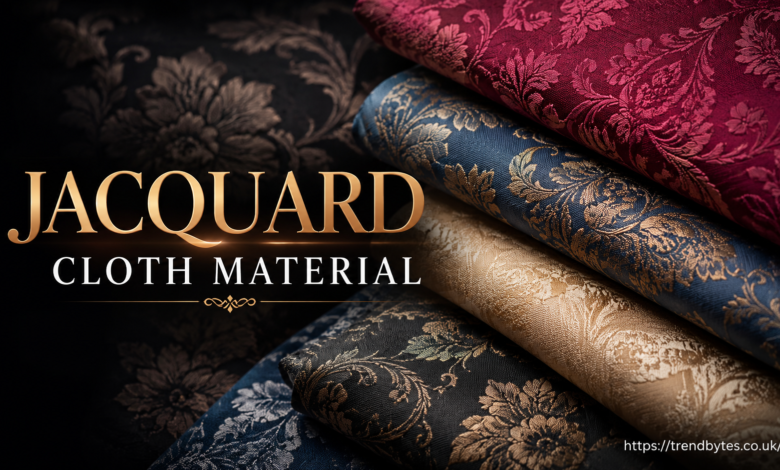
Jacquard cloth material is one of the most recognizable woven fabrics in the textile industry. It is valued for its intricate patterns, luxurious appearance, durability, and versatility. Unlike printed fabrics, jacquard designs are woven directly into the fabric structure, creating patterns that become part of the material itself. This gives the fabric a rich texture and a premium finish that is difficult to achieve with ordinary weaving methods.
From elegant dresses and jackets to curtains, upholstery, and home décor, jacquard cloth material is used in a wide range of fashion and interior applications. Understanding how it is made, what fibers are used, and where it performs best can help you choose the right fabric for your needs.
What Is Jacquard Cloth Material?
Jacquard cloth material is a woven fabric produced on a jacquard loom, a specialized weaving machine that allows complex patterns to be created directly during the weaving process. The design is formed by controlling individual warp threads, enabling floral motifs, geometric shapes, damask patterns, brocade effects, and many other decorative textures.
Unlike embroidery or printing, the pattern is not added afterward. It becomes an integral part of the fabric, making jacquard textiles more durable and visually sophisticated.
Common fibers used in jacquard fabrics include:
- Cotton
- Silk
- Polyester
- Rayon or viscose
- Linen blends
- Wool blends
The choice of fiber affects softness, weight, drape, and maintenance requirements.
History of Jacquard Fabric
The jacquard weaving technique was developed by Joseph Marie Jacquard in the early 19th century. His invention revolutionized textile manufacturing by automating the production of highly detailed woven patterns that previously required extensive manual labor.
The jacquard loom is often considered a precursor to modern programmable machines because it used punched cards to control the weaving pattern. Today, computerized jacquard looms continue this legacy with digital precision.
How Jacquard Cloth Material Is Made
Understanding the manufacturing process helps explain why jacquard cloth material is often more expensive than plain woven fabrics.
Step 1: Pattern Design
A designer creates a detailed motif that will be woven into the fabric.
Step 2: Loom Programming
The pattern is translated into instructions for the jacquard loom, allowing individual threads to be raised or lowered independently.
Step 3: Weaving
Warp and weft yarns interlace according to the programmed design, creating textured patterns directly within the fabric.
Step 4: Finishing
The fabric may undergo washing, softening, pressing, or coating treatments depending on its intended use.
This complex process produces fabrics with exceptional detail and structural integrity.
Key Characteristics of Jacquard Cloth Material
Several features distinguish jacquard fabric from ordinary woven textiles.
| Characteristic | Description |
|---|---|
| Woven patterns | Designs are built into the fabric rather than printed on the surface. |
| Textured appearance | Raised or recessed motifs create visual depth. |
| Durability | Patterns resist fading because they are woven, not applied. |
| Versatility | Available in lightweight, medium, and heavy weights. |
| Elegant look | Often associated with luxury fashion and premium interiors. |
Types of Jacquard Cloth Material
Cotton Jacquard
Soft, breathable, and comfortable for everyday clothing such as shirts, dresses, and kurtas.
Silk Jacquard
Luxurious and lightweight with a natural sheen, ideal for formal wear and sarees.
Polyester Jacquard
Wrinkle-resistant, durable, and easy to maintain, making it popular for upholstery and curtains.
Linen Jacquard
Provides a textured, breathable feel suitable for summer garments and decorative textiles.
Wool Jacquard
Warm and sturdy, commonly used in coats, jackets, and winter accessories.
Common Uses of Jacquard Cloth Material
The adaptability of jacquard cloth material makes it useful across many industries.
Fashion
- Evening gowns
- Blazers and jackets
- Sarees and ethnic wear
- Skirts and dresses
- Formal shirts
Home Décor
- Curtains and drapes
- Sofa upholstery
- Cushion covers
- Bed runners
- Table linens
Advantages of Jacquard Cloth Material
- Long-lasting patterns because the designs are woven into the fabric.
- Premium appearance with an elegant textured finish.
- Strong fabric structure suitable for garments and furnishings.
- Wide variety of colors, patterns, and textures.
- Excellent shape retention compared to many plain woven fabrics.
- Durable enough for everyday use while maintaining its luxurious appearance.
Disadvantages to Consider
- Usually more expensive than plain woven fabrics.
- Some varieties are heavier than standard fabrics.
- Intricate weaves may require careful ironing.
- Silk jacquard and other delicate blends need gentle washing.
- Premium-quality jacquard fabrics often require special care.
Jacquard Cloth Material vs Other Fabrics
| Feature | Jacquard | Printed Fabric |
|---|---|---|
| Pattern creation | Woven into the fabric | Applied on the surface |
| Texture | Raised or textured | Usually smooth |
| Durability | Highly durable | May fade over time |
| Cost | Higher | Lower |
| Luxury appeal | Premium | Moderate |
How to Identify Genuine Jacquard Cloth Material
When shopping for jacquard cloth material, keep these points in mind:
- Examine both sides of the fabric because genuine jacquard usually shows the woven pattern on the reverse side.
- Feel the texture to ensure the design is woven rather than printed.
- Check the edges to confirm the pattern remains consistent across the fabric.
- Look closely at the threads because authentic jacquard designs are created through weaving instead of ink printing.
Best Clothing Applications for Jacquard Cloth Material
Jacquard fabric performs exceptionally well in garments that require structure, elegance, and rich texture.
Women’s Wear
- Wedding dresses
- Cocktail dresses
- Ethnic suits
- Designer skirts
- Luxury blouses
Men’s Wear
- Bandhgala jackets
- Blazers
- Waistcoats
- Sherwanis
- Formal suits
Its ability to hold shape makes it an excellent choice for tailored fashion.
Caring for Jacquard Cloth Material
Proper care helps preserve both the beauty and durability of jacquard fabric.
- Read the care label before washing.
- Wash delicate jacquard fabrics using cold water.
- Use a mild detergent.
- Avoid bleach and harsh chemicals.
- Iron on the reverse side whenever possible.
- Store garments properly to prevent deep wrinkles.
Heavy upholstery jacquard may require professional cleaning for the best results.
Is Jacquard Cloth Material Good for Summer?
The answer depends largely on the fiber used.
- Cotton jacquard is breathable and comfortable during warm weather.
- Linen jacquard is ideal for hot climates because of its cooling properties.
- Silk jacquard is suitable for special occasions in moderate temperatures.
- Heavy polyester jacquard works better during cooler months or for home furnishings.
Lightweight cotton and linen jacquard are generally the best choices for summer clothing.
Why Designers Prefer Jacquard Cloth Material
Fashion designers and interior decorators appreciate jacquard because it combines beauty, durability, and texture in a single fabric. Instead of relying on printed designs or heavy embroidery, jacquard achieves its decorative effect through weaving, creating an elegant and timeless appearance.
The fabric also provides excellent structure, making it perfect for garments, upholstery, curtains, cushions, and luxury home décor items. Its versatility allows designers to create sophisticated products that remain stylish for years.
Buying Tips for Jacquard Cloth Material
When purchasing jacquard cloth material, consider these practical tips:
- Choose the fiber based on your intended use and climate.
- Select the appropriate fabric weight for clothing or upholstery.
- Request a fabric sample when buying online.
- Inspect the weave quality and pattern consistency.
- Match the fabric drape with your garment or décor project.
- Compare different fiber blends for durability and maintenance.
For beginners, cotton-polyester jacquard offers an excellent balance of affordability, durability, comfort, and easy care.
Conclusion
Jacquard cloth material remains one of the finest woven fabrics available because of its elegant patterns, exceptional durability, and luxurious appearance. Whether used for fashionable clothing, premium upholstery, stylish curtains, or decorative home accessories, it delivers outstanding beauty and long-lasting performance. Since the patterns are woven directly into the fabric rather than printed on the surface, jacquard maintains its rich texture and sophisticated look for years.
By understanding the different fibers, weaving techniques, fabric weights, and care requirements, you can confidently choose the right jacquard cloth material for your next project. Whether you are designing clothing, decorating your home, or selecting fabric for a special occasion, jacquard cloth material offers the perfect combination of style, quality, elegance, and durability.