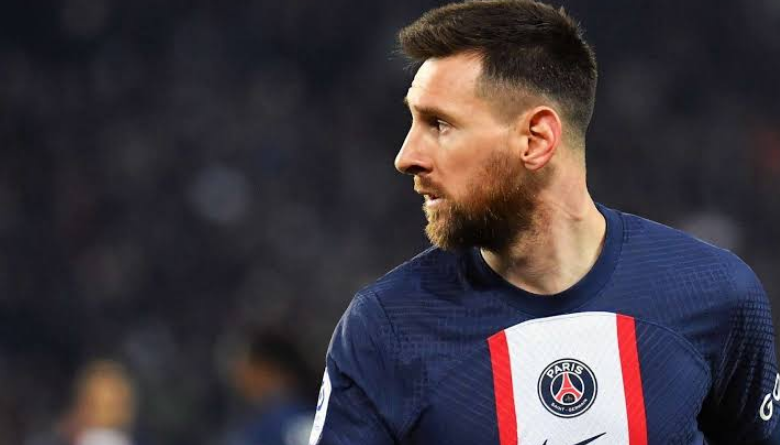
The messi psg era was one of the most talked-about chapters in modern football. When Lionel Messi left Barcelona in 2021 and joined Paris Saint-Germain, the move created huge expectations. Fans imagined a superstar attack featuring Messi, Neymar, and Kylian Mbappé, while PSG hoped the Argentine legend could finally help the club win the UEFA Champions League.
Messi’s time in Paris lasted two seasons, from 2021 to 2023. Although his PSG career did not produce the Champions League trophy many expected, he won domestic silverware, delivered important performances, and added another major chapter to an already remarkable career.
Why Messi Joined PSG
In August 2021, Lionel Messi officially joined Paris Saint-Germain after leaving Barcelona. His departure from Barcelona came after the Spanish club was unable to register a new contract under the financial and league rules in place at the time.
PSG quickly became the natural destination for the six-time Ballon d’Or winner at that point in his career.
The French club offered Messi a team filled with elite talent. Neymar was already an established PSG star, while Mbappé was emerging as one of the world’s most dangerous young forwards.
The combination looked almost impossible to defend on paper.
For Messi, the move also represented something new. After spending his entire senior European club career with Barcelona, he was entering a different league, country, dressing room, and tactical system.
Messi PSG: His First Season in Paris
Messi’s first PSG season was an adjustment period.
He arrived at a club where Neymar and Mbappé were also expected to play major attacking roles. Unlike at Barcelona, where Messi had spent years building a system around his strengths, PSG required him to adapt to a new tactical environment.
His first PSG goal in the Champions League came against Manchester City in September 2021. It was also one of the moments that reminded fans why the club had signed him.
However, his Ligue 1 numbers during the first season were not at the level many expected from Messi.
He finished the 2021–22 league campaign with six goals, although he contributed significantly as a creator and finished with a strong assist total.
PSG still won the Ligue 1 title, giving Messi his first major domestic trophy in France.
Messi PSG Champions League Challenge
The biggest disappointment of Messi’s first season came in the Champions League.
PSG faced Real Madrid in the round of 16. After winning the first leg 1–0 in Paris, PSG appeared to have control of the tie.
The second leg changed everything.
Karim Benzema scored a hat trick as Real Madrid completed a dramatic comeback at the Santiago Bernabéu. PSG were eliminated, and Messi’s European adventure in Paris ended earlier than expected.
The result became one of the defining moments of his PSG career because the Champions League remained the club’s biggest objective.
Messi’s Second PSG Season
Messi looked much more comfortable during the 2022–23 season.
He adapted better to the French league and became more influential in PSG’s attacking structure. His combination play with Neymar remained dangerous, while Mbappé continued to develop into one of football’s leading stars.
Messi’s passing, movement, vision, and ability to create chances remained central to his game.
During the season, he scored 16 Ligue 1 goals and provided numerous assists as PSG competed for another domestic title.
The club ultimately won Ligue 1 again.
For Messi, however, the season became even more important because of what happened away from club football.
The World Cup Changed the Messi PSG Story
The 2022 FIFA World Cup in Qatar became the defining achievement of Messi’s career.
Argentina reached the final against France. Messi scored twice during the match, while Kylian Mbappé scored a hat trick for France.
Argentina eventually won the tournament on penalties.
Messi won the Golden Ball as the tournament’s best player and finally lifted the World Cup after years of international pressure.
His success with Argentina changed the way many people viewed his entire career.
Before the World Cup, discussions about Messi’s legacy often included the fact that he had not won the senior World Cup. After Qatar, that argument disappeared.
Interestingly, Messi returned to PSG as a world champion while Mbappé returned as the star of the team that had lost the final.
That created an unusual dynamic inside one of Europe’s biggest clubs.
Messi PSG Stats
Across his two seasons with Paris Saint-Germain, Messi produced strong overall numbers.
He played 75 competitive matches for PSG and scored 32 goals. He also registered 35 assists across competitions.
His numbers show an important part of his Paris career: Messi was not simply a goal scorer.
He frequently operated as a creator, dropping deeper to receive possession and using his passing range to create opportunities for teammates.
His ability to combine with Neymar, Mbappé, Achraf Hakimi, and other attacking players gave PSG another creative dimension.
Messi PSG Ligue 1 Record
Messi’s Ligue 1 statistics improved considerably from his first season to his second.
His first campaign involved an adjustment period, while his second season showed a more productive version of the Argentine.
In total, Messi won Ligue 1 twice with PSG.
Those titles may not have carried the same emotional importance as his Barcelona achievements or Argentina’s World Cup victory, but they were still significant additions to his trophy collection.
What Went Wrong Between Messi and PSG Fans?
Despite his performances, Messi’s relationship with parts of the PSG fan base became increasingly complicated.
There were several reasons.
First, PSG’s Champions League failures continued. The club had assembled some of the biggest names in football, but the European trophy remained out of reach.
Second, expectations surrounding Messi were enormous.
Some supporters expected him to dominate every match, particularly because of his reputation and previous Barcelona performances.
Third, the tactical balance between Messi, Neymar, and Mbappé was often debated.
Having three world-class attackers does not automatically create a perfect team. Football still requires defensive structure, midfield balance, pressing, positioning, and collective chemistry.
Messi’s role also changed from the one he had held at Barcelona.
Instead of being the unquestioned central figure of the entire team, he shared attacking responsibility with two other superstars.
Messi’s Final Months at PSG
The final stage of Messi’s PSG career was marked by controversy.
In 2023, Messi received a club-related suspension after traveling to Saudi Arabia without authorization following a training situation.
He later apologized publicly, but the episode further damaged the relationship between the player and parts of the club’s fan base.
Messi eventually completed his PSG contract.
In June 2023, he left Paris and chose Inter Miami as his next club destination.
His departure ended one of the most high-profile transfers in modern football.
Did Messi Win the Champions League With PSG?
No.
Messi did not win the UEFA Champions League during his time at PSG.
This is one of the most important facts when evaluating his Paris career.
PSG reached the Champions League knockout stages during both of Messi’s seasons, but they failed to win the competition.
In 2022, Real Madrid eliminated PSG in the round of 16.
In 2023, Bayern Munich eliminated PSG at the same stage.
As a result, Messi’s PSG career is often judged differently from his Barcelona career.
At Barcelona, he won the Champions League four times. At PSG, Europe’s biggest club trophy remained missing.
Messi PSG vs. Barcelona
Comparing Messi’s PSG career with his Barcelona career is difficult because the circumstances were completely different.
At Barcelona, Messi spent more than a decade developing within the club’s football philosophy. He played alongside Xavi, Andrés Iniesta, Sergio Busquets, Luis Suárez, Neymar, and many other elite players.
He was also the central attacking figure for much of that period.
At PSG, he arrived as an established superstar into an already complicated squad.
That distinction matters.
A player can perform well individually while still being part of a team that does not reach its ultimate objective.
Messi’s PSG period should therefore be judged using more than Champions League results.
Messi’s Biggest PSG Strengths
Several aspects of Messi’s game remained exceptional in Paris.
Playmaking
Messi continued to create chances with short passes, through balls, crosses, and combinations around the penalty area.
Ball Control
His close control allowed him to escape pressure in crowded midfield and attacking areas.
Vision
Few players could identify passing opportunities as quickly as Messi. His ability to see runs before defenders reacted remained a major strength.
Free Kicks
Messi also remained a dangerous set-piece specialist during his PSG years.
Movement
Rather than staying permanently in one position, he frequently moved into deeper areas to influence possession and create attacks.
Common Misconceptions About Messi PSG
“Messi failed at PSG”
That statement is too simplistic.
His PSG career did not meet every expectation, especially in the Champions League, but he won two league titles and produced strong individual numbers.
“Messi only joined PSG because of money”
The transfer involved financial considerations, but the move also made sporting sense after his Barcelona departure.
PSG provided an immediate opportunity to compete at the highest European level alongside elite players.
“Messi and Mbappé could not play together”
They clearly could.
Both players produced strong numbers while sharing the PSG attack. The larger issue was how the overall team structure worked around multiple attacking stars.
Lessons From Messi’s PSG Career
Messi’s Paris experience provides several useful lessons about modern football.
First, individual talent does not guarantee team success.
Second, building a squad around famous attackers requires more than signing superstars. Tactical balance is equally important.
Third, expectations can dramatically affect how a player’s performances are perceived.
A player who scores and assists regularly can still be criticized if the team’s biggest target remains unfulfilled.
Finally, football careers should be evaluated in context.
Messi was already a historic player before joining PSG. His two seasons in France did not define his legacy, but they became an important part of his journey.
People Also Ask About Messi PSG
When did Messi join PSG?
Lionel Messi joined Paris Saint-Germain in August 2021 after leaving Barcelona.
How many years did Messi play for PSG?
Messi played for PSG for two seasons, from 2021 to 2023.
Did Messi win Ligue 1 with PSG?
Yes. Messi won Ligue 1 twice with PSG, in the 2021–22 and 2022–23 seasons.
Did Messi win the Champions League with PSG?
No. PSG were eliminated in the round of 16 in both of Messi’s Champions League seasons with the club.
How many goals did Messi score for PSG?
Messi scored 32 goals in 75 competitive appearances for PSG.
Why did Messi leave PSG?
Messi left PSG in 2023 when his contract ended and subsequently joined Inter Miami.
Did Messi play with Neymar and Mbappé at PSG?
Yes. Messi played alongside Neymar and Kylian Mbappé during his PSG career, creating one of the most famous attacking trios in modern football.
Was Messi successful at PSG?
Messi’s PSG career was successful in some areas but fell short of the club’s biggest ambition. He won two Ligue 1 titles and produced strong attacking numbers, but PSG did not win the Champions League.
Conclusion: Understanding the Messi PSG Legacy
The messi psg era was short, spectacular, controversial, and ultimately difficult to judge with a simple success-or-failure label.
Messi joined Paris Saint-Germain as one of football’s greatest-ever players and immediately became the focus of enormous global attention. He won two Ligue 1 titles, scored 32 goals in 75 competitive appearances, and continued to demonstrate his world-class creativity.
Yet the Champions League remained out of reach.
That is why Messi’s PSG legacy is best understood through context. He entered a new league, adapted to a new tactical environment, shared the spotlight with Neymar and Mbappé, won domestic trophies, experienced difficult European nights, and returned from the World Cup as a champion.
His time in Paris was not the defining chapter of his career.
But it was an important one—and it added another fascinating chapter to the story of Lionel Messi’s remarkable football journey.