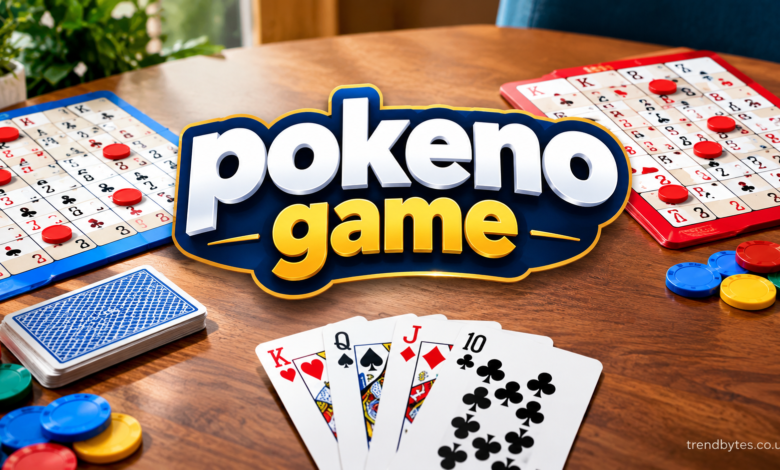
The pokeno game is a classic group game that combines elements of poker and bingo. Instead of calling numbers on a traditional bingo card, players use playing cards to match symbols and ranks on their individual boards. The result is a simple, social game that brings luck, attention, and friendly competition together.
Pokeno is popular with families, friends, and groups looking for an easy game to learn. It can be played at home, during parties, or at social gatherings, and the rules can be adjusted to suit different ages and group sizes.
Whether you are learning Pokeno for the first time or refreshing your memory, this guide explains the equipment, setup, rules, winning patterns, variations, and practical tips you need to get started.
What Is the Pokeno Game?
Pokeno is a card-matching game that combines the basic idea of bingo with a standard deck of playing cards. Players receive boards displaying different playing-card combinations, and a caller reveals cards one at a time.
When a revealed card matches a space on a player’s board, that player marks the corresponding space. The goal is to complete a required pattern before the other players do.
The game is easy to understand because players do not need advanced card-playing skills. Instead, they need to recognize cards, follow the caller, and mark their boards accurately.
Although Pokeno shares some features with poker and bingo, it is not the same as either game. It uses card symbols and bingo-style matching rather than traditional poker hands or numbered bingo calls.
Why Is the Pokeno Game Popular?
One reason Pokeno remains appealing is its simple format. Players can join in without spending much time learning complicated instructions.
It also works well for social gatherings. Players can chat between calls while still following the game, making it a suitable choice for family game nights, parties, and community events.
Another advantage is flexibility. Groups can play for fun, use small prizes, or introduce different winning patterns to keep the experience interesting.
What You Need to Play Pokeno
Before starting, gather the basic equipment. A traditional Pokeno set usually includes game boards and playing cards.
Here is what you need:
- Pokeno boards: Each player needs a board with spaces showing playing-card combinations.
- A standard deck of playing cards: A caller uses the deck to announce the cards drawn.
- Markers or chips: Players use these to cover matching spaces.
- A caller: One person draws cards and announces them to the group.
- A prize, if desired: Optional rewards can make the game more exciting.
Some sets include boards, chips, and instructions. If you do not have a commercial set, you can make your own boards, provided the card combinations and rules are clear to everyone.
Check that all players have the correct boards and enough markers before the first round begins.
How to Set Up a Pokeno Game
Setting up Pokeno takes only a few minutes once you have the equipment ready.
Step 1: Give Each Player a Board
Distribute one Pokeno board to each participant. Depending on the set, boards may contain different arrangements of playing cards.
Players should place their boards where they can see every space clearly. If several people are playing at a table, leave enough room for markers and the caller’s deck.
Step 2: Choose the Caller
Select one person to manage the playing cards. The caller shuffles the deck and draws cards one at a time.
The caller should announce each card clearly, including its rank and suit. For example, the caller might say, “King of hearts.”
Clear announcements help prevent confusion, especially when several players are talking.
Step 3: Prepare the Markers
Give each player enough chips or markers to cover the spaces on their board.
You can use traditional Pokeno chips, coins, buttons, or paper markers, as long as everyone uses the same system.
Step 4: Agree on the Winning Pattern
Before drawing the first card, decide what players must complete to win.
Depending on the rules being used, the winning pattern might be a row, a column, a diagonal, or a full board. Commercial sets and house rules may differ, so agree on the pattern before the game begins.
Pokeno Game Rules: How to Play
The main objective is to match the cards called by the caller to the corresponding spaces on your board.
Although some details vary by edition, the basic gameplay follows a straightforward process.
Step 1: Shuffle and Draw a Card
The caller thoroughly shuffles the playing cards and draws one card from the deck.
The caller announces the card so everyone can hear it. Players then check their boards for a matching space.
Step 2: Match the Card to Your Board
If the called card appears on your board, place a marker over that space.
For example, if the caller announces the seven of diamonds and your board contains that card, cover the matching space.
If the card does not appear on your board, wait for the next call.
Step 3: Continue Calling Cards
The caller continues drawing and announcing cards. Players keep checking their boards and covering matching spaces.
Pay close attention because missing a card can delay your progress toward the winning pattern.
Step 4: Complete the Required Pattern
Continue until a player completes the agreed winning pattern.
For example, if the group is playing for a horizontal row, a player wins by covering every space in one qualifying row, according to the set’s rules.
Step 5: Announce and Verify the Win
The winning player should announce the win immediately.
The caller or other players can check the covered spaces against the cards already called. This simple verification step helps ensure that everyone follows the same rules.
Once the win is confirmed, award the agreed prize, if any, and decide whether to start another round.
Understanding Pokeno Winning Patterns
Winning patterns determine how players complete a round. The exact patterns available depend on the board design and the rules chosen by the group.
<PRIVATE_PERSON>atterns commonly used in bingo-style games include the following.
Horizontal Row
A horizontal row runs from left to right across the board. Players must match every card in one designated row to complete it.
This is a good choice for beginners because the objective is easy to understand.
Vertical Column
A vertical column runs from the top of the board to the bottom. Players must cover all the required spaces in one column.
This variation can create a different challenge because the cards in a column may be distributed differently from those in a row.
Diagonal Pattern
A diagonal pattern runs across the board from one corner toward the opposite corner.
Before starting, make sure everyone knows which diagonal patterns count. Some boards may have different layouts, so the group should establish the rules in advance.
Full Board
A full-board game requires a player to cover all the spaces included in the winning area.
This version generally takes longer than completing a single row or column. It may be suitable when players want a longer round.
Important: These are common bingo-style patterns, not a guarantee that every commercial Pokeno edition uses all of them. Follow the instructions included with your set when they differ from house rules.
Best Tips for Playing Pokeno
Pokeno relies heavily on luck because players cannot control which cards the caller draws. However, good habits can make the game easier to follow and more enjoyable.
Pay Attention to Every Card
Listen carefully when the caller announces a card. If you miss an announcement, you may overlook a match on your board.
Keep your board in front of you and check it after each call.
Organize Your Markers
Keep unused markers in a small pile next to your board. This makes it easier to cover spaces quickly without searching for chips during the round.
If you use coins or buttons, make sure they are large enough to cover the spaces without hiding nearby cards.
Learn Your Board Layout
Take a moment to become familiar with your board before the game starts.
Knowing where the cards are located can help you find matches faster. However, remember that memorizing the layout does not change the cards that will be drawn.
Choose Clear House Rules
Agree on the winning pattern, how ties are handled, and what happens if two players call a win at nearly the same time.
For example, a group might decide to share a prize when two players complete the pattern on the same call, provided both wins are verified.
Clear rules help keep friendly games enjoyable.
Avoid Rushing
Mark each matching space carefully. Covering the wrong card or overlooking a space can create confusion when someone claims a win.
Accuracy matters more than speed, especially in larger groups.
Common Pokeno Game Mistakes to Avoid
Even a simple game can become confusing when players overlook the rules. These common mistakes are easy to prevent.
Forgetting the winning pattern: Players may assume a row or diagonal counts when the group agreed on something else. Confirm the pattern before the first card is drawn.
Marking the wrong space: Similar card ranks or suits can lead to mistakes. Check the full card, not just its rank.
Failing to shuffle properly: A well-shuffled deck helps randomize the order of the cards and supports fair play.
Not announcing a win promptly: Tell the group as soon as you complete the required pattern so the caller can verify it.
Changing rules midway: Avoid changing the winning condition after the round begins. Save new ideas for the next game.
Confusing Pokeno with poker: Although the name combines poker and bingo concepts, the standard matching format does not require players to form traditional poker hands.
Pokeno Game Variations for Family and Friends
Once everyone understands the basic rules, you can introduce variations to suit your group.
Team Pokeno
Divide players into teams. Teammates can help each other identify called cards, depending on the rules established before the game.
This option works well for groups that want a cooperative activity rather than individual competition.
Multiple-Round Pokeno
Play several rounds, changing the winning pattern each time. One round might use a row, while another might use a column or a full board.
If you want to keep score, award points for verified wins and declare an overall winner at the end.
Prize-Based Pokeno
For parties or social gatherings, offer small prizes such as snacks, stationery, or inexpensive gifts.
Agree on the prizes before playing. If money is involved, check applicable local rules and keep the activity appropriate for the participants.
Beginner-Friendly Pokeno
For children or first-time players, start with a simple winning pattern and explain how to match cards before beginning.
Use large markers and clear card announcements. The caller can also pause briefly after each draw to give everyone time to check their boards.
Pokeno vs. Bingo: What Is the Difference?
Pokeno and bingo share a matching-based format, but they use different calling systems.
| Feature | Pokeno | Traditional Bingo |
|---|---|---|
| Called items | Playing cards | Numbers, usually with letters |
| Game boards | Card-based spaces | Numbered grids |
| Matching method | Match called cards | Match called numbers |
| Winning patterns | Depend on board and rules | Depend on the bingo format |
| Main appeal | Card matching and social play | Number matching and group excitement |
Both games are suitable for social gatherings and can be adjusted to different skill levels.
The biggest difference is the type of information players match. Pokeno uses playing cards, while traditional bingo generally uses numbered calls.
People Also Ask About Pokeno Game
1. How do you play the Pokeno game?
Each player receives a board displaying playing cards. A caller draws and announces cards from a deck, and players cover matching spaces. The first player to complete the agreed winning pattern wins the round.
2. How many people can play Pokeno?
The number of players depends on the number of boards available in your set. Check the manufacturer’s instructions to determine the intended group size. Larger groups may need additional boards and enough space for everyone.
3. What do you need to play Pokeno?
You generally need Pokeno boards, a standard deck of playing cards, markers or chips, and someone to call the cards. Prizes are optional.
4. Is Pokeno the same as bingo?
No. Pokeno uses playing cards that players match to spaces on their boards, while traditional bingo usually uses numbered calls. Both games involve marking matching spaces and completing a required pattern.
5. Can you make your own Pokeno boards?
Yes, you can create homemade boards with clearly labeled playing-card combinations. Make sure the boards are easy to read and agree on the matching rules before beginning.
6. Is Pokeno a game of luck or skill?
Pokeno is primarily a game of luck because the caller determines which cards appear and players cannot control the order. Attention and accurate marking help players follow the game, but they do not guarantee a win.
7. What is the best Pokeno winning pattern?
There is no single best pattern for every group. A row or column is often suitable for a short beginner-friendly round, while a full-board pattern can create a longer game. Choose the pattern that fits your available time and board instructions.
8. Can children play Pokeno?
Children can enjoy a simplified version if they can recognize the cards and follow the rules. Use clear instructions, age-appropriate markers, and simple winning patterns. An adult can help younger players understand the game.
Conclusion
The pokeno game is an easy-to-learn card-matching activity that brings the excitement of bingo together with a standard deck of playing cards. Its simple setup, flexible rules, and social nature make it a good choice for family gatherings, parties, and game nights.
To get started, gather the boards, playing cards, and markers, choose a caller, and agree on the winning pattern. Pay attention to each card, mark matches carefully, and verify every winning claim before ending the round.
Whether you prefer a quick game with a simple row or a longer challenge with a full board, Pokeno offers an enjoyable way to spend time with friends and family. Start with the basic rules, introduce variations as your group becomes comfortable, and keep the focus on fair play and fun.