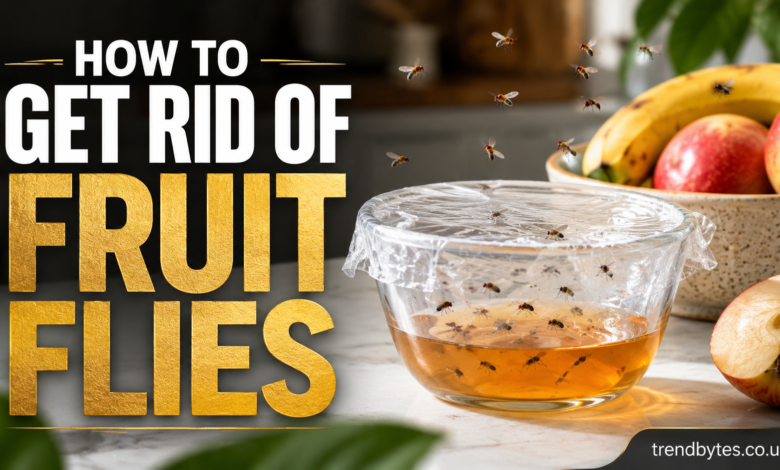
If you are wondering how to get rid of fruit flies, the key is to remove what attracts them, trap the adults, and clean the places where they may be breeding. These tiny flies can appear almost overnight around ripe fruit, kitchen drains, garbage cans, or spilled drinks.
Fortunately, a fruit fly problem does not usually require expensive products. With a few simple steps, you can reduce the adult flies quickly and prevent a new generation from appearing.
The most effective approach combines sanitation, homemade fruit fly traps, proper food storage, and drain cleaning. Here is exactly what to do.
How to Get Rid of Fruit Flies Quickly
Fruit flies are attracted to fermenting or decaying organic material. Even a small amount of spilled juice, an overripe banana, or residue inside a recycling container can provide an attractive food source.
For a quick solution, follow these steps:
- Remove overripe or damaged fruit.
- Take out the garbage and clean the trash can.
- Rinse bottles and cans before recycling them.
- Clean sticky spills from countertops and floors.
- Wash produce before storing it when appropriate.
- Clean kitchen drains and garbage disposals.
- Set up a fruit fly trap.
- Store ripe fruit in the refrigerator or sealed containers.
- Repeat cleaning and trapping for several days.
Killing the visible flies is only part of the solution. If breeding material remains somewhere in the kitchen, more flies can continue to emerge.
Why Do You Have Fruit Flies?
Fruit flies are attracted to sugary, fermented, and moist organic materials. They commonly appear in kitchens because food scraps and liquids are easy for them to find.
Common sources include:
- Ripe bananas, apples, peaches, and other fruit
- Fruit juice and soda spills
- Wine or other fermented drinks
- Garbage and compost containers
- Unwashed recycling containers
- Sticky residue under appliances
- Dirty kitchen drains
- Forgotten food in cabinets
- Damp organic material
Fruit flies are extremely small, so their breeding source may be easy to overlook.
For example, you may clean the countertop and throw away the fruit bowl but still have fruit flies because juice has collected beneath a refrigerator or food residue remains inside a drain.
Make an Easy Apple Cider Vinegar Trap
One of the simplest methods for catching adult fruit flies is an apple cider vinegar trap.
Fruit flies are strongly attracted to the smell of fermenting fruit. Apple cider vinegar can therefore work as an effective bait.
How to Make a Fruit Fly Trap
You will need:
- A small bowl or glass
- Apple cider vinegar
- A few drops of liquid dish soap
- Plastic wrap
- A toothpick
Pour a small amount of apple cider vinegar into the container. Add a few drops of dish soap and gently mix.
Cover the container with plastic wrap and make several tiny holes in the top.
Place the trap near the area where you see the most fruit flies.
The vinegar attracts the flies, while the soap reduces the surface tension of the liquid, making it harder for them to escape after landing.
You can also leave the container uncovered if you prefer a simpler setup.
Expert Tip
Do not place the trap across the room from the infestation. Put it close to the suspected source, such as the fruit bowl, recycling bin, or kitchen sink.
Replace the bait when it becomes dirty or loses its strong smell.
Clean Your Kitchen Drains
If you have removed obvious food sources but still see fruit flies, check your drains.
Organic residue can collect inside drain pipes and provide food for small flies. Simply wiping the sink surface may not remove this buildup.
Start by cleaning the drain and surrounding sink thoroughly. Remove visible debris and rinse the area with plenty of water.
A drain brush can help physically remove buildup from accessible areas.
Don’t Ignore the Garbage Disposal
If your kitchen has a garbage disposal, food particles can become trapped around the components and underneath the splash guard.
Clean the accessible parts according to the manufacturer’s instructions and regularly remove food debris.
Never mix household cleaning chemicals together. Some combinations can create dangerous fumes.
Remove the Things Fruit Flies Eat
Traps can reduce the number of adult flies, but sanitation is what helps stop the infestation.
Inspect your kitchen carefully.
Check:
- Fruit bowls
- Countertops
- Pantry shelves
- Recycling bins
- Trash cans
- Compost containers
- Under small appliances
- Around the refrigerator
- Kitchen drains
- Pet-food areas
Pay particular attention to anything sticky, damp, or fermented.
A tiny spill may not look important to you, but it can be enough to attract fruit flies.
Store Fruit Properly
Fruit left at room temperature can become attractive to fruit flies as it ripens.
Keep particularly ripe fruit refrigerated when suitable. Fruit that should remain at room temperature can be kept in a clean, covered area away from active infestations.
Check fruit regularly and discard pieces that are moldy, leaking, or significantly overripe.
Do not leave cut fruit exposed on counters for long periods.
Take Out the Garbage Regularly
Your trash can can become a hidden breeding area.
Food scraps, fruit peels, empty juice containers, and other organic waste can attract fruit flies.
To reduce the risk:
- Empty kitchen garbage frequently.
- Use bags that do not leak.
- Clean the inside of the trash can.
- Wipe the area around the garbage container.
- Keep food waste covered when possible.
- Clean compost containers regularly.
If you recently had a large amount of fruit waste, clean the container even if it does not appear dirty.
Clean Recycling Containers
Recycling is another commonly overlooked source.
An empty soda bottle, juice container, beer bottle, or wine bottle can retain enough liquid residue to attract fruit flies.
Rinse containers before putting them into your recycling bin.
Also clean the recycling container itself from time to time, especially if bottles and cans are stored indoors.
This simple habit can make a noticeable difference in preventing recurring infestations.
How Long Does It Take to Get Rid of Fruit Flies?
You may notice fewer adult flies within a day or two after removing their food sources and using traps. However, completely eliminating an infestation can take longer.
Fruit flies can reproduce quickly, so eggs or immature flies may remain even after you remove the adult insects.
Continue sanitation and trapping for at least several days after the visible population drops.
If flies keep returning, do not simply add more traps. Look for the hidden breeding source.
Common Mistakes to Avoid
Only Killing the Adult Flies
Swatting or spraying visible flies may provide temporary relief, but it does not address eggs or breeding material.
Always combine trapping with thorough cleaning.
Leaving Fruit on the Counter
A bowl of ripe fruit can become a constant food source.
If fruit is becoming very ripe, use it quickly, refrigerate it when appropriate, or discard damaged pieces.
Forgetting About Recycling
A container that looks empty may still contain enough sugary residue to attract flies.
Rinse bottles and cans before recycling.
Ignoring Small Spills
Fruit juice and sugary drinks can hide under appliances or inside cabinet edges.
Clean spills as soon as they happen.
Using Too Many Chemicals
More cleaning chemicals do not necessarily mean better results.
Focus on physically removing organic residue and follow product labels carefully. Never combine different household cleaners.
How to Prevent Fruit Flies From Coming Back
Once you eliminate the current infestation, prevention becomes much easier.
Keep countertops clean and dry. Store food in appropriate containers, refrigerate suitable produce, and take out food waste regularly.
Make drain and garbage-can cleaning part of your normal kitchen routine.
It is also useful to inspect fruit when bringing it home. Avoid storing visibly damaged or leaking produce with healthy fruit.
If you compost indoors, use a covered container and empty it frequently.
When Should You Consider Professional Pest Control?
A small kitchen infestation can usually be managed with sanitation and traps. However, professional help may be worth considering if the problem continues despite thorough cleaning.
Persistent flies may indicate a hidden organic source, plumbing issue, moisture problem, or a different type of small fly.
If the insects do not look like typical fruit flies, identification is especially important. Drain flies, fungus gnats, and fruit flies can look similar at first but often require different control strategies.
A pest professional can help identify the insect and locate the source when a recurring infestation is difficult to control.
People Also Ask
What is the fastest way to get rid of fruit flies?
The fastest approach is to remove their food and breeding sources while trapping the adult flies. Clean fruit residue, garbage, recycling containers, drains, and spills, then place an apple cider vinegar trap near the infestation.
How do I get rid of fruit flies overnight?
You can significantly reduce visible fruit flies overnight by removing exposed food, cleaning the kitchen, taking out garbage, and placing a vinegar-and-dish-soap trap nearby. Complete elimination may take several days.
Does vinegar really get rid of fruit flies?
Apple cider vinegar can attract and trap adult fruit flies, but it does not replace sanitation. For lasting control, remove the materials that allow the flies to feed and reproduce.
Why do I suddenly have so many fruit flies?
A sudden increase often occurs when fruit becomes overripe or when fermenting food residue, spilled drinks, garbage, recycling, or organic buildup provides a breeding site.
Can fruit flies come from the drain?
Yes. Organic residue inside a drain can provide food and breeding conditions for small flies. Thorough drain cleaning and removal of buildup can help eliminate the source.
How can I keep fruit flies from coming back?
Store ripe food properly, clean spills quickly, rinse recyclable containers, empty garbage regularly, keep kitchen surfaces clean, and check drains and compost containers for organic buildup.
Are fruit flies the same as drain flies?
No. Fruit flies and drain flies are different insects. Fruit flies are commonly associated with fermenting food and liquids, while drain flies are often associated with organic buildup in drains and other consistently damp areas.
When should I call an exterminator for fruit flies?
Consider professional pest control when the infestation continues despite several days of careful sanitation and trapping, or when you cannot locate the source. Professional identification can also help if the insects may not actually be fruit flies.
Conclusion
Learning how to get rid of fruit flies is mostly about finding and removing the source rather than simply killing the insects you can see.
Start by throwing away overripe food, cleaning sticky surfaces, taking out garbage, rinsing recycling, and checking drains. Then use a simple apple cider vinegar trap to reduce the adult population.
Most importantly, stay consistent. Because fruit flies can reproduce quickly, one overlooked food source can keep an infestation going.
With good kitchen sanitation, proper food storage, regular waste removal, and targeted traps, you can get control of fruit flies and make your home much less attractive to them.