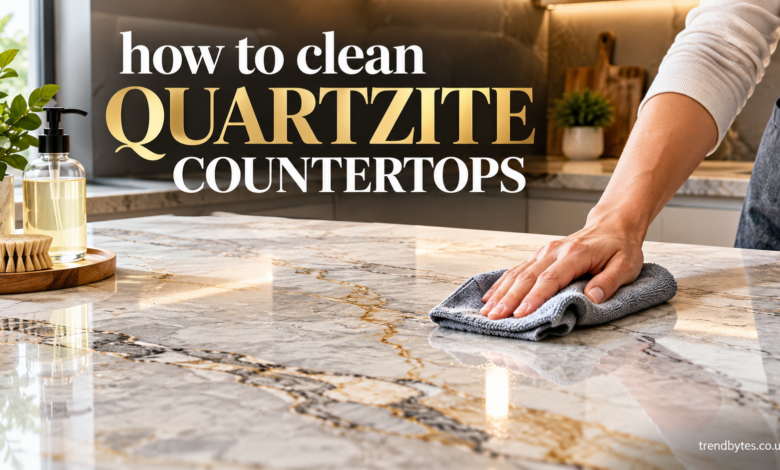
Learning how to clean quartzite countertops properly can help preserve their natural beauty and keep them looking fresh for years. Quartzite is a natural stone known for its strength, durability, and attractive patterns, but it still needs the right cleaning routine.
For everyday messes, you usually do not need expensive products. Warm water, a soft microfiber cloth, and a mild, stone-safe cleaner can handle most spills and surface dirt.
The important part is knowing what to avoid. Harsh chemicals, abrasive scrubbers, acidic cleaners, and improper cleaning techniques can damage the finish or affect the appearance of the stone over time.
This guide explains the best way to clean quartzite countertops, remove common stains, protect the surface, and avoid mistakes that can shorten the life of your countertop.
How to Clean Quartzite Countertops Every Day
Daily cleaning should be simple and gentle. Quartzite is a durable natural stone, but regular maintenance helps prevent grease, food residue, and mineral buildup from becoming harder to remove.
Start by clearing crumbs and loose debris from the countertop. A soft dry cloth works well for this step.
Next, dampen a microfiber cloth with warm water and wipe the surface. If the countertop has grease or food residue, add a small amount of mild dish soap or use a cleaner specifically labeled safe for natural stone.
After cleaning, wipe the surface with clean water to remove any remaining soap. Drying the countertop with a clean microfiber towel can help prevent water spots and streaks.
This routine is usually enough for everyday kitchen use.
How to Clean Quartzite Countertops With Dish Soap
Mild dish soap can be useful when you need to remove light grease or food residue.
Mix a small amount of mild dish soap with warm water. Dip a soft cloth into the solution, wring it out, and gently wipe the countertop.
Avoid soaking the surface unnecessarily. Although quartzite itself is dense, many quartzite countertops have a protective sealer, and good cleaning habits help maintain that finish.
Once the surface is clean, rinse the cloth and wipe away soap residue. Finish by drying the countertop.
What Is the Best Cleaner for Quartzite Countertops?
The best everyday cleaner is one that is gentle and specifically suitable for natural stone.
A pH-neutral stone cleaner is a reliable choice for regular maintenance. Mild dish soap diluted with water can also work for many routine cleaning jobs.
Always read the cleaner’s label before using it. A product that is safe for one countertop material may not be appropriate for another.
Quartzite is sometimes confused with quartz because their names are similar. However, natural quartzite and engineered quartz are different materials and may have different care recommendations.
When in doubt, follow the care instructions supplied by your countertop manufacturer, fabricator, or installer.
How to Remove Stains From Quartzite Countertops
Quartzite is generally resistant to staining, but spills should still be cleaned promptly.
Coffee, wine, tomato sauce, cooking oil, and other strongly colored substances can become more difficult to remove if allowed to sit for a long time.
For a fresh spill, blot it with a soft cloth rather than rubbing it across the countertop.
Then clean the area with warm water and mild soap or a suitable stone cleaner. Rinse and dry the surface afterward.
If a stain remains, do not immediately use a harsh chemical. First determine what caused the stain because different types of discoloration may require different treatments.
How to Clean Quartzite Countertops With Oil Stains
Greasy marks are common in busy kitchens. Cooking oil, butter, salad dressing, and oily sauces can leave a noticeable spot on the surface.
Begin with warm water and mild dish soap. Gently clean the area with a soft microfiber cloth.
If the mark remains, repeat the process rather than scrubbing harder. Persistent oil stains may require a stone-safe degreasing product.
For an older or stubborn stain, a professional stone-care specialist may be able to determine whether the discoloration is on the surface or related to the stone or sealer.
Can You Use Vinegar on Quartzite?
It is best to avoid vinegar as a routine quartzite countertop cleaner.
Vinegar is acidic, and repeated exposure to acidic products is not a good cleaning habit for natural stone surfaces. Strong acids can also affect certain finishes and sealers.
Instead, choose a pH-neutral stone cleaner or use mild soap and water for everyday cleaning.
The same principle applies to other acidic household cleaners. A product does not need to be powerful to be effective.
Can You Use Windex on Quartzite Countertops?
Do not assume that a general glass cleaner is automatically suitable for quartzite.
Some household glass cleaners contain ingredients that may not be recommended for natural stone or sealed surfaces. Instead of relying on a general-purpose cleaner, choose a product specifically labeled for natural stone countertops.
If you have been using a particular cleaner for a long time, check its ingredients and manufacturer recommendations before continuing.
Can You Use Bleach on Quartzite?
Bleach is not normally necessary for routine quartzite countertop cleaning.
Strong disinfecting chemicals can be harder on countertop finishes than gentle cleaners. If you need to disinfect the surface, use a product that is clearly identified as suitable for your specific natural stone and follow the manufacturer’s instructions.
For everyday kitchen messes, mild soap and water are usually a better starting point.
How to Prevent Scratches and Surface Damage
Quartzite is hard and durable, but no countertop is completely immune to damage.
Use cutting boards rather than cutting directly on the countertop. This protects the surface while also providing a more stable and hygienic cutting area.
Be careful when moving heavy cookware, appliances, ceramic dishes, and other objects. Do not drag rough or heavy items across the stone.
Although quartzite can withstand considerable everyday use, protecting the surface from unnecessary abrasion is a simple way to maintain its appearance.
Should Quartzite Countertops Be Sealed?
Many quartzite countertops are sealed because natural stone can have varying degrees of porosity.
A sealer creates a protective barrier that can make the countertop more resistant to staining and easier to maintain. However, sealing does not mean the surface can be neglected.
Sealers can wear down with time, particularly in high-use kitchens. The appropriate resealing schedule depends on the specific quartzite, sealer, installation, and amount of use.
Instead of automatically resealing every year, follow the recommendations from the stone professional who installed or fabricated the countertop.
How to Tell If Quartzite Needs Resealing
One common way to evaluate a natural stone sealer is to place a small amount of water on a clean, inconspicuous area and observe the surface according to the sealer manufacturer’s testing guidance.
If the stone appears to absorb moisture quickly or develops a darker wet-looking area, the protective treatment may need attention.
However, water testing is not a perfect measure for every quartzite or sealer. If you are unsure, ask a qualified stone professional to evaluate the countertop.
Common Quartzite Cleaning Mistakes to Avoid
Even durable stone can suffer from poor cleaning habits. Avoid these common mistakes.
Using Abrasive Scrubbers
Steel wool, rough scouring pads, and abrasive powders can scratch or dull the surface.
Use microfiber cloths, soft sponges, or other nonabrasive cleaning tools instead.
Using Acidic Cleaners
Regular use of vinegar, lemon-based cleaners, or other acidic products is unnecessary.
A pH-neutral stone cleaner is a safer choice for routine maintenance.
Leaving Spills for Too Long
Quartzite is stain resistant, but prompt cleanup is still one of the best habits you can develop.
Wipe up coffee, wine, oil, sauces, and other spills as soon as practical.
Using Too Much Cleaner
More cleaner does not necessarily mean a cleaner countertop.
Excess product can leave behind residue and create streaks. Follow the label instructions and use only the amount needed.
Assuming Quartz and Quartzite Are the Same
This is a common source of confusion.
Quartzite is a natural stone, while quartz countertops are engineered surfaces made using quartz and other materials. Their care requirements can differ.
Always identify your countertop material before choosing a cleaning product.
Best Practices for Long-Term Quartzite Care
A consistent maintenance routine is more effective than occasional aggressive cleaning.
Follow these simple habits:
- Wipe spills promptly.
- Use warm water for basic cleaning.
- Choose mild dish soap or a pH-neutral stone cleaner.
- Clean with microfiber cloths or soft sponges.
- Rinse away cleaning residue.
- Dry the surface after cleaning.
- Use cutting boards during food preparation.
- Use trivets or protective pads when appropriate.
- Avoid abrasive cleaning products.
- Avoid acidic cleaners for routine care.
- Follow your fabricator’s sealing recommendations.
- Address unusual stains before trying aggressive treatments.
These habits can help preserve the countertop’s finish while reducing the need for intensive cleaning.
How to Clean Quartzite Countertops After Cooking
After preparing a meal, allow the countertop to cool if it has been exposed to heat.
Remove crumbs and food debris first. Then wipe the surface with a damp microfiber cloth.
For greasy areas, use warm water with a small amount of mild dish soap. Work gently across the surface until the residue is gone.
Rinse the cloth and wipe the countertop again with clean water. Finally, dry it with a soft towel.
This takes only a few minutes and can prevent cooking residue from building up over time.
How to Handle Hard Water Spots
Hard water can leave white or cloudy-looking mineral deposits around sinks and faucets.
Because acidic cleaners are not ideal for routine natural stone care, avoid reaching immediately for vinegar.
Instead, start with a damp microfiber cloth and a stone-safe cleaner. For stubborn mineral deposits, choose a product specifically designed to remove them from natural stone and follow its instructions.
Preventing standing water is also helpful. Wiping around the sink after use can reduce mineral buildup.
When to Call a Professional
Most everyday quartzite cleaning can be handled without professional assistance.
However, consider professional help if you encounter deep discoloration, stubborn stains, chips, cracks, scratches, or a damaged sealer.
A professional stone fabricator or restoration specialist can determine whether the issue is related to surface residue, staining, etching, the sealer, or the stone itself.
Trying several aggressive chemicals at home can sometimes make restoration more difficult, so professional advice is worthwhile when a basic cleaning routine does not solve the problem.
People Also Ask
1. What is the best way to clean quartzite countertops?
Use warm water with mild dish soap or a pH-neutral cleaner made for natural stone. Wipe with a soft microfiber cloth, rinse away residue, and dry the surface.
2. Can I use Dawn dish soap on quartzite?
A small amount of mild dish soap can be suitable for routine cleaning. Dilute it with warm water and rinse the surface afterward to prevent soap buildup.
3. Can you use vinegar to clean quartzite countertops?
Vinegar is not recommended as a routine cleaner for quartzite. Choose mild soap and water or a pH-neutral stone cleaner instead.
4. How do you get stains out of quartzite?
Start with gentle cleaning using warm water and mild soap. If the stain remains, identify its cause and use a stone-safe treatment designed for that type of stain.
5. Does quartzite need to be sealed?
Many quartzite countertops benefit from sealing because natural stone can vary in porosity. The need and frequency of resealing depend on the specific stone and sealer.
6. Can you use Windex on quartzite?
It is better to use a cleaner specifically labeled for natural stone. General glass cleaners may contain ingredients that are not ideal for every quartzite surface or sealer.
7. Can quartzite countertops be damaged by cleaning products?
Yes. Harsh chemicals, abrasive products, and unsuitable acidic cleaners may affect the surface, finish, or sealer. Use products appropriate for natural stone.
8. How often should quartzite countertops be cleaned?
Clean them whenever they become dirty or after food preparation. A quick daily wipe and prompt spill cleanup are usually enough for normal household use.
Final Thoughts on How to Clean Quartzite Countertops
Understanding how to clean quartzite countertops is mostly about using gentle products and consistent habits. You do not need a complicated collection of cleaners to maintain a beautiful natural stone surface.
For everyday care, warm water, mild dish soap, a pH-neutral stone cleaner, and a soft microfiber cloth can handle most common messes. Clean spills promptly, avoid abrasive scrubbers and acidic products, and protect the surface from unnecessary scratches.
It is also important to remember that quartzite and quartz are different countertop materials. When it comes to sealing, specialized stain removal, or restoration, follow the recommendations for your specific stone.
With the right routine and a little preventive care, quartzite countertops can remain durable, attractive, and functional for many years.