Knowing how to clean soapstone countertops properly is simple once you understand how this natural stone behaves. Soapstone is durable, nonporous, and naturally resistant to many stains, so it does not require complicated cleaning products or special equipment.
For everyday cleaning, warm water, a soft cloth, and a small amount of mild dish soap are usually enough. The key is to avoid harsh chemicals, abrasive tools, and cleaning habits that can dull or scratch the surface.
Whether you have a new soapstone kitchen countertop or an older surface that needs some attention, this guide explains the safest cleaning methods, how to remove common stains, and how to keep soapstone looking beautiful for years.
How to Clean Soapstone Countertops for Everyday Cleaning
Daily cleaning is one of the easiest parts of owning soapstone. Because soapstone is nonporous, spills generally stay on the surface instead of soaking deeply into the stone.
Start by removing crumbs, food particles, or other loose debris with a dry or slightly damp microfiber cloth.
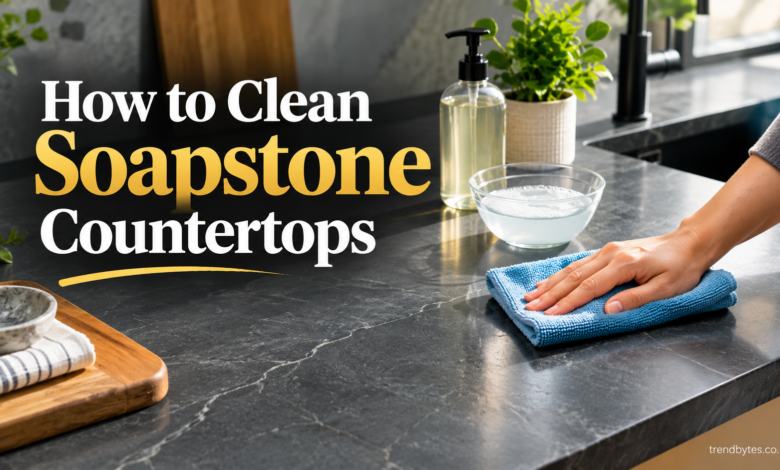
Next, mix warm water with a small amount of mild dish soap. Dampen a soft cloth or sponge with the solution and gently wipe the countertop.
After cleaning, wipe the surface again with clean water to remove soap residue. Finally, dry it with a clean microfiber towel.
This simple routine works well for most everyday messes, including food spills, cooking oils, drink marks, and light dirt.
How to Clean Soapstone Countertops With Dish Soap
Mild dish soap is one of the most practical choices for routine soapstone care.
Add a few drops of gentle dish soap to a bowl of warm water. Dip a soft cloth into the mixture, wring it out, and wipe the countertop using gentle, overlapping motions.
There is no need to scrub aggressively. Soapstone is tough, but unnecessary abrasion can affect its appearance over time.
For a heavily soiled area, let the soapy water sit for a short time before wiping it clean.
What Makes Soapstone Easy to Maintain?
Soapstone is a natural stone made primarily from talc and other minerals. Its composition gives it a distinctive soft, smooth feel compared with harder stones such as granite.
One major advantage is that soapstone is nonporous. Liquids do not penetrate it in the same way they can penetrate porous natural stones.
This makes soapstone useful in kitchens, bathrooms, laboratories, and other areas where spills are common.
However, nonporous does not mean impossible to damage. Soapstone can develop scratches and changes in appearance, particularly on frequently used countertops.
The good news is that many minor scratches are considered part of soapstone’s natural character and can often be blended or treated relatively easily.
How to Remove Stains From Soapstone Countertops
Although soapstone is highly stain resistant, certain spills can leave visible marks or discoloration on the surface.
If you notice a fresh spill, clean it as soon as practical. Blot liquids rather than spreading them around.
For a stubborn mark, begin with mild dish soap and warm water. Use a soft sponge and gently work over the affected area.
If that does not work, a stronger cleaning approach may be appropriate depending on the type of stain. Always start with the mildest method because aggressive cleaning is rarely necessary for routine soapstone maintenance.
Removing Grease and Oil From Soapstone
Kitchen countertops frequently encounter cooking oil, butter, sauces, and greasy foods.
Start with warm water and mild dish soap. Dish soap is designed to break down grease, making it a useful first choice.
Apply the soapy solution with a soft cloth and wipe the area thoroughly. For heavier grease, repeat the process rather than immediately reaching for a harsh chemical cleaner.
Once the grease is gone, rinse the area with clean water and dry the countertop.
Removing Food and Drink Spills
Coffee, tea, wine, juice, and sauces should be wiped up when possible, even though soapstone is naturally resistant to staining.
For a normal spill, use a damp microfiber cloth followed by mild soapy water if necessary.
Avoid using a rough scrub pad simply because a spill looks difficult. Gentle cleaning is generally the better approach.
Can You Use Vinegar on Soapstone Countertops?
Vinegar is acidic, so it is not the best choice for routine soapstone countertop cleaning.
Soapstone itself is relatively resistant to many household substances, but there is little reason to use acidic cleaners when warm water and mild dish soap can handle most everyday messes.
A simple cleaning routine reduces the chance of unwanted surface changes and avoids exposing your countertop to unnecessary chemicals.
If you are unsure whether a particular cleaner is appropriate, check the product instructions and, when possible, test it on a small inconspicuous area first.
Can You Use Bleach on Soapstone?
Bleach and other strong chemical cleaners are generally unnecessary for routine soapstone countertop care.
While soapstone is chemically resistant compared with many other natural stones, using powerful chemicals can create unnecessary risks, especially if the countertop has been treated with an oil or finish.
For normal kitchen cleaning, stick with mild soap and water.
If you need to disinfect a countertop, choose a product specifically suitable for the surface and follow its directions carefully.
How to Clean Soapstone Countertops Without Scratching Them
Soapstone is softer than many common countertop materials, so scratches can occur.
The safest approach is to use soft cleaning materials. Microfiber cloths, soft sponges, and nonabrasive cleaning pads are good options for routine maintenance.
Avoid steel wool, harsh scouring pads, and abrasive powders unless you are intentionally performing a repair or refinishing task.
Do not drag heavy cookware, appliances, or rough objects across the countertop.
For example, placing a cast-iron pan directly on soapstone is usually not a problem from a heat-resistance standpoint, but sliding the pan across the surface can leave a mark.
How to Handle Scratches on Soapstone
Small scratches are normal with soapstone and can become less noticeable as the countertop develops its natural patina.
For a minor surface scratch, gently rubbing the affected area with very fine sandpaper may help blend it with the surrounding surface. However, sanding changes the texture and appearance, so it should be done carefully.
Afterward, clean away the dust and evaluate the surface before applying any additional treatment.
For deeper scratches or extensive damage, professional stone restoration may be the better option.
Should You Oil Soapstone Countertops After Cleaning?
Soapstone does not require oil to remain functional or protected. However, some homeowners use mineral oil or a soapstone-specific treatment to deepen the stone’s color and create a more uniform appearance.
Oiling is primarily an aesthetic choice rather than a requirement for preventing water damage.
If you decide to oil the countertop, make sure the surface is completely clean and dry first. Apply a small amount of appropriate oil with a soft cloth and spread it evenly.
Do not apply an excessive amount. Too much oil can leave the surface feeling greasy and may create uneven patches.
Follow the care recommendations provided by your countertop installer or manufacturer, especially if the surface has a specific finish.
Common Mistakes to Avoid
Proper soapstone care is easy, but several common mistakes can create unnecessary problems.
Using Abrasive Cleaners
Abrasive powders and rough scrubbers can alter the surface and make scratches more noticeable.
Use gentle cleaning materials for normal maintenance.
Leaving Thick Soap Residue
Soap residue can make a countertop look cloudy or dull. After cleaning, wipe the surface with clean water and dry it.
Using Too Much Oil
Oil can enhance soapstone’s appearance, but applying too much can create a sticky or uneven surface.
A thin, even application is usually better than saturating the countertop.
Scrubbing Every Mark Aggressively
Not every mark requires heavy scrubbing. Soapstone naturally develops character over time, and minor surface marks may blend into its overall appearance.
Ignoring Spills for Long Periods
Soapstone is stain resistant, but promptly cleaning spills is still a good countertop habit. It also prevents sticky residue and buildup.
Best Practices for Long-Term Soapstone Care
A few simple habits can keep your countertop looking attractive and functional.
- Wipe up spills when you notice them.
- Use warm water and mild dish soap for routine cleaning.
- Choose microfiber cloths or soft sponges.
- Dry the surface after cleaning when practical.
- Use cutting boards instead of cutting directly on the countertop.
- Avoid abrasive cleaning products.
- Do not drag heavy or rough objects across the surface.
- Apply mineral oil only if you want the appearance it provides.
- Follow the care instructions supplied with your specific countertop.
The biggest advantage of soapstone is that it does not require a complicated maintenance schedule. Consistent gentle cleaning is usually more valuable than occasional intensive cleaning.
Soapstone vs. Other Countertop Materials
Soapstone has a different maintenance profile from granite, marble, quartz, and other countertop materials.
Granite is harder and generally handles scratching very well, but some granite varieties require sealing. Marble can be more vulnerable to etching from acidic substances.
Quartz is engineered and has its own manufacturer-specific cleaning recommendations.
Soapstone, by comparison, is nonporous and does not need sealing. Its softer nature means scratches can occur more easily, but many homeowners appreciate the natural patina that develops with use.
The best countertop care method depends on the specific material, finish, and manufacturer’s recommendations.
When Should You Consider Professional Cleaning or Restoration?
Most soapstone countertops can be maintained at home with basic cleaning supplies.
Professional help may be worthwhile if you have deep scratches, extensive discoloration, an uneven finish, or a countertop that needs refinishing.
A professional can evaluate whether the surface needs sanding, refinishing, or another restoration method.
Before attempting major repairs yourself, consider how much material would need to be removed and whether the repair could create a visible difference in texture.
People Also Ask
1. What is the best cleaner for soapstone countertops?
Warm water and a small amount of mild dish soap are excellent choices for everyday soapstone cleaning. A soft cloth or sponge is usually all you need.
2. Can you use dish soap on soapstone?
Yes. Mild dish soap diluted in warm water is commonly suitable for routine cleaning. Rinse away residue and dry the surface afterward.
3. Is soapstone easy to clean?
Yes. Its nonporous nature makes soapstone relatively easy to clean and resistant to many common kitchen stains.
4. Can you use vinegar to clean soapstone?
It is better to avoid vinegar for routine cleaning. Mild soap and water are sufficient for most everyday messes and eliminate the need for acidic cleaners.
5. How do you get stains out of soapstone?
Begin with warm water and mild dish soap. Gently clean the affected area and repeat if necessary rather than immediately using an aggressive cleaner.
6. Does soapstone need to be sealed?
No. Soapstone is naturally nonporous, so it does not require sealing in the same way that some porous natural stones do.
7. Should soapstone countertops be oiled?
Oiling is optional and mainly changes the appearance of the stone. Some homeowners use mineral oil to deepen the color and create a more consistent look.
8. How do you remove scratches from soapstone?
Minor scratches can sometimes be blended using very fine sandpaper. Deeper scratches may require more extensive refinishing or professional restoration.
Final Thoughts on How to Clean Soapstone Countertops
Learning how to clean soapstone countertops does not require expensive products or complicated techniques. For most daily messes, warm water, mild dish soap, and a soft cloth are enough.
Because soapstone is naturally nonporous, it is resistant to many common stains and does not require sealing. At the same time, its softer surface can develop scratches and a natural patina, which many homeowners consider part of its charm.
The best approach is simple: clean spills promptly, avoid abrasive materials, skip unnecessary harsh chemicals, and use oil only when you want the appearance it provides.
With gentle, consistent care, a soapstone countertop can remain a practical and attractive part of your home for many years.