Aspic: What It Is, How to Make It, and Why This Classic Dish Still Matters

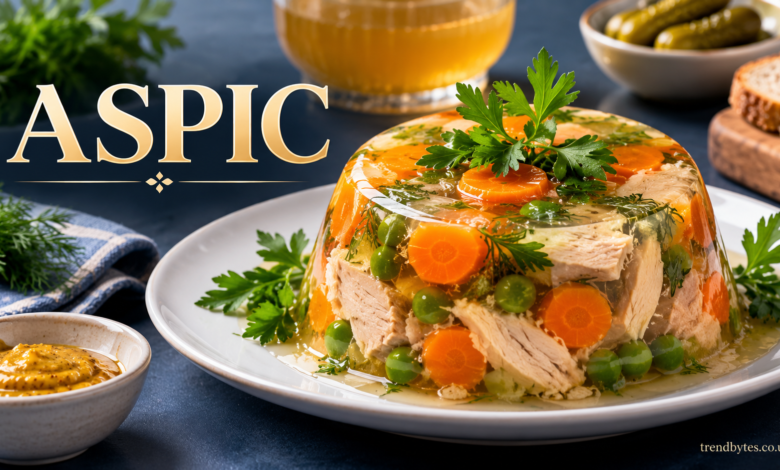
Aspic is a traditional savory dish made by setting meat, seafood, vegetables, or eggs in a clear, flavorful gelatin. It is one of those foods that can seem unusual at first, but its history, preparation, and elegant presentation make it worth discovering.
Unlike sweet gelatin desserts, aspic is usually made with a savory stock or broth. It can be served as a chilled appetizer, a molded centerpiece, or part of a classic cold buffet.
Whether you are curious about what aspic tastes like, want to learn how to make aspic at home, or are exploring traditional European cuisine, this guide covers everything you need to know.
What Is Aspic?
Aspic is a savory jelly made by setting a flavorful liquid with gelatin. The liquid usually comes from meat stock, poultry broth, fish stock, or another savory base.
When chilled, the gelatin turns the liquid into a firm or softly set jelly. Ingredients such as cooked meat, vegetables, seafood, and herbs can be suspended inside it.
The result is a dish that combines rich flavor with a smooth, often transparent appearance.
What Does Aspic Taste Like?
Aspic generally tastes like the broth or stock used to make it.
A chicken aspic may have a mild, savory chicken flavor. A beef version can taste rich and meaty, while fish aspic often has a lighter seafood taste.
The gelatin itself is mostly neutral in flavor. Its main purpose is to create the texture that holds the ingredients together.
Aspic can be:
- Savory and rich.
- Light and herb-filled.
- Meaty and hearty.
- Delicate and seafood-based.
- Mild or strongly seasoned, depending on the recipe.
Because it is served cold, the seasoning should be balanced carefully. Chilling can make flavors seem less intense than they do in a warm broth.
The History of Aspic
Aspic has a long history in European cooking. Before modern powdered gelatin became widely available, cooks often relied on the natural gelatin found in animal bones, skin, and connective tissue.
When these ingredients were simmered for a long time, they released collagen that could help the cooled stock set into a jelly.
Early Uses of Aspic
Traditional aspic was closely connected to practical cooking. It provided a way to preserve and present cooked foods in a chilled form.
Meat, poultry, and fish could be arranged in a mold and covered with a seasoned stock. Once the liquid cooled, it formed a protective jelly around the ingredients.
Aspic became especially associated with French cuisine and later appeared in many European culinary traditions.
Aspic in Classic Cuisine
In traditional French cooking, aspic was used for dishes such as cold meats, pâtés, poultry, and seafood preparations.
It was often valued for its appearance as much as its flavor. A clear jelly could make a dish look polished and carefully prepared.
Over time, aspic became part of formal dining, hotel buffets, and classic restaurant cooking.
How Is Aspic Made?
Making aspic involves preparing a flavorful liquid, adding gelatin if needed, arranging ingredients, and allowing everything to set.
The process is easier than it may seem, especially when using powdered or sheet gelatin.
Ingredients for Basic Aspic
For a simple chicken or vegetable aspic, you may need:
- 4 cups of clear chicken or vegetable stock.
- 1 tablespoon of unflavored powdered gelatin, or the amount recommended for the desired firmness.
- 1–2 cups of cooked chicken, vegetables, or other fillings.
- 1 tablespoon of lemon juice, optional.
- Salt and black pepper, to taste.
- Fresh parsley, dill, or other herbs.
- A small amount of onion, carrot, or celery for extra flavor.
The exact gelatin quantity depends on the brand, the liquid, and whether you want a soft or firm set.
Step-by-Step Aspic Recipe
1. Prepare the Stock
Start with a flavorful stock. Homemade stock can provide excellent taste, but a good-quality prepared stock also works.
If the stock contains too much fat or sediment, strain it through a fine-mesh strainer.
For a clearer aspic, remove visible fat from the surface.
2. Season the Liquid
Warm the stock gently and season it with salt, pepper, herbs, and a little lemon juice if desired.
Remember that cold food often needs slightly more seasoning than hot food. However, taste carefully to avoid making it too salty.
3. Add the Gelatin
If using powdered gelatin, sprinkle it over a small amount of cool water and allow it to bloom according to the package directions.
Then stir the bloomed gelatin into the warm stock until fully dissolved.
Do not boil the gelatin mixture unnecessarily. Excessive heat can affect the setting performance of some gelatin products.
4. Arrange the Fillings
Place cooked chicken, vegetables, eggs, or other ingredients into a mold.
For a decorative presentation, arrange the ingredients carefully before pouring in the liquid.
5. Pour in the Stock
Slowly pour the gelatin mixture over the fillings.
Make sure the ingredients are covered evenly. If they float, gently press them down or pour the liquid in stages.
6. Chill Until Set
Place the mold in the refrigerator until the aspic is fully set.
This commonly takes several hours, depending on the depth of the mold and the gelatin strength.
7. Unmold and Serve
To remove the aspic, briefly dip the outside of the mold in warm water.
Place a serving plate over the top and carefully turn it over.
If the aspic does not release, repeat the warm-water step briefly. Avoid using water that is too hot, as it can melt the outer layer.
Popular Types of Aspic
Aspic can be made with many different ingredients. The main difference is the filling and the stock used.
Chicken Aspic
Chicken aspic is a classic choice for beginners.
It often includes cooked chicken, carrots, peas, herbs, and a clear chicken stock.
The mild flavor makes it easy to customize, and the colorful vegetables create an attractive presentation.
Beef Aspic
Beef aspic has a deeper, richer flavor.
It may contain cooked beef, onions, carrots, parsley, and a savory beef stock.
Traditional versions can be quite firm and are often served in slices.
Fish Aspic
Fish aspic uses seafood stock or a light gelatin-rich broth.
Common fillings include cooked fish, shrimp, salmon, or vegetables.
Because seafood is delicate, the stock should be well-seasoned but not overpowering.
Vegetable Aspic
Vegetable aspic is a lighter option that can be made with vegetable stock and gelatin.
It may include:
- Carrots.
- Peas.
- Green beans.
- Corn.
- Bell peppers.
- Fresh herbs.
For a vegetarian version, use a suitable plant-based setting agent such as agar-agar, following its preparation instructions.
Aspic vs. Jellied Meat
Aspic and jellied meat are closely related, but they are not exactly the same.
Aspic describes the savory gelatin or jelly used to hold ingredients together.
Jellied meat usually refers to meat that has been cooked and chilled in a gelatin-rich broth until it sets.
Key Difference
Aspic can be made with meat, fish, vegetables, or other fillings.
Jellied meat generally focuses on the meat itself and the natural gelatin released during cooking.
Both are served cold and can have a firm, sliceable texture.
Tips for Making Clear and Flavorful Aspic
A good aspic should look clean, taste balanced, and hold its shape.
Here are some practical tips for better results.
Use a Clear Stock
Cloudy stock can produce cloudy aspic.
Strain the broth carefully and remove excess fat before adding gelatin.
If presentation matters, use a light-colored stock and avoid ingredients that release too much starch into the liquid.
Season Before Chilling
Cold food can taste less seasoned than warm food.
Taste the stock before it sets and adjust the seasoning gradually.
Salt, herbs, pepper, and a small amount of acid can help create a balanced flavor.
Do Not Overfill the Mold
Too many fillings can make aspic difficult to slice.
Leave enough space for the liquid to surround the ingredients.
A balanced ratio of gelatin to filling creates a more attractive and stable result.
Allow Enough Chilling Time
Aspic needs time to set fully.
If you remove it too early, it may break apart or remain too soft.
For best results, prepare it several hours before serving.
Common Mistakes to Avoid
Even simple aspic recipes can go wrong if the preparation is rushed.
Mistake 1: Using Too Little Gelatin
Too little gelatin can result in a weak set.
Follow the instructions on your gelatin package and consider the total amount of liquid.
Mistake 2: Adding Ingredients That Are Too Hot
Very hot ingredients can affect the setting process.
Allow cooked fillings to cool before arranging them in the mold.
Mistake 3: Forgetting Food Safety
Aspic is a chilled dish containing ingredients that may spoil if handled improperly.
Keep it refrigerated and avoid leaving it at room temperature for long periods.
Mistake 4: Making the Stock Too Salty
As the stock becomes chilled, its flavor changes.
A broth that tastes extremely salty when warm may be unpleasant in the finished aspic.
Season carefully and taste before setting.
How to Serve Aspic
Aspic is usually served cold, often as an appetizer or part of a buffet.
It can be sliced, cut into cubes, or unmolded as a centerpiece.
Serving Ideas
Try serving aspic with:
- Fresh salad greens.
- Mustard.
- Horseradish sauce.
- Pickles.
- Crusty bread.
- Fresh herbs.
- Light vinaigrette.
A simple chicken aspic can be served with a green salad for a classic cold meal.
For a more formal presentation, use small molds and decorate the top with herbs or colorful vegetables.
Is Aspic Healthy?
Aspic can be part of a balanced diet, but its nutritional value depends on the ingredients.
A vegetable-based aspic with lean chicken may be relatively light. A rich beef aspic may contain more fat and sodium.
Gelatin provides protein, but aspic should not be treated as a complete nutritional supplement.
Nutrition Considerations
When making aspic at home, you can control:
- Salt levels.
- Fat content.
- The amount of meat.
- The types of vegetables.
- The portion size.
For a lighter version, use lean meat, a low-sodium stock, and plenty of vegetables.
Frequently Asked Questions About Aspic
1. What is aspic made of?
Aspic is made from a savory liquid such as meat, poultry, or vegetable stock, combined with gelatin. It may contain cooked meat, seafood, vegetables, eggs, and herbs.
2. Is aspic sweet or savory?
Aspic is savory. Unlike sweet gelatin desserts, it is usually seasoned with salt, herbs, spices, and broth.
3. Does aspic taste good?
Aspic tastes like the stock used to make it. A well-seasoned aspic can be rich, flavorful, and refreshing when served cold.
4. Can you make aspic without gelatin?
Yes. Traditional aspic can set naturally when made from collagen-rich stock. Vegetarian versions can use agar-agar or another suitable setting agent.
5. How long does aspic last in the refrigerator?
Homemade aspic should be kept refrigerated and consumed within a safe storage period based on its ingredients and preparation. As a general food-safety practice, many cooked leftovers are best used within 3–4 days when stored properly at 40°F (4°C) or below.
6. Why is my aspic not setting?
Possible reasons include too little gelatin, too much liquid, incorrect gelatin preparation, or insufficient chilling time.
7. Can aspic be frozen?
Freezing can damage the texture of gelatin-based dishes. Aspic is generally best served fresh from the refrigerator.
8. What is the difference between aspic and jelly?
Aspic is a savory gelatin preparation, while jelly usually refers to a sweet fruit-based spread or dessert. The main difference is flavor and culinary use.
Conclusion
Aspic is a classic savory dish that combines flavorful stock, gelatin, and carefully arranged ingredients into a chilled culinary creation.
From chicken and beef to fish and vegetables, there are many ways to prepare it. Although it may seem old-fashioned, aspic remains an interesting part of food history and traditional cooking.
With a clear stock, balanced seasoning, proper gelatin preparation, and enough chilling time, you can make a beautiful aspic at home.
Whether you are learning about classic European cuisine or trying a new recipe, aspic offers a unique way to enjoy savory flavors in a cool, elegant form.