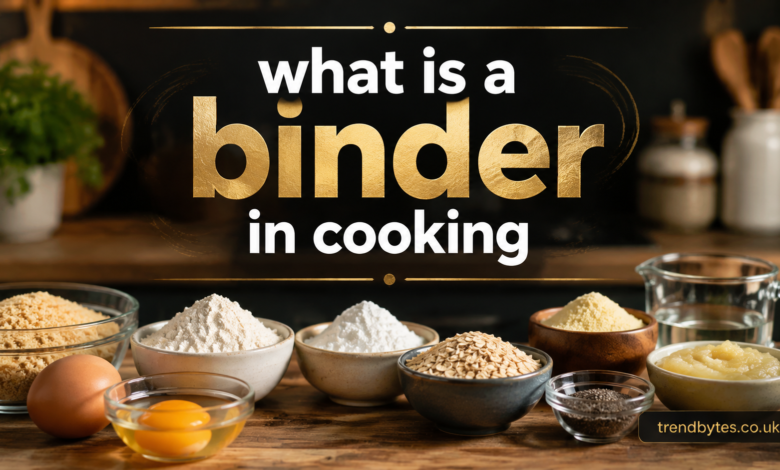
If you have ever wondered what is a binder in cooking, the answer is simple: a binder is an ingredient that helps hold food mixtures together. Binders create structure, improve texture, and prevent ingredients from falling apart during cooking.
From meatballs and burgers to sauces, baked goods, and plant-based recipes, binders play an important role in everyday cooking. Common binders include eggs, flour, breadcrumbs, cornstarch, gelatin, and starch-based ingredients.
Understanding how binders work can help you fix recipes, improve consistency, and create better results in the kitchen. Whether you are a beginner cook or an experienced home chef, knowing when and how to use a binder is a valuable cooking skill.
What Is a Binder in Cooking and Why Is It Important?
A cooking binder is an ingredient that connects other ingredients together by creating a stable texture or structure. It works by absorbing moisture, forming a gel, or creating a network that keeps ingredients combined.
For example, when making meatballs, ground meat alone may crumble during cooking. Adding an egg or breadcrumbs helps hold the mixture together so the meatballs maintain their shape.
In baking, binders help ingredients combine properly. Eggs, gluten, and starches provide structure in cakes, cookies, breads, and pastries.
A good binder does more than simply hold food together. It can also affect:
- Texture
- Moisture retention
- Shape
- Mouthfeel
- Cooking stability
Choosing the right binder depends on the type of dish you are preparing.
How Do Binders Work in Cooking?
Different binders work in different ways. Some create physical connections between ingredients, while others absorb liquid or form a gel-like texture.
Moisture Absorption
Many binders work by absorbing extra liquid. Ingredients such as breadcrumbs, flour, and oats soak up moisture and create a thicker mixture.
For example, breadcrumbs added to meatloaf absorb juices from the meat, helping create a firm but tender texture.
Gel Formation
Some binders create a gel when mixed with liquid. Cornstarch, gelatin, and certain plant-based ingredients become thicker when heated or hydrated.
This process is commonly used in sauces, puddings, and desserts.
Protein Structure
Protein-based binders, especially eggs, create structure when heated. The proteins in eggs set during cooking, helping ingredients stay connected.
This is why eggs are commonly used in dishes like quiches, casseroles, and meat mixtures.
Common Types of Cooking Binders
Many ingredients can act as binders depending on the recipe. Here are some of the most common options.
Egg as a Binder in Cooking
Eggs are one of the most popular natural binders. They contain proteins that firm up when heated, helping ingredients stick together.
Eggs are commonly used in:
- Meatballs
- Meatloaf
- Burgers
- Breaded foods
- Baked dishes
For example, when making homemade veggie patties, an egg can help combine vegetables, grains, and seasonings into a mixture that holds its shape.
For people avoiding eggs, several alternatives can provide similar binding effects.
Breadcrumbs as a Cooking Binder
Breadcrumbs are often used as a binder in savory recipes. They absorb moisture and help create a balanced texture.
They are especially useful in:
- Meatballs
- Stuffed vegetables
- Crab cakes
- Vegetable fritters
Fresh breadcrumbs often create a softer texture, while dried breadcrumbs provide more structure.
Flour and Starch-Based Binders
Flour and starches are common thickening and binding ingredients.
Examples include:
- All-purpose flour
- Cornstarch
- Potato starch
- Tapioca starch
- Arrowroot powder
These ingredients absorb liquid and help create thickness. Cornstarch, for example, is often used to thicken sauces, gravies, and pie fillings.
Gelatin as a Binder
Gelatin is a protein-based binder made from collagen. It creates a firm texture when cooled.
It is commonly used in:
- Jellies
- Desserts
- Mousses
- No-bake recipes
Gelatin is especially useful when a recipe needs a stable shape without baking.
Plant-Based Binders and Egg Alternatives
As more people follow vegetarian, vegan, or allergy-friendly diets, plant-based binders have become increasingly popular.
Common options include:
Flaxseed and Chia Seeds
Ground flaxseed and chia seeds can absorb water and create a gel-like mixture. This makes them useful as egg substitutes in baking.
A common method is mixing one tablespoon of ground flaxseed with several tablespoons of water and allowing it to thicken before adding it to a recipe.
Mashed Vegetables and Fruits
Ingredients such as mashed potatoes, pumpkin, applesauce, and bananas can provide moisture and help hold recipes together.
These are often used in:
- Vegan baking
- Vegetable patties
- Energy bars
Aquafaba
Aquafaba is the liquid from cooked chickpeas. It can act as a binder and egg white replacement in some recipes.
It is popular in plant-based cooking because it can help create structure and texture.
How to Choose the Right Binder for Your Recipe
Selecting the right binder depends on the final texture you want.
For firm foods like burgers or meatballs, choose binders that create structure, such as eggs, breadcrumbs, or starches.
For thick sauces, use ingredients like cornstarch or flour.
For desserts, gelatin, eggs, or plant-based gels may work better.
Consider these questions:
- Does the recipe need to stay firm?
- Does it need moisture?
- Is the dish baked or cooked on the stovetop?
- Are there dietary restrictions?
The right binder should support the recipe without overpowering the flavor.
Common Mistakes When Using Binders
Even experienced cooks can use too much or too little binder. Balance is important.
Using Too Much Binder
Adding excessive flour, breadcrumbs, or starch can make food dry, heavy, or gummy.
For example, too many breadcrumbs in meatballs can create a dense texture instead of a tender one.
Choosing the Wrong Binder
Not every binder works for every recipe.
Using cornstarch in a meat mixture may create an unusual texture, while breadcrumbs may not provide enough structure for a delicate dessert.
Forgetting Moisture Balance
Binders often absorb liquid. If a recipe becomes too dry, you may need to adjust moisture levels.
Always consider how the binder changes the overall texture.
Expert Tips for Better Cooking Results
Professional cooks often focus on texture balance when using binders.
Here are practical tips:
- Start with a small amount of binder and add more if needed.
- Allow mixtures to rest so binders can absorb moisture.
- Test a small portion before cooking the entire batch.
- Match the binder to the cooking method.
- Avoid adding strong-flavored binders that compete with the dish.
For example, when making homemade veggie burgers, allowing the mixture to rest for 10 to 15 minutes before shaping can help the binder work more effectively.
People Also Ask About Cooking Binders
What is a binder in cooking used for?
A binder in cooking is used to hold ingredients together, improve texture, and help food maintain its shape during preparation and cooking.
What are common examples of binders in food?
Common cooking binders include eggs, breadcrumbs, flour, cornstarch, gelatin, oats, flaxseed, chia seeds, and mashed vegetables.
Is flour a binder in cooking?
Yes, flour can act as a binder by absorbing moisture and helping ingredients stick together. It is commonly used in sauces, baked goods, and coatings.
What can I use instead of eggs as a binder?
Egg substitutes include ground flaxseed, chia seeds, mashed potatoes, applesauce, aquafaba, and commercial egg replacers.
Are breadcrumbs considered a binder?
Yes, breadcrumbs are a popular binder because they absorb moisture and help create structure in recipes like meatballs, meatloaf, and patties.
What is the best binder for burgers?
The best binder depends on the burger type. Eggs, breadcrumbs, oats, and starches are commonly used to help homemade burgers hold together.
Can cheese act as a binder in cooking?
Yes, melted cheese can help bind ingredients in some recipes because it creates a stretchy, cohesive texture when heated.
Conclusion: What Is a Binder in Cooking and How to Use It Correctly?
Understanding what is a binder in cooking helps you create recipes with better texture, structure, and consistency. Binders are essential ingredients that bring foods together, whether you are preparing savory dishes, baked goods, sauces, or desserts.
Eggs, breadcrumbs, starches, gelatin, and plant-based alternatives each work differently, so choosing the right option is key. The best results come from using the correct amount and matching the binder to your recipe’s needs.
Once you understand how cooking binders work, you can confidently adjust recipes, experiment with new ingredients, and improve your overall cooking skills.