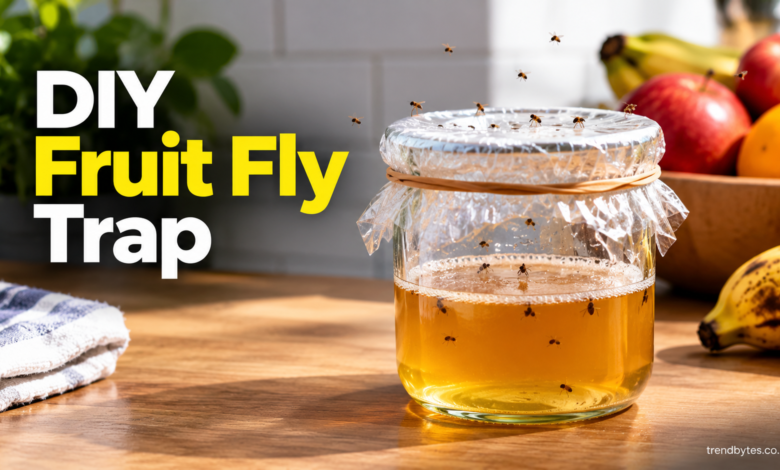
A DIY fruit fly trap is a simple, affordable way to catch fruit flies using items you may already have in your kitchen. These tiny insects often appear around ripe fruit, kitchen drains, trash cans, and recycling bins. Although they are small, they can become annoying when they multiply quickly.
The good news is that you do not always need expensive sprays or store-bought products to control them. A homemade fruit fly trap made with apple cider vinegar, dish soap, or overripe fruit can help reduce the number of flies in your kitchen.
However, trapping adult flies is only part of the solution. You also need to remove the food scraps and damp areas where they breed. In this guide, you will learn how to make several effective homemade traps, where to place them, and how to prevent fruit flies from returning.
What Is a DIY Fruit Fly Trap?
A DIY fruit fly trap is a homemade device that attracts fruit flies and prevents them from escaping easily. Most designs use a sweet or fermented smell to draw the insects toward a container.
Fruit flies are attracted to the odors produced by ripening and fermenting foods. Apple cider vinegar, ripe bananas, and other sugary materials can attract them because these smells resemble suitable food sources.
Homemade traps usually fall into three categories:
- Liquid traps: Use vinegar or another attractant, often with a small amount of dish soap.
- Funnel traps: Guide flies into a container through a narrow opening.
- Sticky traps: Use a suitable adhesive surface to capture insects that land on it.
Each method has advantages. Liquid traps are easy to make, funnel traps help contain insects, and sticky traps can be useful for monitoring flying pests.
For the best results, combine trapping with proper kitchen cleaning and food storage.
5 Easy DIY Fruit Fly Trap Methods
Here are five homemade options you can try with common household materials.
1. Apple Cider Vinegar Fruit Fly Trap

An apple cider vinegar trap is one of the most popular homemade solutions because it is inexpensive and simple to prepare.
What You Need
- 2–3 tablespoons of apple cider vinegar
- A few drops of liquid dish soap
- A small glass or jar
- Optional plastic wrap and a rubber band
How to Make It
- Pour the apple cider vinegar into the glass or jar.
- Add two or three drops of dish soap.
- Gently swirl the mixture to combine it without creating too much foam.
- Place the container near the area where you see fruit flies.
- Check the trap daily and replace the mixture when it becomes dirty or less effective.
The vinegar attracts the flies, while the dish soap reduces the surface tension of the liquid. This makes it harder for flies that land on the mixture to remain on the surface and escape.
Expert tip: Start with a small amount of dish soap. Too much can create foam that interferes with the trap’s surface.
2. DIY Fruit Fly Trap With Plastic Wrap

If flies keep escaping from an open container, a plastic-wrap trap offers another option.
What You Need
- A small jar or cup
- Apple cider vinegar or a piece of ripe fruit
- Plastic wrap
- A rubber band
- A toothpick
Instructions
- Add a small amount of apple cider vinegar to the container.
- Stretch plastic wrap tightly over the opening.
- Secure it with a rubber band.
- Use a toothpick to make several small holes in the wrap.
- Place the trap near the affected area.
The holes allow fruit flies to enter while making it harder for them to find the exit. Keep the holes small but large enough for the insects to pass through.
You can use a piece of ripe banana instead of vinegar, although fruit-based bait may spoil more quickly.
Keep this trap away from children and pets, and avoid leaving uncovered food nearby.
3. Ripe Banana Fruit Fly Trap

Fruit flies are naturally drawn to ripe and fermenting fruit. That makes an overripe banana a useful bait when vinegar is unavailable.
What You Need
- A small piece of overripe banana
- A jar or plastic container
- A sheet of paper
- Tape
How to Make It
- Place a small piece of banana in the bottom of the container.
- Roll the paper into a funnel with a narrow opening at the bottom.
- Insert the funnel into the container without letting its tip touch the bait.
- Tape the paper so it stays in place.
- Position the trap near the fruit bowl or trash area.
The banana attracts fruit flies, and the funnel makes it more difficult for them to escape.
Check the trap each day and replace the bait when it becomes moldy or unpleasant. Dispose of spoiled bait in a sealed bag.
This method is particularly useful when fruit flies gather around bananas, peaches, or other ripening produce.
4. Red Wine or Fermented Juice Trap

Fruit flies are also attracted to the smell of fermentation. A small amount of leftover red wine or fermented fruit juice may work as bait.
What You Need
- A small glass or jar
- A tablespoon or two of leftover red wine or fermented juice
- A few drops of dish soap, if using an open liquid trap
Instructions
- Pour a small amount of the liquid into the container.
- Add a few drops of dish soap if you want to use the open-liquid method.
- Place the trap near the flies, away from food preparation surfaces.
- Inspect it daily and replace the liquid as needed.
This option can be useful if you already have leftover wine or juice. However, it is not necessary to buy alcohol specifically for a fruit fly trap; apple cider vinegar is often a more practical household choice.
Keep all alcohol-containing mixtures out of reach of children and pets.
5. Sticky Trap for Fruit Flies

Sticky traps can catch flying insects that land on their adhesive surface. They are especially useful for monitoring small flying pests around houseplants.
How to Use a Sticky Trap
- Choose a commercially made sticky insect trap suitable for indoor use.
- Place it near the area where insects gather, following the product instructions.
- Check it regularly to see how many insects are being captured.
- Replace it when the adhesive becomes covered with dust or insects.
Yellow sticky cards may catch fungus gnats and other small flying insects, not just fruit flies. Therefore, they are most useful when you need to monitor an infestation rather than identify the pest by appearance alone.
Avoid placing sticky traps where children or pets could touch them.
Where Should You Place a Homemade Fruit Fly Trap?
Location can make a noticeable difference in how well a trap works.
Fruit flies usually gather near their food sources, so place your trap close to the area where you see the most activity.
Good locations include:
- Near, but not inside, the fruit bowl
- Beside a kitchen trash can
- Near a recycling bin containing beverage containers
- Close to a compost container
- Near a sink where food scraps collect
Avoid placing traps directly beside uncovered meals or clean dishes. Choose a stable surface away from cooking areas.
If you see flies in several parts of the kitchen, use two or three small traps rather than relying on one container placed far from the infestation.
Check each location after a day or two. Move traps if you are not seeing results.
Why Your DIY Fruit Fly Trap May Not Be Working
A homemade trap can catch adult flies, but several factors can limit its effectiveness.
1. There Is Too Much Competing Food
A trap may be less attractive if ripe fruit, spilled juice, or food scraps are nearby.
Remove the competing food sources, wipe down surfaces, and store ripe produce in the refrigerator when appropriate.
2. The Bait Is Old
Vinegar traps can become dirty, diluted, or less useful over time. Fruit bait may dry out or develop mold.
Replace the mixture regularly and clean the container before refilling it.
3. The Trap Is in the Wrong Place
A trap on the opposite side of the kitchen may not capture many flies if they are concentrated near the sink or trash can.
Observe where the insects gather and place the trap nearby.
4. The Insects Are Not Fruit Flies
Small flying insects can look similar but require different control methods.
Fruit flies are often found near ripening produce and fermenting food. Fungus gnats are commonly associated with damp potting soil, while drain flies often gather near drains and have fuzzy, moth-like wings.
If the insects keep appearing despite removing food sources, identify them before changing your pest-control approach.
How to Prevent Fruit Flies From Coming Back
Traps work best when combined with preventive habits. Since fruit flies can reproduce quickly when conditions are favorable, removing breeding sites is essential.
Store Fruit Properly
Keep ripe fruit in the refrigerator when suitable. If you prefer to leave fruit on the counter, inspect it daily and remove damaged or overripe pieces.
Wash reusable fruit bowls regularly to remove sticky residue.
Clean Kitchen Drains and Sinks
Food residue and organic buildup can attract flies and provide breeding sites.
Remove visible food scraps from sink strainers, clean the sink basin, and maintain drains with appropriate routine cleaning. Follow product directions when using drain cleaners, and never mix cleaning chemicals.
If flies repeatedly emerge near a drain, investigate the organic buildup rather than assuming a vinegar trap will solve the problem.
Empty Trash and Recycling Bins
Dispose of food waste regularly, especially during warm weather. Rinse beverage containers before recycling them, and clean any sticky residue from the bottoms of bins.
Use a covered trash can when possible and wash it periodically.
Keep Counters Dry and Clean
Wipe up juice, soda, and other spills promptly. Clean under appliances and around fruit bowls where small pieces of food may be overlooked.
These simple habits reduce the smells that attract fruit flies and make your kitchen less suitable for breeding.
People Also Ask About DIY Fruit Fly Traps
1. What is the best homemade fruit fly trap?
An apple cider vinegar trap with a few drops of dish soap is a practical starting point. The vinegar attracts fruit flies, while the soap helps prevent trapped insects from remaining on the liquid’s surface.
2. Does apple cider vinegar really attract fruit flies?
Yes. Its fermented smell can attract fruit flies because they are drawn to fermenting food. However, results depend on the location of the trap and whether other food sources are available.
3. How long does a DIY fruit fly trap take to work?
You may notice flies in a trap within a few hours, although results vary. Check the trap after 24 hours and adjust its location or bait if necessary.
4. Can I make a fruit fly trap without vinegar?
Yes. Try a small piece of ripe banana or another overripe fruit inside a funnel trap. Replace the bait regularly and remove other food sources that may compete with it.
5. Why do I still have fruit flies after using a trap?
The trap may be catching adults while eggs and larvae remain in fermenting food, trash, or other organic material. Remove these sources and continue trapping to help reduce the population.
6. Are homemade fruit fly traps safe around pets?
They can be used with care, but vinegar mixtures, spoiled fruit, dish soap, and alcohol-containing bait should not be accessible to pets. Place traps on secure surfaces and use pet-safe cleaning practices.
7. Can fruit flies come from kitchen drains?
They can gather around drains, but other small insects, including drain flies, may be responsible. Clean organic buildup and identify the insect before deciding on the right treatment.
8. How do I get rid of fruit flies permanently?
There is no single trap that guarantees permanent removal. The most reliable approach is to remove breeding sources, store food properly, clean waste containers and drains, and use traps to catch remaining adults.
Conclusion
A DIY fruit fly trap is an inexpensive and convenient way to reduce fruit flies in your home. Apple cider vinegar and dish soap provide a simple starting point, while plastic-wrap, funnel, and ripe-fruit traps offer useful alternatives.
For the best results, place traps near areas where flies gather, replace old bait, and remove the food scraps and organic buildup that allow them to reproduce. Clean fruit bowls, empty trash regularly, and keep kitchen surfaces free of sticky spills.
With the right combination of homemade traps and consistent cleaning, you can make your kitchen less attractive to fruit flies and reduce the chances of another infestation.