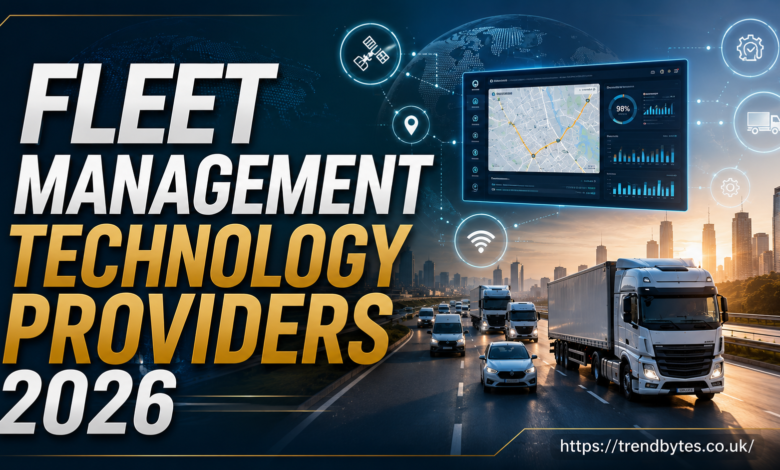
The fleet management technology providers 2026 market is transforming how businesses manage vehicles, drivers, fuel usage, maintenance, and operational efficiency. As transportation, logistics, construction, delivery services, and public fleets become increasingly digital, organizations are investing in smarter technologies that improve productivity while reducing costs.
Modern fleet management is no longer limited to GPS tracking. Today’s solutions integrate artificial intelligence, Internet of Things (IoT) sensors, predictive maintenance, real-time analytics, driver safety monitoring, route optimization, fuel management, compliance reporting, and electric vehicle support.
Whether you manage a small delivery fleet or thousands of commercial vehicles, understanding fleet management technology providers 2026 will help you choose the right platform and maximize your return on investment.
What Are Fleet Management Technology Providers 2026?
Fleet management technology providers 2026 are companies that develop software, hardware, and connected technologies to help organizations monitor, optimize, and manage commercial vehicle fleets.
Their solutions typically combine cloud-based software, GPS tracking devices, telematics systems, mobile applications, dashboards, and data analytics into one centralized management platform.
These technologies enable businesses to make informed decisions while improving operational performance and reducing unnecessary expenses.
Why Fleet Management Technology Matters
Fleet operations face many daily challenges, including rising fuel costs, vehicle downtime, driver safety concerns, regulatory compliance, and customer expectations for faster deliveries.
Fleet management technology helps organizations overcome these challenges by providing real-time visibility into fleet performance.
Major benefits include:
- Improved vehicle tracking
- Lower fuel consumption
- Better route planning
- Reduced maintenance costs
- Enhanced driver safety
- Higher customer satisfaction
- Increased operational efficiency
- Better regulatory compliance
- Lower insurance risks
- Smarter business decisions
Core Features Offered by Fleet Management Technology Providers
Modern fleet platforms include a wide variety of advanced features.
GPS Vehicle Tracking
Real-time GPS tracking allows fleet managers to monitor vehicle locations throughout the day.
Benefits include:
- Live vehicle visibility
- Theft recovery
- Route monitoring
- Dispatch optimization
- Delivery tracking
Telematics Systems
Telematics combines vehicle sensors with cloud software to collect valuable operational data.
Information collected includes:
- Engine performance
- Fuel usage
- Vehicle speed
- Idle time
- Mileage
- Driver behavior
- Maintenance alerts
Route Optimization
Smart routing software helps reduce travel time while lowering fuel costs.
It considers factors such as:
- Traffic conditions
- Weather
- Road closures
- Delivery priorities
- Driver schedules
Efficient routing improves both productivity and customer satisfaction.
Driver Safety Monitoring
Many providers include safety tools that monitor:
- Harsh braking
- Rapid acceleration
- Speeding
- Sharp cornering
- Seatbelt usage
- Fatigue indicators
Safety monitoring encourages responsible driving habits while reducing accident risks.
Maintenance Management
Preventive maintenance keeps fleets operating efficiently.
Fleet software can automatically schedule:
- Oil changes
- Tire rotations
- Brake inspections
- Engine diagnostics
- Battery replacement
- Vehicle inspections
Timely maintenance reduces unexpected breakdowns and extends vehicle lifespan.
Fuel Management
Fuel is one of the largest operating expenses for fleet businesses.
Technology platforms help reduce fuel costs by tracking:
- Fuel purchases
- Fuel efficiency
- Excessive idling
- Route efficiency
- Driver habits
- Vehicle performance
Managers can identify opportunities for immediate cost savings.
Compliance Management
Commercial fleets must comply with numerous transportation regulations.
Fleet software often simplifies compliance through:
- Electronic logging
- Driver hours tracking
- Inspection reports
- Maintenance documentation
- Safety records
- Regulatory reporting
Automated compliance reduces administrative workload while minimizing legal risks.
Industries Using Fleet Management Technology
Fleet technology supports many industries.
Common users include:
- Logistics companies
- Transportation businesses
- Construction firms
- Delivery services
- Utility providers
- Government agencies
- Public transportation
- Waste management
- Field service companies
- Emergency response organizations
Every organization operating commercial vehicles can benefit from smarter fleet management.
Benefits of Fleet Management Technology Providers 2026
Lower Operating Costs
Improved routing, preventive maintenance, and fuel management significantly reduce operating expenses.
Better Customer Service
Accurate delivery tracking helps customers receive timely updates and improves satisfaction.
Increased Driver Accountability
Performance monitoring encourages safer and more efficient driving behavior.
Improved Asset Utilization
Managers gain better visibility into vehicle usage and productivity.
Enhanced Decision-Making
Real-time dashboards provide valuable business insights for long-term planning.
Emerging Trends in Fleet Management Technology Providers 2026
Technology continues reshaping fleet management.
Artificial Intelligence
AI helps predict maintenance needs, optimize routes, and identify operational inefficiencies.
Internet of Things (IoT)
Connected sensors continuously collect data from vehicles and equipment.
Electric Vehicle Fleet Management
As EV adoption grows, providers now offer tools for:
- Battery monitoring
- Charging schedules
- Energy consumption
- Charging station management
Predictive Maintenance
Advanced analytics identify potential mechanical issues before failures occur.
Video Telematics
AI-powered dash cameras improve driver coaching and accident investigations.
These innovations continue making fleet management smarter and more efficient.
How to Choose Fleet Management Technology Providers 2026
Selecting the right provider requires careful evaluation.
Important considerations include:
Scalability
Choose software that can grow alongside your fleet.
Ease of Use
Simple dashboards reduce employee training time.
Mobile Access
Managers should be able to monitor operations from any location.
Integration Capabilities
Look for platforms that connect with accounting, ERP, CRM, and logistics software.
Data Security
Fleet systems store valuable operational information.
Strong cybersecurity protections are essential.
Customer Support
Reliable technical support minimizes operational disruptions.
Best Practices for Successful Fleet Management
Organizations achieve better results by following proven strategies.
Monitor Performance Regularly
Review fleet reports weekly to identify improvement opportunities.
Schedule Preventive Maintenance
Routine maintenance prevents costly repairs and extends vehicle life.
Train Drivers
Continuous driver education improves safety and fuel efficiency.
Use Real-Time Data
Immediate insights allow faster operational decisions.
Establish Clear Performance Goals
Measure success through key performance indicators such as:
- Fuel efficiency
- On-time deliveries
- Vehicle utilization
- Driver safety scores
- Maintenance costs
Common Mistakes to Avoid
Many businesses fail to maximize fleet technology because of avoidable mistakes.
Choosing Software Based Only on Price
The cheapest solution may lack essential features.
Focus on long-term value instead.
Ignoring Employee Training
Even the best software requires proper user training.
Skipping Preventive Maintenance
Waiting until equipment fails increases downtime and repair expenses.
Not Reviewing Reports
Data provides value only when managers analyze and act upon it.
Overlooking System Integration
Disconnected software creates unnecessary manual work.
Expert Tips for Maximizing Fleet Performance
Experienced fleet professionals recommend several strategies.
- Automate routine reporting.
- Monitor fuel trends monthly.
- Replace aging vehicles strategically.
- Reward safe driving behaviors.
- Analyze maintenance costs regularly.
- Review route efficiency frequently.
- Invest in continuous driver training.
- Track operational KPIs consistently.
These habits produce measurable long-term improvements.
Real-World Example
Imagine a regional delivery company operating 150 commercial vehicles.
Before implementing fleet management software, drivers selected their own routes, maintenance scheduling was inconsistent, and fuel expenses continued increasing.
After adopting a modern fleet management platform, managers gained real-time vehicle visibility, automated maintenance scheduling, optimized delivery routes, and driver performance monitoring.
Within months, the company reduced fuel costs, improved delivery times, lowered maintenance expenses, and increased customer satisfaction.
This example demonstrates how technology can significantly improve fleet operations.
Future Outlook
Fleet management technology continues evolving rapidly.
Future innovations are expected to include:
- Autonomous vehicle integration
- Advanced AI decision support
- Digital twins for fleet optimization
- Enhanced predictive analytics
- Smarter energy management
- Expanded electric fleet capabilities
- Automated compliance reporting
- Sustainable fleet management solutions
Organizations adopting these technologies early will likely gain competitive advantages through improved efficiency and lower operating costs.
People Also Ask (FAQs)
What are fleet management technology providers 2026?
Fleet management technology providers 2026 are companies offering software and connected technologies that help businesses monitor vehicles, improve efficiency, manage maintenance, reduce costs, and optimize fleet operations.
What features should fleet management software include?
Essential features include GPS tracking, telematics, route optimization, maintenance management, fuel monitoring, driver safety tools, compliance reporting, and real-time analytics.
Which industries benefit from fleet management technology?
Logistics, transportation, construction, utilities, field services, government agencies, delivery companies, public transportation, emergency services, and waste management all benefit from fleet technology.
How does fleet management technology reduce costs?
It lowers fuel consumption, improves route efficiency, prevents unexpected maintenance, reduces downtime, improves driver behavior, and increases vehicle utilization.
Is fleet management software suitable for small businesses?
Yes. Many providers offer scalable solutions that support both small fleets and large enterprise operations.
How does predictive maintenance work?
Predictive maintenance uses telematics, sensors, and analytics to detect potential mechanical problems before equipment fails, reducing costly repairs and downtime.
Can fleet management support electric vehicles?
Yes. Modern platforms increasingly include battery monitoring, charging management, energy tracking, and EV performance analytics.
What should businesses consider before choosing a provider?
Businesses should evaluate scalability, ease of use, security, customer support, integration capabilities, reporting features, mobile access, and overall long-term value.
Conclusion
The fleet management technology providers 2026 landscape continues advancing through innovations in artificial intelligence, telematics, predictive maintenance, IoT connectivity, and electric vehicle support. Modern fleet solutions help organizations improve operational efficiency, enhance driver safety, reduce fuel costs, simplify compliance, and deliver better customer experiences.
Businesses that invest in the right fleet management platform, train employees effectively, monitor key performance indicators, and embrace continuous improvement will be well-positioned for long-term success. As transportation technology continues evolving, fleet management technology providers 2026 will remain essential partners in building smarter, safer, more efficient, and more sustainable fleet operations.