Integrated Digital Marketing: A Complete Guide to Connected Online Growth

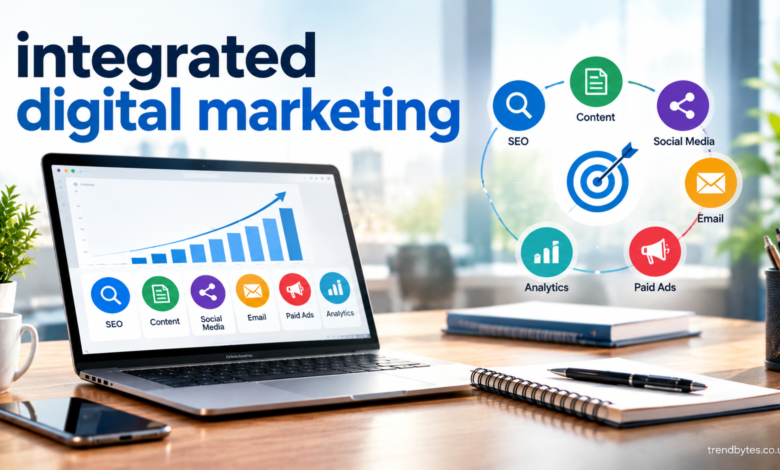
Integrated digital marketing brings multiple online marketing channels together so they work toward the same business goals. Instead of treating SEO, content marketing, social media, email, paid advertising, and website optimization as separate activities, an integrated strategy connects them into one coordinated customer journey.
For example, a company might publish an educational article to attract organic search traffic, promote that article through social media, use paid advertising to reach a wider audience, and invite visitors to join an email list. Each channel supports the others while moving potential customers closer to a purchase.
This connected approach can make marketing more consistent, easier to measure, and more focused on real business outcomes.
What Is Integrated Digital Marketing?
Integrated digital marketing is a coordinated approach to online promotion in which different marketing channels share a common strategy, message, audience, and set of goals.
Traditional digital marketing can sometimes become fragmented. An SEO team may focus on rankings, a social media team may focus on engagement, and an advertising team may focus on clicks. If these activities are not connected, the business may have many campaigns but no clear customer journey.
Integration changes that.
A coordinated strategy can connect:
- Search engine optimization
- Content marketing
- Social media
- Email marketing
- Paid advertising
- Website optimization
- Online reputation management
- Video marketing
- Conversion optimization
- Analytics and reporting
The objective is not to use every available channel. Instead, businesses should select channels that reach their target audience and support their specific goals.
Why Integrated Digital Marketing Matters
Customers rarely follow a perfectly straight path before making a purchase.
Someone might discover a brand through Google, watch one of its videos, visit the website several days later, see a social media post, read customer reviews, and eventually return through an email campaign.
An integrated strategy recognizes that these interactions are connected.
Integrated Digital Marketing Creates a Consistent Customer Journey
Imagine a person searching for a project management platform.
They find a company’s blog through Google and read an article about managing remote teams. The article introduces the company’s software and offers a useful downloadable guide.
The visitor downloads the guide and joins an email list. Later, they see a social media post from the same company and eventually receive an email explaining the software’s features.
The channels are different, but the message remains consistent.
This creates a smoother journey from awareness to consideration and, eventually, conversion.
Key Components of an Integrated Digital Marketing Strategy
Search Engine Optimization
SEO helps businesses attract people who are actively searching for relevant information, products, or services.
An integrated SEO strategy can include:
- Keyword research
- Search intent analysis
- Technical SEO
- On-page optimization
- Internal linking
- Local SEO
- Content optimization
- Competitor research
- Digital PR and link acquisition
SEO should not operate independently from the rest of marketing.
For example, keyword research can reveal questions that become blog topics, social media content, videos, email subjects, and landing-page ideas.
Content Marketing
Content is often the foundation connecting multiple channels.
A detailed guide can become a series of social posts, an email newsletter, a short video, an infographic, and supporting website content.
This approach allows a business to get more value from strong original ideas without simply repeating the same material everywhere.
Content should still be adapted to each platform and audience.
Social Media Marketing
Social media can support awareness, engagement, community building, and content distribution.
Rather than publishing unrelated posts, businesses can connect social campaigns to broader marketing themes.
For instance, a company launching a new service might publish educational content first, share customer questions and answers on social media, run targeted advertising, and use email to reach existing subscribers.
Each activity contributes to the same campaign.
Email Marketing
Email remains useful for maintaining relationships with people who have already interacted with a business.
An integrated email strategy might include:
- Welcome sequences
- Educational newsletters
- Product updates
- Promotional campaigns
- Abandoned-cart messages
- Event invitations
- Customer retention campaigns
Email works especially well when it connects with website content and other campaigns rather than operating as a separate communication stream.
Paid Digital Advertising
Paid advertising can provide additional reach and help businesses target specific audiences.
Search ads, display campaigns, social advertising, and retargeting can support organic marketing efforts.
For example, a business could use SEO to build long-term visibility while using paid search to capture high-intent searches for important commercial terms.
Website and Conversion Optimization
The website is often the central destination for digital marketing activity.
Regardless of where visitors originate, they should quickly understand:
- What the company offers
- Who the product or service is for
- Why it is valuable
- Why the company should be trusted
- What action to take next
A marketing campaign cannot reach its full potential if the landing page is confusing, slow, difficult to navigate, or missing a clear call to action.
How to Create an Integrated Digital Marketing Strategy
Building an integrated strategy becomes easier when the process starts with business objectives instead of individual platforms.
1. Establish Clear Business Goals
Begin by defining what the company actually wants to achieve.
Possible objectives include:
- Increasing qualified leads
- Generating online sales
- Growing brand awareness
- Entering a new market
- Increasing repeat purchases
- Improving customer retention
- Promoting a new service
These goals determine which channels deserve attention.
2. Define the Target Audience
Create a clear picture of the people the business wants to reach.
Consider their:
- Needs
- Problems
- Search behavior
- Buying habits
- Preferred platforms
- Location
- Budget
- Common objections
A business cannot create an effective integrated campaign without understanding its audience.
3. Map the Customer Journey
Identify what customers typically do before making a purchase.
A simple journey might look like:
Awareness → Research → Comparison → Decision → Purchase → Retention
Then assign useful marketing activities to each stage.
SEO and educational content may support awareness and research. Reviews, case studies, and comparison pages can support consideration. Strong landing pages and offers can support conversion. Email and customer content can support retention.
4. Develop One Core Campaign Message
Every channel does not need identical wording, but the core message should remain consistent.
For example, if a company is promoting an accounting platform that saves small businesses time, that central value proposition should appear throughout its website, advertising, email, social content, and educational resources.
Consistency makes the campaign easier to recognize.
5. Connect Marketing Data
Use analytics to understand how different channels contribute to business results.
Instead of asking only which channel received the most clicks, consider questions such as:
- Which channels generated qualified leads?
- Which content assisted conversions?
- Where do visitors leave the website?
- Which campaigns produce repeat customers?
- How does paid traffic interact with organic traffic?
This creates a more complete view of performance.
Practical Example of Integrated Digital Marketing
Consider a local home renovation company launching a bathroom remodeling service.
The company could create a detailed bathroom remodeling service page and publish helpful content about remodeling costs, design options, materials, and project timelines.
SEO helps the pages appear for relevant searches.
Social media can showcase completed projects and educational tips. Paid search can target people actively looking for bathroom remodeling services. Email can reach existing customers who may be interested in additional work.
The website then provides project photos, service information, testimonials, and a clear quote request form.
Instead of five unrelated campaigns, the company has one connected marketing system.
Expert Tips for Better Integration
Use One Content Idea Across Multiple Channels
Start with a strong topic and adapt it intelligently.
A comprehensive article can become a video script, newsletter topic, social media series, infographic, and sales resource.
This saves resources while keeping campaigns connected.
Align Marketing and Sales Teams
Marketing should understand what sales teams hear from prospects.
Common objections, frequently asked questions, and reasons customers hesitate can become useful content and advertising themes.
Track the Entire Funnel
Do not stop measuring performance when someone clicks an advertisement.
Track the journey from acquisition to meaningful business action whenever your analytics setup allows it.
Prioritize Quality Over Channel Quantity
Being active on six platforms is not automatically better than doing an excellent job on two or three.
Choose channels based on audience behavior, resources, and business goals.
Common Integrated Marketing Mistakes to Avoid
Treating Every Channel Separately
When teams use different messages and goals, customers can receive confusing signals.
Create a central campaign strategy before launching individual channel activities.
Chasing Vanity Metrics
Likes, followers, impressions, and clicks can provide useful context, but they should not replace meaningful business measurements.
Connect marketing activity to leads, sales, revenue, retention, or another relevant outcome.
Creating Duplicate Content Everywhere
Integration does not mean copying the same paragraph onto every platform.
Repurpose ideas while adapting the format, length, tone, and presentation to the specific channel.
Ignoring Existing Customers
Digital marketing often focuses heavily on acquiring new customers.
Existing customers can also be valuable audiences for retention campaigns, cross-selling, referrals, education, and loyalty initiatives.
Failing to Test and Improve
Even a carefully designed campaign may contain weak landing pages, ineffective messages, or poorly targeted audiences.
Review performance regularly and make data-informed improvements.
Best Practices for Long-Term Success
An integrated strategy should be flexible enough to adapt as customer behavior changes.
Maintain consistent branding across major channels, keep website information current, regularly review campaign performance, and document what works.
Create a shared marketing calendar so SEO, content, social media, email, and paid advertising teams know what campaigns are coming.
It is also useful to establish a clear measurement framework. Define the primary business goal first, then identify the metrics that demonstrate progress toward that goal.
Most importantly, keep the customer at the center of the strategy.
A connected marketing system should make it easier for people to discover useful information, understand a company’s value, evaluate their options, and take the next appropriate step.
Measuring Integrated Digital Marketing Performance
Measurement should cover more than individual platform statistics.
Useful metrics may include:
- Organic search visibility
- Website traffic
- Qualified leads
- Conversion rate
- Customer acquisition cost
- Revenue
- Return on advertising spend
- Email engagement
- Customer retention
- Assisted conversions
For example, social media may not directly produce many sales, but it could introduce customers to a brand who later convert through organic search or email.
That is why looking at the full customer journey can provide more insight than judging every channel in isolation.
People Also Ask
What is integrated digital marketing?
Integrated digital marketing is a coordinated approach that connects channels such as SEO, content marketing, social media, email, paid advertising, and website optimization around shared goals and messaging.
Why is integrated digital marketing important?
It helps businesses create a more consistent customer experience and allows different marketing channels to support one another instead of operating as isolated campaigns.
What channels are included in integrated digital marketing?
Common channels include SEO, content marketing, social media, email, paid search, display advertising, video, website optimization, local marketing, and analytics.
What is the difference between digital marketing and integrated digital marketing?
Digital marketing refers broadly to marketing activities conducted through digital channels. Integrated digital marketing focuses specifically on coordinating those channels so they work together toward shared objectives.
How do you create an integrated digital marketing strategy?
Start with business goals and audience research, map the customer journey, establish core messaging, select relevant channels, coordinate campaigns, connect measurement systems, and continuously optimize performance.
Does integrated marketing work for small businesses?
Yes. Small businesses can use an integrated approach by focusing on a few channels that match their audience. For example, local SEO, content, social media, email, and a conversion-focused website can work together without requiring a large marketing department.
How do you measure integrated digital marketing?
Measure outcomes such as qualified leads, conversions, sales, customer acquisition cost, revenue, retention, and relevant channel performance. Use multiple data points to understand the customer journey.
Is integrated digital marketing expensive?
The cost varies based on the channels, industry, competition, campaign scope, and internal resources. Integration itself does not require every possible channel; it means coordinating the channels that make sense for the business.
Conclusion
Integrated digital marketing connects SEO, content, social media, email, paid advertising, website optimization, and analytics into a coordinated system built around shared business goals.
Rather than treating each platform as an isolated activity, businesses can use each channel to strengthen the others. A search-optimized article can support social content, an email campaign can bring visitors back to the website, and paid advertising can amplify a successful offer.
The most effective strategy starts with the customer. Understand what people need, map their journey, create useful experiences, maintain consistent messaging, and measure outcomes that matter to the business.
When these pieces work together, integrated digital marketing becomes more than a collection of online tactics. It becomes a connected growth strategy designed to attract the right audience, build trust, generate conversions, and support long-term customer relationships.