John Deere Precision Construction Technology: The Complete Guide to Smarter Construction

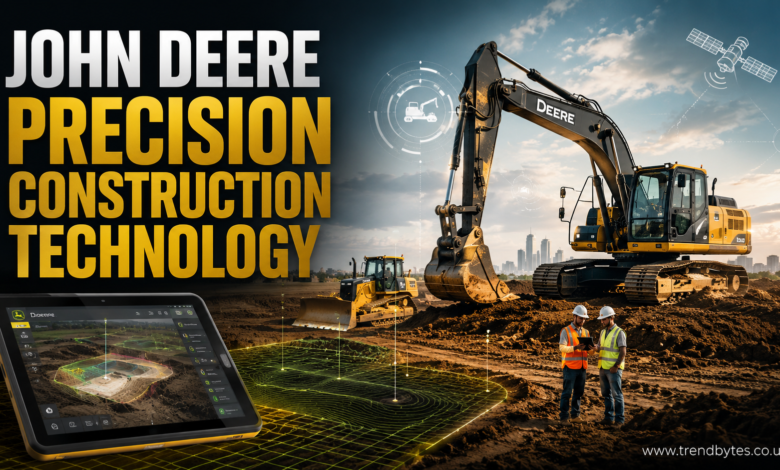
The construction industry is becoming more connected, data-driven, and efficient than ever before. John Deere Precision Construction Technology helps contractors improve productivity, reduce waste, and complete projects with greater accuracy. Whether you’re managing a small excavation project or a large commercial development, modern machine technology can transform how work gets done.
From machine guidance and grade control to fleet management and real-time jobsite monitoring, John Deere combines advanced hardware and intelligent software to help operators make better decisions every day. This guide explains how the technology works, its major benefits, practical applications, best practices, and what contractors should know before investing.
What Is John Deere Precision Construction Technology?
John Deere Precision Construction Technology is a collection of digital tools, machine control systems, GPS guidance, telematics, and connected software designed to increase efficiency on construction sites.
Instead of relying only on manual measurements and operator experience, contractors can use digital data to guide machines with exceptional precision.
These technologies help:
- Improve grading accuracy
- Reduce material waste
- Increase machine productivity
- Minimize rework
- Track equipment performance
- Enhance jobsite safety
- Improve project planning
The result is a smarter construction workflow from planning through project completion.
Why Precision Technology Matters in Modern Construction
Construction projects are becoming more complex every year. Tight schedules, rising labor costs, and material shortages make efficiency more important than ever.
Precision technology helps solve these challenges by providing accurate information directly to operators and project managers.
Key advantages include:
- Faster project completion
- Better quality control
- Lower operating costs
- Improved fuel efficiency
- Less downtime
- More consistent grading
- Better communication between field and office
Instead of correcting mistakes later, contractors can build accurately the first time.
Key Components of John Deere Precision Construction Technology
Machine Control Systems
One of the most valuable features of john deere precision construction technology is advanced machine control.
Machine control automatically guides equipment using GPS, GNSS, sensors, and digital project models.
Operators receive real-time guidance that helps them achieve precise grades without constant manual checking.
Benefits include:
- Accurate cuts and fills
- Reduced staking requirements
- Less survey work
- Better surface consistency
- Increased operator confidence
GPS and GNSS Positioning
Satellite positioning allows equipment to know its exact location on the jobsite.
This improves:
- Earthmoving accuracy
- Road construction
- Site preparation
- Utility installation
- Foundation work
Operators can work confidently even on large or complex projects.
Connected Jobsite Software
Digital construction software connects the office with the field.
Managers can monitor:
- Machine locations
- Project progress
- Equipment usage
- Fuel consumption
- Maintenance schedules
- Operator productivity
Real-time information supports faster and better decision-making.
Fleet Management
Managing multiple machines becomes much easier with connected technology.
Fleet management tools help contractors:
- Schedule equipment efficiently
- Reduce idle time
- Monitor utilization
- Improve maintenance planning
- Lower operating costs
These insights help businesses maximize equipment investments.
Major Benefits of John Deere Precision Construction Technology
Improved Accuracy
Precision guidance helps machines follow digital plans with minimal deviation.
Accurate grading means:
- Less rework
- Better project quality
- More satisfied clients
Increased Productivity
Operators spend less time measuring, checking grades, and making corrections.
As a result:
- More work gets completed each day.
- Projects finish sooner.
- Labor costs decrease.
Lower Material Waste
Precise earthmoving reduces unnecessary excavation and overfilling.
This helps save:
- Soil
- Aggregate
- Asphalt
- Concrete
- Fuel
Material savings can significantly improve project profitability.
Better Operator Performance
Even newer operators can produce high-quality results with machine guidance.
Technology reduces guesswork while increasing consistency across crews.
Enhanced Safety
Digital systems reduce the need for workers to enter hazardous areas for repeated grade checks.
Better visibility and real-time machine information also improve overall jobsite awareness.
Real-World Applications
John Deere precision solutions support many types of construction projects.
Road Construction
Machine control creates accurate road grades while reducing survey work and improving paving quality.
Residential Development
Builders use precision grading to prepare lots, install drainage systems, and create stable foundations.
Commercial Construction
Large commercial projects benefit from accurate excavation, utility installation, and site preparation.
Infrastructure Projects
Highways, airports, bridges, and municipal projects require consistent grading and detailed documentation.
Precision technology helps meet these demanding standards.
Mining and Earthmoving
Large earthmoving operations gain greater efficiency by optimizing equipment movement and reducing unnecessary passes.
How Precision Construction Technology Improves Jobsite Efficiency
Every minute saved on a construction site affects profitability.
Connected equipment allows contractors to:
- Identify idle machines
- Reduce unnecessary travel
- Optimize equipment assignments
- Improve scheduling
- Monitor production targets
- Detect maintenance issues early
Instead of relying on assumptions, project managers make decisions using real operational data.
Best Practices for Successful Implementation
Investing in technology alone isn’t enough.
Follow these best practices for maximum results.
Train Operators Thoroughly
Technology works best when operators understand every feature.
Regular training improves:
- Accuracy
- Productivity
- Confidence
- Equipment longevity
Keep Software Updated
Software improvements often include:
- Better performance
- Security updates
- New features
- Improved compatibility
Regular updates ensure optimal operation.
Use Accurate Project Models
Machine control depends on reliable digital plans.
Always verify:
- Site measurements
- Elevation data
- Design files
- Coordinate systems
Accurate inputs produce accurate results.
Monitor Performance Metrics
Review reports regularly.
Track:
- Fuel efficiency
- Machine hours
- Productivity
- Idle time
- Maintenance history
Small improvements across multiple machines can create significant cost savings.
Common Mistakes to Avoid
Many contractors fail to achieve the full value of precision technology because of avoidable mistakes.
Common issues include:
Skipping Operator Training
Even advanced systems require knowledgeable operators.
Insufficient training often leads to errors and underused features.
Ignoring Preventive Maintenance
Poor equipment maintenance reduces system accuracy and reliability.
Follow recommended maintenance schedules consistently.
Using Outdated Design Files
Incorrect project data can create expensive grading mistakes.
Always confirm that crews are using the latest project files.
Overlooking Data Analysis
Collecting information without reviewing it limits the benefits of connected technology.
Use reports to identify trends and improve future projects.
Expert Tips for Maximizing ROI
Construction professionals can increase returns by following these recommendations.
- Start with one project before expanding across the fleet.
- Train experienced operators first.
- Standardize workflows across teams.
- Review productivity reports weekly.
- Schedule preventive maintenance proactively.
- Integrate office and field communication.
- Monitor idle time carefully.
- Evaluate project performance after completion.
Small operational improvements often produce substantial long-term savings.
The Future of Precision Construction
Construction technology continues to evolve rapidly.
Future innovations may include:
- More autonomous equipment
- Enhanced machine learning capabilities
- Improved remote monitoring
- Greater cloud integration
- Smarter predictive maintenance
- More accurate digital twins
- Advanced fleet optimization
- Expanded automation across jobsites
Companies that adopt connected technologies today will be better prepared for tomorrow’s competitive construction industry.
Is John Deere Precision Construction Technology Worth the Investment?
For many contractors, the answer is yes.
Although implementation requires investment in equipment, training, and software, long-term savings often outweigh initial costs.
Organizations typically benefit through:
- Increased productivity
- Reduced labor costs
- Lower fuel consumption
- Better project quality
- Less rework
- Improved scheduling
- Higher customer satisfaction
The return becomes even greater for companies managing multiple machines across several projects.
People Also Ask
What is John Deere Precision Construction Technology?
John Deere Precision Construction Technology is a suite of connected construction solutions that combines machine control, GPS guidance, telematics, and digital software to improve jobsite accuracy, productivity, and equipment management.
How does machine control improve grading?
Machine control uses GPS, sensors, and digital models to guide equipment accurately, reducing manual measurements and minimizing grading errors.
Can small contractors benefit from precision construction technology?
Yes. Small contractors can improve efficiency, reduce material waste, and complete projects faster, making the investment valuable even for smaller fleets.
Does precision technology reduce operating costs?
Yes. Better machine utilization, reduced fuel consumption, fewer grading corrections, and improved maintenance planning all contribute to lower operating costs.
Is operator training necessary?
Absolutely. Proper training helps operators use advanced features effectively, maximizing productivity while reducing costly mistakes.
Which construction projects benefit the most?
Road construction, commercial development, residential site preparation, infrastructure projects, utilities, mining, and large-scale earthmoving all benefit significantly.
Does connected equipment improve maintenance?
Yes. Connected systems monitor equipment health, helping contractors schedule preventive maintenance before major breakdowns occur.
What is the biggest advantage of John Deere Precision Construction Technology?
The biggest advantage is improved productivity through accurate machine guidance, better project visibility, reduced waste, and smarter equipment management.
Conclusion
John Deere Precision Construction Technology is changing how modern construction projects are planned, managed, and completed. By combining intelligent machine control, GPS guidance, connected fleet management, and real-time jobsite data, contractors can improve accuracy, increase productivity, reduce costs, and deliver higher-quality results. Whether you’re running a small excavation business or managing large infrastructure projects, adopting john deere precision construction technology can help you stay competitive, improve operational efficiency, and build with greater confidence in today’s rapidly evolving construction industry.