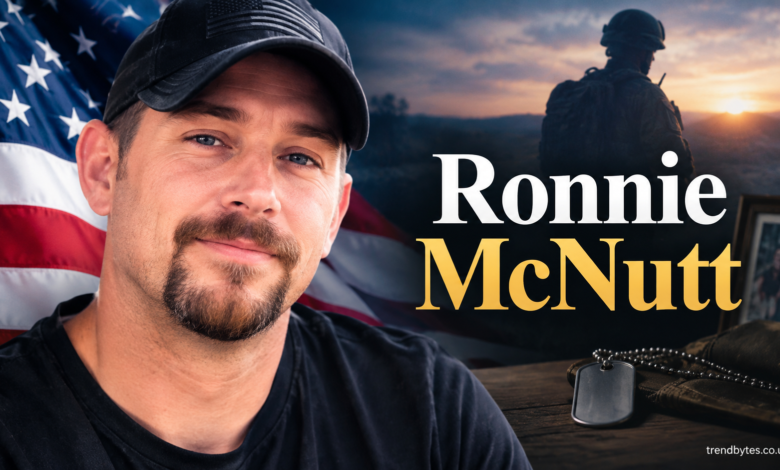
Ronnie McNutt was an American Army Reserve veteran whose name became widely known after his death in August 2020. The tragedy became a major social media story because it occurred during a Facebook Live broadcast and later spread across other online platforms. However, the most important part of understanding Ronnie McNutt is not the disturbing footage associated with his death. It is understanding the person behind the viral story, the circumstances that surrounded his life, and the broader questions his death raised about mental health, veterans, social media, and digital responsibility.
This article focuses on verified biographical information and the lasting impact of the case without describing or reproducing graphic material.
Who Was Ronnie McNutt?
Ronald “Ronnie” Merle McNutt was born on May 23, 1987, and was 33 years old when he died on August 31, 2020, in New Albany, Mississippi. His obituary identifies him as a U.S. Army Reserve veteran who served in the Iraq War. It also notes that he worked at the Toyota plant in Blue Springs, Mississippi, and had interests that included theater and comic conventions.
These details matter because online discussions about Ronnie McNutt often focus almost entirely on the circumstances of his death. That can reduce a real person to a single tragic event.
His life included military service, employment, family relationships, hobbies, friendships, and ordinary experiences that are often absent from viral posts.
According to his published obituary, Ronnie was survived by his mother, brother, sister, nieces, nephews, and other relatives and friends. His family later became involved in efforts connected with veteran mental-health awareness and suicide prevention.
Ronnie McNutt and His Military Service
Ronnie McNutt served in the United States Army Reserve and was a veteran of the Iraq War. His military background became an important part of later conversations about his life and the challenges some veterans face after returning to civilian life.
It is important, however, not to simplify his death into a single explanation.
People sometimes search for one specific reason that explains why someone dies by suicide. In reality, suicide is complex, and outside observers usually cannot know every factor that influenced an individual’s private experience.
Reports and statements connected with Ronnie’s story have discussed mental-health struggles and difficulties in his life. Those issues can be part of a broader conversation about how veterans and other people experiencing emotional distress can receive timely support.
The responsible lesson is not to diagnose someone after death. Instead, it is to recognize that mental-health struggles deserve attention before they reach a crisis.
What Happened to Ronnie McNutt?
Ronnie McNutt died by suicide on August 31, 2020, while using Facebook Live. The broadcast was viewed by other people and subsequently became the source of widely circulated copies and reposts. Contemporary reporting documented how the footage spread beyond Facebook and appeared on other social platforms.
Because the event was livestreamed, it created an unusual digital problem. A private tragedy was transformed into content that could be copied, downloaded, reposted, and encountered by people who had never searched for it.
That distinction is important.
The original event was a human tragedy. The later circulation of recordings turned that tragedy into an internet phenomenon, raising difficult questions about platform moderation, algorithms, user responsibility, and the ethics of sharing disturbing material.
For that reason, responsible coverage should not provide instructions for finding, downloading, or viewing the footage.
Why Did the Ronnie McNutt Story Become So Widely Known?
The Ronnie McNutt case became especially difficult because livestreaming allowed an event to be witnessed in real time.
After the original broadcast, copies circulated across different social networks. Some users encountered the material unexpectedly, including through unrelated-looking posts and videos. News coverage at the time highlighted the difficulty platforms faced in preventing copies from spreading rapidly.
Several characteristics of social media contributed to the problem:
1. Content Could Be Reuploaded Quickly
Once a video exists online, removing the original does not necessarily remove every copy. Users can download material, edit it, rename it, and upload it again.
2. Algorithms Can Amplify Harmful Material
Recommendation systems are designed to identify content that attracts attention and engagement. That can create serious challenges when disturbing material begins receiving large numbers of views.
3. People May Share Content Without Context
Some users may repost shocking material because they want attention, while others may share it as a warning. Regardless of intent, repeated sharing can expose more people to traumatic content.
4. Search Interest Can Reinforce the Cycle
When a tragic event becomes a major search topic, websites and social accounts may publish increasingly sensational material to capture attention.
This creates a cycle in which curiosity generates clicks, clicks generate more visibility, and visibility encourages further reposting.
Ronnie McNutt and the Problem of Viral Suicide Content
The online spread of the Ronnie McNutt footage became an important example of why suicide-related content requires special care.
Graphic recordings can be deeply distressing. They can also expose people to traumatic imagery without warning. For young users in particular, unexpected exposure can be especially upsetting.
Responsible digital behavior means refusing to treat such material as entertainment.
A better approach is to discuss the broader issues: mental-health awareness, suicide prevention, platform moderation, digital literacy, and the importance of supporting people who may be struggling.
This also explains why reputable discussions of suicide should avoid unnecessary descriptions of methods, graphic imagery, or sensational details.
The Human Story Behind the Internet Search
One of the most important lessons from Ronnie McNutt’s story is the danger of allowing a viral search term to replace a person’s identity.
Someone searching for “Ronnie McNutt” may encounter pages that focus almost entirely on the viral incident. Yet his obituary describes a man with family connections, work experience, military service, hobbies, and interests.
That broader context creates a more respectful understanding of his life.
It also illustrates a larger problem with internet culture: people can become famous for events they never intended to become public symbols of.
Once an incident becomes viral, search results may preserve the most shocking part of the story while leaving out years of ordinary life that came before it.
Lessons for Social Media Users
The Ronnie McNutt case offers several practical lessons for anyone who uses social media.
Do Not Share Graphic Material
If you encounter disturbing footage involving suicide, violence, or severe injury, do not download or repost it.
Sharing it can expose additional people to harmful material and can cause further distress for families and communities.
Report Harmful Content
Most major platforms provide reporting systems for dangerous or disturbing content. Reporting the material instead of sharing it helps reduce its reach.
Avoid Sensational Captions
Words designed to provoke shock or curiosity can increase engagement. Responsible communication should describe serious events without turning suffering into clickbait.
Think Before You Repost
Before sharing a tragic story, ask whether the post provides useful information or simply encourages people to watch something disturbing.
If the only purpose is shock value, there is usually no benefit in spreading it.
Common Mistakes When Writing About Ronnie McNutt
Writers and publishers should take particular care when covering this subject.
Mistake 1: Focusing Only on the Death
Reducing Ronnie McNutt to the circumstances of his death removes important context about his life.
Mistake 2: Reproducing Graphic Details
Detailed descriptions can be unnecessary and harmful. A factual article can explain what happened without describing graphic imagery.
Mistake 3: Presenting Unverified Claims as Facts
Viral stories often attract rumors. Claims about a person’s private life, relationships, mental health, or final moments should not be treated as fact unless supported by reliable evidence.
Mistake 4: Linking to Disturbing Footage
Providing directions to graphic material can contribute to further circulation.
Mistake 5: Turning Tragedy Into Entertainment
Titles, thumbnails, and descriptions should not use a person’s death simply as a way to attract clicks.
Best Practices for Responsible Coverage
A responsible article about a sensitive death should follow a few basic principles.
First, verify the person’s identity and basic biographical information.
Second, separate confirmed facts from speculation.
Third, avoid unnecessary graphic details.
Fourth, provide meaningful context rather than sensational descriptions.
Finally, remember that family members and friends may encounter the article years after publication.
The goal should be to inform readers without creating additional harm.
What Ronnie McNutt’s Legacy Can Teach Us
The legacy surrounding Ronnie McNutt is complicated because his name became connected to both a personal tragedy and a larger internet phenomenon.
His story contributed to discussions about the responsibilities of social platforms when livestreamed emergencies occur. It also highlighted how quickly disturbing content can move from one platform to another. Contemporary reporting specifically examined criticism of social media companies over the spread of the footage.
At the same time, his family and supporters have worked to connect his memory with veteran awareness and suicide-prevention efforts. One organization established in his name describes its mission as supporting veteran suicide awareness programs and related outreach.
That provides a more constructive way to understand his legacy.
Instead of remembering only the viral event, people can also remember the conversations it created about veterans, mental health, responsible technology, and compassion.
People Also Ask About Ronnie McNutt
Who was Ronnie McNutt?
Ronnie McNutt was an American Army Reserve veteran from Mississippi. He was born in 1987 and died at age 33 in August 2020. His death became widely known because it occurred during a Facebook Live broadcast.
How old was Ronnie McNutt when he died?
Ronnie McNutt was 33 years old. His published obituary lists his birth date as May 23, 1987, and his date of death as August 31, 2020.
Was Ronnie McNutt a veteran?
Yes. His obituary identifies him as a veteran of the United States Army Reserve who served in the Iraq War.
Why is Ronnie McNutt famous online?
His name became widely known after his death was livestreamed on Facebook and recordings from the broadcast were subsequently copied and circulated across social media platforms.
Is the Ronnie McNutt video still something people should share?
No. Sharing graphic suicide footage can expose others to disturbing material and can further sensationalize a real person’s death. Responsible coverage should focus on verified facts and prevention rather than distributing the recording.
Where did Ronnie McNutt live?
Ronnie McNutt lived in the New Albany, Mississippi, area. His published obituary states that he died at his home there.
What can people learn from Ronnie McNutt’s story?
The case highlights the importance of mental-health support, responsible social-media behavior, careful content moderation, and treating people involved in tragedies with dignity rather than reducing them to viral content.
How should websites cover suicide-related stories?
Websites should use factual, non-sensational language, avoid unnecessary descriptions of methods or graphic scenes, verify claims, and focus on context, prevention, and respectful reporting.
Conclusion: Remembering Ronnie McNutt Beyond the Viral Story
Ronnie McNutt became known around the world because a deeply personal tragedy entered the public internet. Yet his life was much more than the event that made his name a viral search term.
He was a son, brother, uncle, friend, worker, performer, comic-convention enthusiast, and U.S. Army Reserve veteran. His obituary provides a reminder that a person should not be defined solely by the circumstances of their death.
The most responsible way to discuss Ronnie McNutt is therefore to move beyond curiosity about disturbing footage and toward the larger lessons his story raises.
Those lessons include the importance of mental-health awareness, compassionate support, responsible social-media use, and careful reporting of suicide.
Ultimately, remembering Ronnie McNutt should not mean preserving the most shocking part of his story. It should mean recognizing the person behind the viral name and using the discussion around his death to encourage greater compassion, awareness, and responsibility online.