Automotive Schools Near Me: How to Find the Best Automotive Training Program

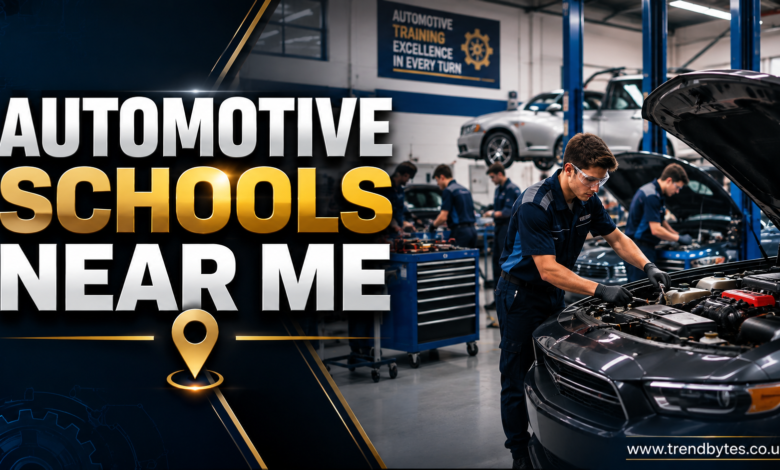
Searching for automotive schools near me is often the first step toward turning an interest in cars into a practical career. Whether you want to become an automotive technician, diagnostic specialist, diesel mechanic, or performance technician, choosing the right school can have a major impact on your training and future opportunities.
The challenge is that not every automotive program offers the same curriculum, equipment, instructors, or career support. Some focus on basic maintenance, while others provide advanced training in diagnostics, electrical systems, hybrid vehicles, and modern automotive technology.
This guide explains how to find and compare automotive schools in your area, what to look for during a campus visit, how much training may cost, and how to choose a program that fits your career goals.
How to Find Automotive Schools Near Me
The easiest way to start your search for automotive schools near me is to create a list of programs within a reasonable travel distance.
Start by searching for automotive technology schools, automotive technician programs, mechanic schools, community college automotive programs, and trade schools in your area.
Then narrow the results based on:
- Distance from home
- Program length
- Tuition and fees
- Course curriculum
- Hands-on training
- Available certifications
- Equipment and facilities
- Class schedules
- Financial aid
- Career services
Distance matters because automotive programs often include regular laboratory sessions. A school that is slightly farther away may still be worth considering if it offers significantly better training.
What Makes a Good Local Automotive School?
A quality automotive school should provide more than classroom instruction.
Look for a program where students regularly work with real vehicles, diagnostic equipment, tools, and automotive systems. Practical training helps students develop the confidence needed for an actual repair environment.
You should also look for instructors with professional industry experience and a curriculum that reflects modern vehicle technology.
What Do Automotive Schools Teach?
Automotive programs can vary widely, but most cover the major systems found in passenger vehicles and light trucks.
Common subjects include:
- Engine repair
- Brake systems
- Steering and suspension
- Automatic and manual transmissions
- Automotive electrical systems
- Engine performance
- Fuel systems
- Heating and air conditioning
- Vehicle diagnostics
- Preventive maintenance
- Shop safety
- Computerized vehicle systems
More advanced programs may also include hybrid and electric vehicle technology, advanced driver-assistance systems, network communications, and specialized diagnostic procedures.
Automotive Diagnostics Training
Diagnostics is one of the most important skills for today’s automotive technicians.
Modern vehicles contain numerous sensors, control modules, wiring networks, and computerized systems. A technician may need to use a scan tool, multimeter, oscilloscope, service information, and other equipment to identify the source of a problem.
When comparing automotive schools, ask how much diagnostic training students receive.
A program that teaches students only how to replace parts may not provide enough preparation for today’s increasingly complex vehicles.
Hands-On Training Should Be a Priority
Automotive repair is a hands-on profession, so practical training should be one of your biggest considerations.
During laboratory sessions, students may inspect vehicles, perform maintenance, diagnose faults, remove and install components, and practice repair procedures.
For example, a student might learn about brake systems in the classroom and then perform an actual brake inspection in the shop.
That combination of theory and practice makes technical information easier to understand and remember.
How Much Does Automotive School Cost?
The cost of automotive training depends on the type of school, program length, location, equipment, and credential.
Community colleges, technical schools, private trade schools, and specialized training centers can all have different pricing structures.
When comparing costs, do not look at tuition alone.
Your total education budget may include:
- Tuition
- Registration fees
- Books
- Tools
- Safety equipment
- Uniforms
- Lab fees
- Transportation
- Certification testing
- Other course materials
How to Compare Automotive School Costs
Create a simple comparison chart for every school you are considering.
Record the total estimated cost, program length, class schedule, equipment, certifications, and career services.
A program that costs slightly more may provide better equipment, more laboratory hours, or stronger employer connections.
The goal is to find the best overall value rather than simply the lowest price.
How Long Does Automotive School Take?
Program length varies depending on the credential and curriculum.
Short certificate programs may take several months, while comprehensive automotive technology programs can take a year or two or more.
Some students choose a shorter program to enter the workforce quickly. Others prefer a broader program that provides more extensive technical training.
Before enrolling, review the complete course schedule.
Make sure the program provides enough time for both classroom learning and hands-on practice.
Automotive Certifications and Credentials
Professional certifications can strengthen an automotive technician’s qualifications.
Depending on your career goals, you may encounter certifications related to areas such as brakes, electrical systems, engine performance, suspension, heating and air conditioning, and other automotive specialties.
Some schools prepare students for industry certification exams as part of their programs.
However, certification should not be your only consideration. Practical experience, troubleshooting ability, communication skills, and continued education are also important.
What Careers Can You Pursue?
Automotive school can prepare you for several different career paths.
Automotive Service Technician
Service technicians perform inspections, maintenance, repairs, and diagnostics on vehicles.
Their responsibilities can range from oil and filter services to brake repairs, suspension work, electrical diagnosis, and engine troubleshooting.
Diagnostic Technician
Diagnostic technicians specialize in identifying difficult vehicle problems.
They often work with advanced scan tools, electrical testing equipment, service information, and computerized vehicle systems.
Diesel Technician
If you are interested in trucks, buses, commercial vehicles, or diesel-powered equipment, consider a program with diesel technology training.
Diesel technicians may work on engines, fuel systems, electrical components, emissions systems, and other heavy-duty equipment.
Automotive Electrical Technician
Modern vehicles rely heavily on electronics.
Technicians with strong electrical and diagnostic skills can work on wiring, sensors, batteries, control modules, communication networks, and electronic systems.
Service Advisor
Automotive education can also lead to customer-facing positions.
Service advisors communicate with customers, explain repair recommendations, prepare estimates, and coordinate work between customers and technicians.
What to Ask When Visiting Automotive Schools Near Me
A campus visit can reveal information that is difficult to learn from a website.
Before visiting, prepare a list of questions.
Ask:
- How much hands-on training do students receive?
- What vehicles do students work on?
- Is modern diagnostic equipment available?
- Does the program cover hybrid and electric vehicles?
- What qualifications do instructors have?
- How large are the classes?
- What tools must students purchase?
- Are certifications included or supported?
- Is financial aid available?
- What career services are offered?
Also pay attention to the condition of the workshop.
A clean, organized, well-equipped facility can indicate that the school takes practical training seriously.
How to Choose the Right Automotive Program
Choosing the right program becomes easier when you start with your career goal.
If you want to work at a general repair shop, a broad automotive technology program may be appropriate.
If you are interested in performance vehicles, look for additional training in engine performance, suspension, exhaust, forced induction, and vehicle tuning.
If you want to work with electric vehicles, make sure the school provides appropriate high-voltage safety and EV-related instruction.
Your intended career should guide your education choices.
Common Mistakes to Avoid
Choosing Only by Location
The closest school is not always the best school.
Consider curriculum, equipment, instructors, costs, and career support before making a decision.
Looking Only at Tuition
A low advertised tuition price does not necessarily mean low total cost.
Always ask about tools, books, equipment, fees, and certification expenses.
Ignoring Modern Technology
Automotive technology continues to evolve.
A program that focuses exclusively on older mechanical systems may not provide enough preparation for modern vehicles.
Skipping the Campus Visit
Photos and websites can only tell you so much.
Visit the facility and observe the classrooms, workshops, vehicles, tools, and overall learning environment.
Assuming School Guarantees Employment
Training is an important starting point, but students still need to develop professional skills and pursue employment opportunities.
Take advantage of internships, career counseling, resume assistance, and employer connections when available.
Expert Tips for Automotive Students
Start building practical skills as early as possible.
Do not focus only on memorizing procedures. Learn why a system works and how different components interact.
For example, when diagnosing an engine problem, consider air, fuel, ignition, compression, electrical signals, and computer inputs rather than immediately replacing a component.
Keep a notebook of difficult repairs and diagnostic procedures.
You can also improve your career prospects by learning how to communicate clearly with customers and coworkers. Technical knowledge is important, but professionalism matters too.
Finally, stay current with new technology. Hybrid systems, electric vehicles, advanced driver-assistance systems, and computerized diagnostics are changing the automotive industry.
Best Practices for Comparing Schools
Create a shortlist of three to five programs.
For each school, compare:
| Factor | What to Look For |
|---|---|
| Location | Reasonable commute |
| Curriculum | Comprehensive automotive systems |
| Training | Strong hands-on experience |
| Equipment | Modern diagnostic and shop equipment |
| Instructors | Relevant industry experience |
| Cost | Transparent total expenses |
| Certifications | Preparation for recognized credentials |
| Career Support | Job assistance and employer connections |
| Schedule | Fits your personal needs |
| Technology | Modern and emerging vehicle systems |
This makes it easier to compare programs objectively instead of choosing based on advertising or appearance alone.
People Also Ask
How do I find automotive schools near me?
Search for automotive technology schools, mechanic schools, technical colleges, community college automotive programs, and automotive trade schools in your area. Then compare distance, curriculum, cost, hands-on training, equipment, and career support.
How long does automotive school usually take?
The length varies by program. Short certificate programs may take several months, while comprehensive automotive technology programs may take a year or two or longer.
Is automotive school worth it?
Automotive school can be worthwhile for people who want structured technical training and hands-on experience. The value depends on the quality of the program, total cost, career goals, and opportunities available after graduation.
Do you need college to become an automotive technician?
A traditional four-year college degree is not usually required for an automotive technician career. Specialized automotive training, hands-on experience, and professional certifications can provide valuable preparation.
What should I look for in an automotive school?
Look for experienced instructors, modern equipment, extensive hands-on training, a relevant curriculum, reasonable costs, certification preparation, and strong career services.
Can automotive schools teach electric vehicle repair?
Some programs offer hybrid and electric vehicle training. If EV technology is important to your career plans, check the curriculum carefully before enrolling.
Can I become a mechanic without automotive school?
Some people enter automotive careers through apprenticeships, entry-level shop positions, manufacturer training, or independent experience. However, formal schooling can provide structured instruction and practical training that may make it easier to build foundational skills.
What is the difference between a trade school and a community college automotive program?
A trade school typically focuses heavily on career-specific training, while a community college may offer automotive programs alongside broader academic courses. The best option depends on your preferred learning style, schedule, budget, and career goals.
Conclusion
Finding the right automotive schools near me is about more than choosing the closest training center. The best program should match your career goals and provide the technical knowledge, hands-on experience, equipment, and professional preparation needed for today’s automotive industry.
Start by comparing several schools instead of choosing the first result you find. Review their curriculum, visit their facilities, ask about diagnostic and EV training, calculate the complete cost, and investigate career support.
Whether your goal is to become an automotive service technician, diagnostic specialist, diesel technician, electrical specialist, or another automotive professional, quality training can give you a strong foundation.
Most importantly, choose a program that prepares you for the vehicles of today while helping you continue learning for the vehicles of tomorrow.