Celebrities Who Have Autism: Famous People Breaking Stereotypes and Inspiring Millions

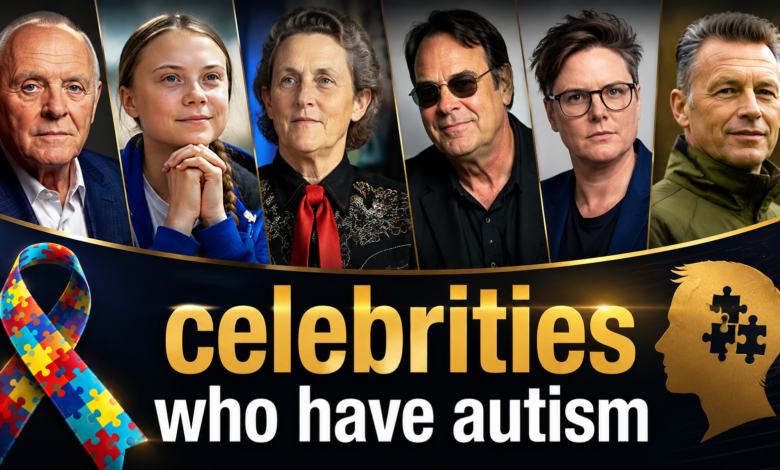
Learning about celebrities who have autism helps challenge outdated stereotypes and promotes a better understanding of autism spectrum disorder (ASD). Many successful actors, musicians, entrepreneurs, athletes, authors, and public figures have openly discussed their autism diagnosis or shared that they are on the autism spectrum. Their experiences demonstrate that autism is not a barrier to achieving remarkable success.
Autism affects people differently. Every individual has unique strengths, challenges, communication styles, and interests. Some autistic people require significant support, while others live independently, build successful careers, and become leaders in their fields.
In this guide, you’ll discover well-known celebrities who have autism, learn about their journeys, understand common misconceptions, and see how greater awareness is creating a more inclusive society.
Understanding Autism Spectrum Disorder
Autism Spectrum Disorder (ASD) is a neurodevelopmental condition that affects communication, social interaction, sensory processing, and behavior.
The term “spectrum” reflects the wide variety of experiences among autistic individuals. Some people are diagnosed during childhood, while others are not diagnosed until adulthood.
Common characteristics may include:
- Strong attention to detail
- Deep focus on specific interests
- Sensory sensitivities
- Different communication styles
- Preference for routines
- Exceptional memory
- Creative problem-solving
- Unique perspectives
No two autistic individuals are exactly alike.
Why Learning About celebrities who have autism Matters
Public figures who openly discuss autism help reduce stigma and increase understanding.
Their stories show that:
- Autism does not define a person’s potential.
- Success looks different for everyone.
- Early support can make a positive difference.
- Neurodiversity strengthens workplaces and communities.
- Different ways of thinking deserve recognition and respect.
For many autistic individuals and their families, seeing successful role models can provide hope and encouragement.
Well-Known Celebrities Who Have Autism
Several famous people have publicly shared their autism diagnosis or confirmed they are on the autism spectrum.
Greta Thunberg
Environmental activist Greta Thunberg has openly described autism as her “superpower.”
She has spoken about how autism helps her remain focused on important issues and maintain strong determination in pursuing her goals.
Her advocacy has inspired millions around the world.
Anthony Hopkins
Academy Award-winning actor Anthony Hopkins revealed later in life that he was diagnosed with Asperger syndrome, which is now included within Autism Spectrum Disorder.
Hopkins has discussed how his unique way of thinking has influenced his acting career and attention to detail.
Temple Grandin
Temple Grandin is one of the world’s best-known autism advocates.
Diagnosed with autism as a child, she became an accomplished professor, author, inventor, and expert in animal behavior.
Her work has transformed livestock handling practices while educating millions about autism.
Dan Aykroyd
Actor and comedian Dan Aykroyd has shared that he was diagnosed with Asperger syndrome.
He credits some of his intense interests and creativity with helping shape his successful entertainment career.
Hannah Gadsby
Australian comedian Hannah Gadsby has spoken publicly about being diagnosed with autism in adulthood.
Her stand-up performances have helped increase awareness of late autism diagnoses, especially among women.
Chris Packham
Television presenter and wildlife expert Chris Packham has openly discussed living with autism.
He has shared how autism influences his work, relationships, and passion for conservation.
H2: How celebrities who have autism Are Changing Public Perception
Celebrity stories have helped reshape conversations about autism.
Instead of focusing only on challenges, many now recognize the strengths associated with autism.
Positive changes include:
- Greater workplace inclusion
- Better educational support
- Increased acceptance
- More accurate media representation
- Greater understanding of neurodiversity
- Reduced stigma surrounding diagnosis
Public awareness continues to improve as more individuals share their experiences.
Common Strengths Often Associated with Autism
Although every autistic person is different, many individuals demonstrate exceptional abilities in certain areas.
These may include:
Attention to Detail
Many autistic individuals notice details others may overlook.
Strong Memory
Some possess remarkable long-term memory for facts, numbers, or specialized topics.
Deep Focus
Autistic people often develop extensive knowledge in subjects that interest them.
Creative Thinking
Different perspectives frequently lead to innovative ideas and problem-solving.
Honesty
Many autistic individuals value direct and honest communication.
H3: What We Can Learn from celebrities who have autism
The experiences of public figures offer valuable lessons.
Success Has Many Paths
There is no single definition of achievement.
Autistic individuals succeed in entertainment, science, business, education, sports, technology, and countless other fields.
Differences Are Strengths
Many successful people embrace their unique thinking rather than trying to hide it.
Awareness Creates Acceptance
When respected public figures discuss autism openly, society becomes more informed and compassionate.
Support Makes a Difference
Family support, education, therapy, workplace accommodations, and understanding communities can significantly improve quality of life.
Common Myths About Autism
Myth 1: Autistic people cannot succeed professionally.
False.
Many autistic individuals build highly successful careers across numerous industries.
Myth 2: Everyone with autism has the same traits.
False.
Autism is a spectrum with diverse experiences.
Myth 3: Autism only affects children.
False.
Autistic children become autistic adults, and many adults receive diagnoses later in life.
Myth 4: Autism limits intelligence.
False.
Autistic individuals have a wide range of intellectual abilities, just like the general population.
The Importance of Neurodiversity
Neurodiversity recognizes that differences in brain function are natural variations of human experience.
Rather than viewing autism solely as a disorder, many advocates encourage society to recognize both challenges and strengths.
Inclusive schools, workplaces, and communities benefit everyone by welcoming different perspectives and talents.
Why Representation Matters
Seeing successful autistic public figures helps:
- Increase confidence among autistic individuals
- Reduce harmful stereotypes
- Encourage earlier diagnosis
- Promote inclusive education
- Improve workplace understanding
- Inspire families seeking hope and guidance
Representation reminds people that autism is one part of a person’s identity—not the whole story.
Conclusion
Learning about celebrities who have autism helps create a more accurate and respectful understanding of autism spectrum disorder. The accomplishments of public figures such as Greta Thunberg, Anthony Hopkins, Temple Grandin, Dan Aykroyd, Hannah Gadsby, and Chris Packham demonstrate that autistic individuals contribute meaningfully across countless professions and communities.
By celebrating neurodiversity, challenging misconceptions, and supporting inclusion, society can better recognize the talents, creativity, and perspectives that autistic people bring to the world. Whether you’re researching celebrities who have autism out of curiosity, personal interest, or to support someone you know, these stories highlight an important truth: autism is part of a person’s identity, but it does not define their potential or limit what they can achieve.