Kraken Robotics Stock: Business, Growth Potential, Risks, and What Investors Should Know

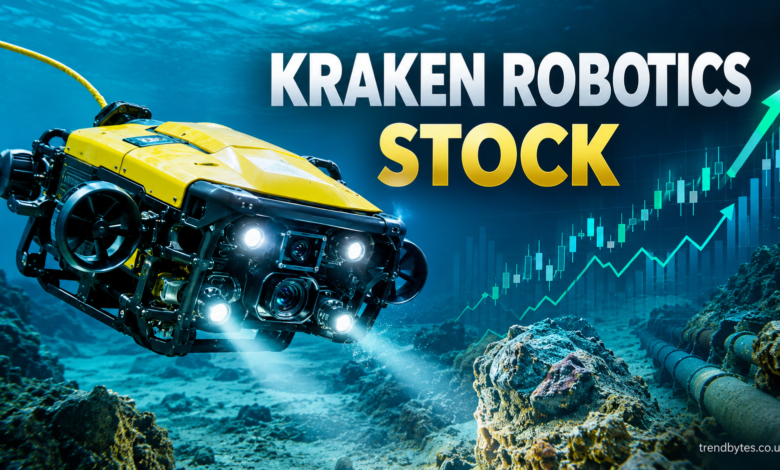
Kraken Robotics stock has attracted attention as investors look for companies positioned at the intersection of robotics, defense technology, marine exploration, and advanced sensing systems. Kraken Robotics is known for developing technology used in underwater applications, including autonomous underwater vehicles and subsea imaging systems.
For investors researching kraken robotics stock, the bigger question is not simply whether the company operates in an exciting industry. It is whether Kraken can turn growing demand for underwater technology into sustainable revenue, improving margins, and long-term shareholder value.
This guide explains what Kraken Robotics does, why its market is important, potential growth drivers, major risks, and the key metrics investors should monitor.
What Is Kraken Robotics?
Kraken Robotics is a Canadian technology company focused on advanced subsea systems. Its products are designed for demanding underwater environments where traditional methods can be expensive, difficult, or limited.
The company operates in areas such as:
- Autonomous underwater systems
- Sonar and subsea sensing
- Underwater imaging
- Synthetic aperture sonar
- Battery systems
- Defense and security applications
- Marine research and offshore industries
Its technology can be useful for locating underwater objects, mapping the seafloor, inspecting infrastructure, and supporting defense-related missions.
This makes Kraken different from a traditional software or consumer robotics company. Its business is closely tied to specialized engineering, hardware, marine operations, and government and industrial customers.
Kraken Robotics Stock: Why Investors Are Watching It
Interest in kraken robotics stock is connected to several major trends.
First, governments around the world are increasing their focus on maritime security. Subsea infrastructure such as communication cables, energy systems, and pipelines has become increasingly important to national security and economic activity.
Second, autonomous underwater systems can reduce the need for human divers and expensive crewed operations. Robots can collect data in environments that are difficult or dangerous for people.
Third, advances in artificial intelligence, sensors, batteries, navigation, and autonomous systems are improving what underwater robots can accomplish.
Kraken operates in a specialized part of this broader technology market, giving it exposure to several long-term industry trends at once.
How Kraken Robotics Makes Money
Understanding the company’s business model is important before evaluating its stock.
Kraken generates revenue primarily by selling subsea technology and related systems to customers operating in defense, marine, offshore, and other specialized markets.
Its offerings can include complete systems as well as individual technologies.
For example, a customer may require underwater sonar technology to survey an area. Another customer may need an autonomous underwater vehicle equipped with advanced sensors. Kraken can participate in these types of projects through its technology portfolio.
The company may also benefit from repeat orders, upgrades, maintenance, integration, and additional equipment when customers expand their operations.
This creates an important distinction between simply selling a single piece of equipment and building long-term relationships with specialized customers.
Key Growth Drivers for Kraken Robotics Stock
Defense and Maritime Security
One of the most important themes surrounding kraken robotics stock is growing investment in underwater defense capabilities.
Modern naval forces increasingly use unmanned systems for surveillance, mine detection, reconnaissance, mapping, and other missions.
Uncrewed underwater systems can operate for extended periods without placing personnel directly in hazardous environments.
If governments continue increasing spending on these technologies, specialized companies such as Kraken could potentially benefit.
However, investors should remember that defense contracts can have long sales cycles. Revenue may not arrive evenly from quarter to quarter.
Growth in Autonomous Underwater Vehicles
Autonomous underwater vehicles are becoming increasingly useful across commercial and government applications.
These systems can collect underwater data while reducing the need for traditional crewed operations.
Potential applications include:
- Seafloor mapping
- Mine detection
- Infrastructure inspection
- Marine research
- Offshore energy
- Environmental monitoring
- Defense surveillance
As the technology improves, the addressable market for autonomous underwater systems could expand.
Advanced Sonar Technology
Sonar is another important part of Kraken’s technology portfolio.
Underwater environments are difficult to observe using conventional cameras because light penetration is limited. Sonar can instead use sound waves to identify and map objects and underwater terrain.
Advanced sonar can provide detailed information for military, commercial, and scientific applications.
Kraken’s specialized capabilities in subsea sensing may therefore provide a technological advantage in markets where accuracy and reliability are critical.
Increasing Interest in Underwater Infrastructure
The world’s underwater infrastructure is extensive.
Communication cables cross oceans, offshore energy infrastructure operates underwater, and governments increasingly recognize the strategic importance of subsea assets.
Monitoring these systems can require specialized equipment and expertise.
That creates another potential market for underwater robotics and sensing companies.
What Could Make Kraken Robotics Attractive?
Investors evaluating kraken robotics stock should look beyond the excitement surrounding robotics and examine the company’s underlying business characteristics.
One factor is specialization.
Underwater robotics is technically challenging. Equipment must operate under pressure, communicate effectively, navigate difficult environments, and collect reliable data.
Companies with established technology, specialized engineering expertise, and customer relationships may have advantages over new competitors.
Another factor is the potential for long-term demand.
Defense modernization, maritime security, offshore infrastructure, and autonomous systems are not necessarily short-lived trends.
Still, strong industry growth does not automatically mean a particular stock will perform well. Valuation, execution, competition, financing, and financial results remain important.
Financial Metrics to Watch
Before making any investment decision involving kraken robotics stock, investors should regularly review the company’s latest financial reports.
Revenue Growth
Revenue growth shows whether demand for the company’s products is increasing.
However, investors should look at the quality of that growth as well. A large contract can create a strong quarter without necessarily representing a permanent change in the company’s earnings power.
Gross Margin
Gross margin helps show how much revenue remains after direct costs.
If revenue increases while margins also improve, the business may be gaining operating efficiency.
Operating Cash Flow
Cash flow is particularly important for technology companies that need to invest in research, manufacturing, employees, and equipment.
A company can report accounting profits while still facing cash-flow pressure.
Backlog and Contract Awards
For a project-driven business, backlog can provide useful information about future demand.
Investors should examine whether reported contracts represent new customers, repeat orders, long-term programs, or one-time projects.
Share Dilution
Investors should also monitor the number of shares outstanding.
Companies sometimes issue additional shares to raise capital. While this can provide funding for expansion, it can also reduce existing shareholders’ percentage ownership.
Risks Associated With Kraken Robotics Stock
Every investment carries risk, and specialized technology companies can experience significant volatility.
Contract Timing Risk
Large contracts may take months or years to develop and finalize.
A delayed order can affect quarterly revenue even if long-term demand remains strong.
Government Spending Risk
Defense-related demand can depend partly on government budgets and procurement priorities.
Changes in spending plans, procurement schedules, or political priorities can affect contract opportunities.
Technology Risk
Robotics and underwater sensing are rapidly developing fields.
Competitors may introduce better sensors, vehicles, software, batteries, or autonomous navigation systems.
Kraken must continue investing in technology to remain competitive.
Manufacturing and Supply Chain Risk
Hardware businesses depend on components, manufacturing capacity, skilled employees, and suppliers.
Unexpected production problems can affect delivery schedules and profitability.
Valuation Risk
A company can have strong technology and attractive growth prospects while its stock is still expensive relative to future earnings.
This is why investors should separate the quality of a business from the price being paid for its shares.
How to Research Kraken Robotics Stock
A practical research process can help investors avoid making decisions based solely on headlines.
Start by reviewing the company’s latest financial statements.
Next, examine revenue growth, margins, cash flow, debt, share count, and contract announcements.
Then consider the broader underwater robotics market.
Ask questions such as:
- Is demand expanding?
- Are customers increasing orders?
- Is the company improving margins?
- Is cash flow strengthening?
- How competitive is the technology?
- Is the current valuation reasonable relative to expected growth?
This approach provides a more complete picture than looking only at the share price.
Common Mistakes Investors Should Avoid
One common mistake is treating robotics as a guaranteed growth industry.
A growing market can still contain companies that struggle to generate profits.
Another mistake is focusing exclusively on contract announcements. A large contract sounds positive, but investors should examine its size, timing, profitability, and contribution to total revenue.
It is also important not to confuse a rising stock price with improving business fundamentals.
Finally, investors should avoid making decisions based on a single quarter. Specialized technology businesses can have uneven revenue patterns.
Expert Tips for Following Kraken Robotics Stock
Keep a long-term tracking sheet containing revenue, gross margin, operating expenses, cash flow, backlog, major contracts, and share count.
Compare quarterly results with previous periods rather than focusing on one headline number.
It can also help to distinguish between three separate questions:
Is the industry growing?
Is Kraken gaining market share or expanding its business?
Is the stock price already reflecting that growth?
These questions are related, but they are not the same.
Investors should also read company filings and earnings materials carefully instead of relying only on social media discussions or stock-market commentary.
Kraken Robotics Stock and the Future of Underwater Technology
The underwater robotics industry could become increasingly important as governments and businesses seek better ways to monitor, inspect, map, and protect underwater environments.
Autonomous vehicles, advanced sonar, artificial intelligence, improved batteries, and better navigation systems could expand what underwater robots are capable of doing.
Kraken’s position within this ecosystem gives the company exposure to these developments.
However, future success will depend on execution. The company must continue developing competitive technology while converting demand into profitable and sustainable business growth.
For investors, that means following both technological developments and financial performance.
People Also Ask About Kraken Robotics Stock
Is Kraken Robotics a robotics company?
Yes. Kraken Robotics develops specialized underwater robotics and subsea technology, including autonomous systems and advanced sonar-related products.
What does Kraken Robotics do?
Kraken Robotics develops technology for underwater applications such as subsea imaging, sensing, autonomous operations, marine surveying, and defense-related missions.
Why is Kraken Robotics getting attention?
Interest has been driven by growing attention toward underwater robotics, maritime security, autonomous systems, and subsea infrastructure.
Is Kraken Robotics involved in defense?
The company’s underwater technology can be used in defense and security applications, including areas such as surveillance, mine detection, and underwater reconnaissance.
What should investors watch with Kraken Robotics stock?
Important factors include revenue growth, margins, cash flow, contract awards, backlog, production capacity, competition, financing needs, and valuation.
Is Kraken Robotics stock risky?
Like other smaller technology companies, Kraken Robotics can face risks related to contract timing, competition, manufacturing, government spending, financing, and stock valuation.
Does Kraken Robotics benefit from autonomous underwater vehicles?
Potentially. Autonomous underwater vehicles can serve defense, commercial, scientific, and infrastructure-related applications, creating potential demand for Kraken’s technology.
Where can investors find updated Kraken Robotics financial information?
Investors should use the company’s latest official filings, financial reports, earnings releases, and exchange information when researching current financial performance and valuation.
Conclusion
Kraken Robotics stock represents an investment opportunity tied to several developing markets, including underwater robotics, advanced sonar, autonomous systems, maritime security, and subsea infrastructure.
The company’s specialized technology gives it exposure to industries where reliable underwater data and autonomous capabilities can be valuable. At the same time, investors need to consider contract timing, competition, manufacturing challenges, government spending, cash flow, dilution, and valuation.
The most useful way to follow Kraken Robotics is to track the business rather than the stock price alone. Watch revenue growth, margins, cash generation, major contracts, backlog, technology development, and the company’s ability to convert market demand into sustainable results.
Ultimately, the future of kraken robotics stock will depend on how effectively Kraken executes within the expanding underwater technology market and how the company’s financial performance compares with the expectations already reflected in its share price.